Abstract
Employees who appreciate what they do and the atmosphere in which they work are more likely to continue employed with their company. Retention strategies are significant because they help create a positive work environment and strengthen an employee's commitment to the organisation. Hence, the objective of this paper is to make aware and assist organisation to develop their own retention policies. Labour markets have been tightening over the past decade, and replacement costs associated with filling vacancies have been strengthening upward for years. Development of fully integrated retention policy may be one of the most effective responses that workforce managers can make to these kinds of problems. Integrated retention policy uses problem-relevant information to shape focused retention initiatives. This retention research may help in the policy-development process and shed light on the value of standard practices, offer telling insights into patterns and trends in employee retention policy, the relative tendencies of high and low performers, and provide information relating to the effectiveness of popular retention strategies. In this article, it tried to show how this study of retention research may be used to inform and enlighten a policy-formulation process for employees in an organisation.
Keywords
RetentionTurnoverMotivation
Introduction
Every organisation needs to have a strategy in place to retain the high performers that give it a competitive edge; they are the ones you can’t afford to lose. Ignoring high levels of employee turnover can be very costly; it lowers internal morale and it could harm an organisation’s external reputation and cost it business. So, understanding the importance of staff retention is vital. It’s essential to try to learn more about the reasons why people resign. The reasons might simply be more attractive jobs elsewhere or chances for lifestyle reshapes, in which case it might be out of your hands to retain these employees. However, many people leave their jobs because they are dissatisfied with their current situation. There are ways of retaining these people, highlighted below. An organisation cannot survive if the top performers quit. It needs employees who are loyal and work hard with full dedication to achieve the organisation’s objective. It is essential for the management to retain its valuable employees who think in favor of the organisation and contribute their level best. An employee who spends a longer duration at any organisation is familiar with the rules, guidelines and policies of the organisation and thus can adjust better.
Retention relates to the extent to which an employer retains its employees and may be measured as the proportion of employees with a specified length of service (typically one year or more) expressed as a percentage of overall workforce numbers. (CIPD, 2015). An effort by a business to maintain a working environment which supports current staff in remaining with the company. Many employee retention policies are aimed at addressing the various needs of employees to enhance their job satisfaction and reduce the substantial costs involved in hiring and training new staff.
HR records include a wide range of data relating to individuals working in an organisation, for example, pay or absence levels, hours worked and trade union agreements. This information may be stored in a variety of media, such as computer databases or paper files.
It is important for all organisations to maintain effective systems for storing HR data, both to ensure compliance with all relevant legislation (for example in respect of the minimum wage or working time regulations) as well to support sound personnel administration and broader HR strategy. Our factsheet on human capital contains more details of how employee information can help identify the sort of HR or management interventions which will drive business performance. (CIPD, 2015)
Employee Turnover
At its broadest, the term is used to encompass all leavers, both voluntary and involuntary, including those who resign, retire or are made redundant, in which case it may be described as ‘overall’ or ‘crude’ employee turnover. It is also possible to calculate more specific breakdowns of turnover data, such as redundancy-related turnover or resignation levels, with the latter particularly useful for employers in assessing the effectiveness of people management in their organisations (CIPD, 2015).
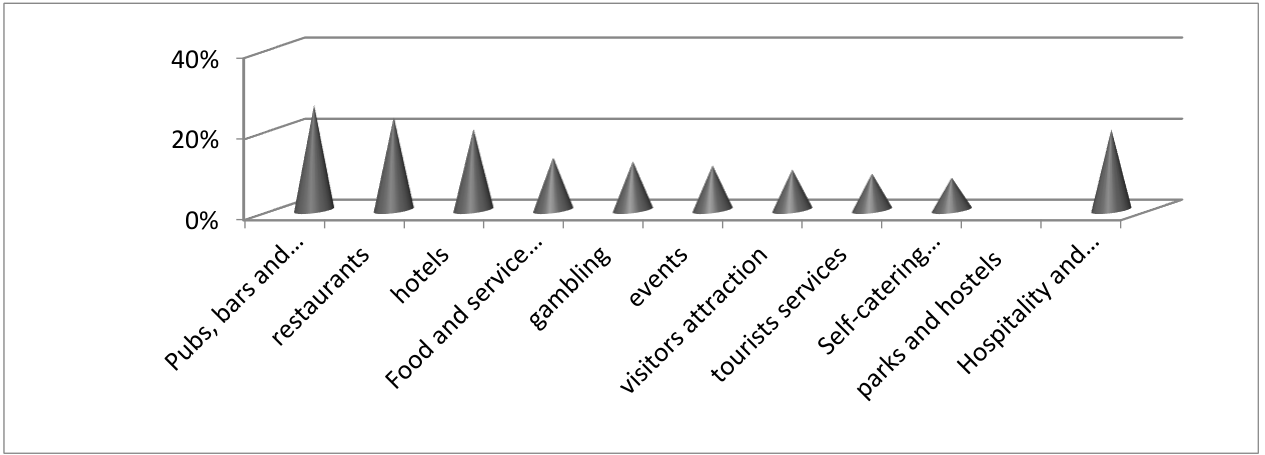
Fig 1 Industry Labour Turnover, Source: People 1st analysis of the Employer Skills Survey, UK Commission for Employment and Skills, 2011
According to the same survey (2011) turnover was highest among operative staffs and lowest among managers. However, there are few very sound arguments in favour or staff turnover, according to Torrington, et al. (2008:100), who propose:
- Companies need to be revitalised with fresh blood every now and again to avoid dullness services and becoming stale. The idea of invigorating staff forces really works at the senior staff level, where the leadership level requires to remain updated and move forward according to the market needs and trends.
- A high degree of staff turnover is the main tool in keeping the labour costs under control as a reaction to the unpredictable and changing economic climate. During quiet periods leaving staff will not be replaced, minimising the costs but still maintaining the organisation profit.
- ‘Employee turnover is functional rather than dysfunctional because it results in the loss of poor performers and their replacement with more effective employees’
Retention and Turnover
Employers need to understand their rates of labour turnover and how they affect the organisation’s performance. An appreciation of the levels of turnover across occupations, locations and groups of employees can help to inform a comprehensive resourcing strategy (CIPD, 2015).
According to a study conducted by Torrington, (Torrington et al, 2008:198). after interviewing some 200 leaving employees, suggested the most common reasons for leaving a job were:
- Push factors represented by dissatisfaction with the actual work (particularly the hours, shifts patters) or work place (the organisation)
- The personal awareness that employees were not offered enough career development opportunities.
- A dysfunctional and bad communication relationship with the direct superior; when leaving, employees leave their managers not the actual organisation; staff is feeling let down not by the company’s policies but by the way they have been implemented in the work place by the managers.
- Financial reasons and a pay raise counts as another reason for employees switching their workplace.
Another study conducted by Saratoga Institute and graphically presented by Branham, (Branham, 2005:20) reveals alike reasons, failure in meeting employees’ basic needs:
- Limited career growth and of promotion at work-employees’ deficiency of hope and motivation;
- Shortage of respect from the manager leads to lack of self-esteem and personal and professional confidence at work:
- Very unchallenging and unexciting job responsibilities: the dullness and repetitively tasks affect the employee’s fulfilment;
- Working schedule: overtime, inflexibility, very unsocial hours, little holiday, no possibility to take sabbatical. Employees ‘personal satisfaction level decreases. Due to the busy schedule at work they are deprived of having a personal life.
According to (Brantham, 2015:20) ‘an employee decision to leave or stay based on pay is the basic rule of thumb: in a health job market, an unhappy employee will not bolt the company for a 5 % pay increase, but it will take at least an increase of 20% to compel a satisfied employee to jump ship’.
Motivation as a Milestone in Retention
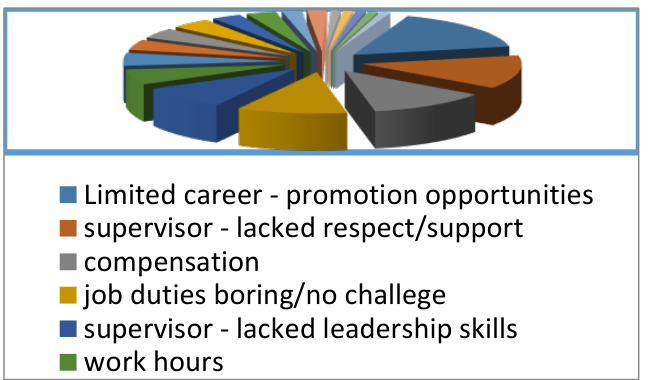
Fig 2: Why employees left (Branham 2005)
Theories Supporting Retention Policy
The researcher of this study has used some theories to investigate deeper into employee behaviour and job satisfaction including Maslow’s hierarchy of needs, Herzberg’s motivation-hygiene theory and Vroom, Porter and Lawler expectancy theory.
Maslow’s hierarchy of needs theory states individuals are driven by several aspects in the working environment, targeting to fulfil one specific necessity before planning on to challenge to satisfy the next coming one in the pyramid. According to Maslow, there are 5 stages of the hierarchy, starting with basic needs such as food and shelter necessities to superior needs as self-achievement and self-fulfilment. (Armstrong, 2001). The important part of this theory is the fact that a satisfied need is no longer a motivator
‘Frederick Herzberg’s motivation-hygiene theory determines which factors in an employee’s work environment cause satisfaction or dissatisfaction. Herzberg interviewed employees and asked them if what pleased and displeased them about their work. He found the factors causing job satisfaction (presumably motivation) were different from that causing job dissatisfaction. ‘(Armstrong, 2001, p:166)
Herzberg theory has been strongly criticised because it failed in measuring the relationship between the satisfaction and performance at work. The theory couldn’t prove that satisfied employees improve organisation’s productivity and revenue. Money can provide positive motivation in the right circumstances. The incentives will motivate people in different manners and to different extends. The lack of money can cause dissatisfaction at the work place but good provisions of money does not necessary results in long-lasting satisfaction. (Armstrong,2001).
Vroom expectancy theory explains that motivation and performance are influenced by three relationships: the association between the employee effort and his/her performance at work, the connection between this performance and its direct result as well as the importance of the outcome for the person. The personal effort translated as motivation depends on the probability of a reward following the effort. Given the reward, the effort is worthwhile. Of course, as Armstrong, 2001, p: 162 cited Vroom: ‘mere effort is not enough. It has to be effective effort if it is to produce the desired performance.’
Best Practices for Retention Policy:
If employee retention policy plays such an important role in organisation’s well-being and increase performances, to reduce costs and bureaucracy within company, then the answer to how to retain staff is very simple: to find the right employment retention strategies. ‘A better working environment retention strategy refers to creating and maintaining a workplace that interests, retains and promotes skilled and hardworking employees. The strategy involves the creation of a corporate culture and a value hierarchy to focus on a safe working environment and transparent operating guidelines and procedures.’ (Mondaq.com, 2015)
The present is the era of employees seeking openness and shared information culture in organisations that employ them. Workers want to be informed of company’s goals, objective and future progress. What is actual financial situation of the company they work for? Employees claim to be informed on how their jobs responsibilities fit into the organisation overall scheme and what are the expectations. According to Naukrihub.com, (2015), ‘a business that operates in an open environment where managers share information, will benefit from a reduced labour turnover rates.’ When starting to work for a business, good employees’ general goal is to improve professional knowledge and personal skills to expand their value on the labour market and increase their level of competitively through self-esteem growth. (Armstrong, 2001)
Training and development strategies are the part of the growth opportunities that organisations are expected to offer to the employees as ‘in-house curriculum for skills training and development, paying for college and continuing education, bringing in outside experts to educate employees about subjects that affect their personal lives’ (Mondaq.com, 2015). Companies should offer a realistic and practical prospect to stand up as an employer and create a massive effect on employee retention. Innovation is the key to success. Most employers offer pay raise but how many are willing to teach their employees to improve their quality of life, for instance how to purchase the best house or car insurance? ‘An idea will be set up a brown-bag lunch that teaches people the ins and outs of car insurance and how to get the best buy’ (Mondaq.com, 2015).
Employee compensation strategies suggest ‘money alone will not retain most employees. In the old days, companies essentially paid people for their time. Today, more and more companies pay for performance – in every position’ (Mondaq.com, 2015). When employees go above anticipations, they deserve to be rewarded with a bonus. That way they will understand what the company is expecting from them. According to Torrington, Hall and Torrington, 2008, p: 200:’employers who offer the most attractive reward packages have the lower attrition rates than those who pay poorly. As mentioned in (Worldwide, 2015) Hilton Worldwide typically pays 3% below the hospitality market hourly rate. Despite being one of the most reputable names in the hospitality industry, working for Hilton does not provide a better pay than average in the industry.
Model of Retention Policy
Companies’ strategy of looking for employees on the labour market to replace the leaving ones is considered a very old fashioned and inefficient approach but still highly used by many branded employers. According to Deloitte University Press an effective employee retention strategy should highlight ‘critical employees’ motivational drives, the nature of their perceived psychological contact with the organisation and how these perceptions fit into the reality at work’ (Employee Value Propositions. Maximising performance through EVP, not IOU, 2010)
The same source based on their research reveals that EVP (Employee value proposition) model is very suitable in terms of enabling an organisation to shape its critical employee strategy. The EVP model discloses why and how the most valued resources of any company are its employees. Modern companies are keeping their employees informed, engaged therefore motivated and content. For small companies, family run that is the responsibility of the owner or manager but branded organisations dealing with tens of thousands of employees this task is the attribution of the HR department. The way employers treat their employee will directly reflect into companies’ level of staff retention and profitability as per Deloitte University Press study: ‘over forty percentage of the return or loyal customers are due to employees’ positive attitude, more than 70% of company brand image is based on customer’s experience with company’s human factor and interpersonal interaction.
Another model explaining the employee retention is Stevens First to Leave Model:
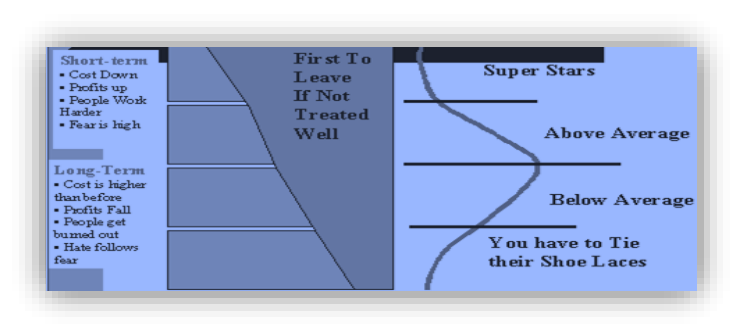
Fig 1.4 Craig Stevens First to leave model
The model refers to the fact that in the modern economic market the management is the problem in decreasing performance and profits therefore a series of organisational changes must be implemented. When such drastic measures are called for the high management level employees will first leave the organisation. The immediate effect will be panic at the management level workforce level with even more people leaving the company. The chart above illustrates how the high performing employees leaving first, consequently, are creating a huge talent loss for the company, a terrible damage in terms of skilled and talented people. (Westbrookstevens.com, 2015)
Critical Analyses about Retention Policies
Around the world social realities have different impacts on talent retention. In USA, the withdrawal from the workforce market of the Baby Boomer generation created a limitless number of open positions. In Europe, the cause was slightly different, low birth rate faced the economy with a huge wave of open jobs and an aged workforce. Talented, skilled and young workforce is hard to reach in Europe. The demand is higher than the offer.
Of course, managing talent is different in the business environment, the chosen strategies are various but suitable from one continent to another. In USA, the credit crunch crisis forced managers to develop a performance oriented work philosophy to increase effectiveness and production. Europe on the other hand is challenged to provide talent management solutions for retiring employees to diminish the loss of knowledge, capability and skills. (Huntley, 2008)
Benefits, Reward and Motivation
The findings of the CIPD and National Training Award investigations mentioned above can help to answer the question. Both studies suggest that individuals place great emphasis on financial reward when looking for a new job so that in the event an individual should receive more than one job offer it is very likely that this will opt for the one associated with the most generous reward package. Financial reward would clearly be in this case the ‘motive’ for an individual accepting an employment offer or the motive for deciding amongst several offers which one to accept. But can benefits and reward be considered effective motivators in the workplace?
As a rule, completely underestimating the effect and significance of financial reward would represent a massive blunder; not only during periods characterised by predominantly grim financial and economic conditions. Financial reward never is completely irrelevant; as suggested by the Hertzberg’s two-factor theory (1957), it is not a motivator on its own, but an inadequate and insufficient financial reward package is extremely likely to produce demotivating effects. (Longo, 2011)
Benefits, Reward and Engagement

Taking into consideration the concept of engagement as defined by the US Conference Board and the British IES, benefits or strategic benefits how referred to by Hemsley (2011), should be regarded as useful to retain employees and to keep these committed to an organisation; safe in the knowledge that committed individuals are not necessarily engaged individuals. This approach, notwithstanding, can be considered debatable in that whether an individual has decided to leave his/her current employer and has actively started to seek another job, it is hardly believable that such a decision have been made because of the weakness of the benefits package offered by the current employer, unless the organisation is offering overall financial reward packages completely unaligned with the local labour market. In general, such decisions are indeed based on well-different grounds. Whether to perform well individuals need a job giving them a feeling of usefulness, autonomy, involvement and growth it is unlikely that these may exhibit discretionary behaviour by a more considerable financial reward package; which after a while would be considered as normal and justified irrespective of their performance. (Longo, 2011)
Benefits, Reward and Commitment
It could be contended that to some extent benefits and reward may help employers to retain employees. Taking as axiomatic that, when seeking for a new job, individuals only care about financial reward, it would really make no sense leaving the current employer for a new one offering a reward package similar to that which they already receive. Under similar circumstances individuals would possibly opt to better remain with the current employer. Yet, employees know how things go within their current organisation (which could sometimes be just the reason why individuals decide to leave), but they surely know little or nothing about how things would go once having eventually joined a new organisation; things may potentially go worse. Generally, unless the worth of the reward package offered by the new employer is remarkably more considerable than the current one, it is unlikely that an individual might decide to leave an organisation for joining a different one exclusively because financial-reward-related reasons.
The benefits package offered by an employer may hence reveal to be useful to retain its employees, but it sorely depends on the different circumstances so that the effectiveness of benefits packages as a certain means to retain staff remains questionable. In contrast, as confirmed by the CIPD and the National Training Awards investigations, benefits packages can reveal to be useful for businesses which want to attract new talents from the exogenous environment. Claiming that reward packages may reveal to be useful to attract new staff, but can produce limited effects, if any, to retain existing staff may sound contradictory. The different role which benefits packages can play depends indeed on the overall reward package offered by an employer. Whether, for instance, an individual should receive in addition to pay only a daily luncheon voucher, the offer of a similar financial reward package enriched by a company car, a housing allowance and a complementary pension scheme could make a world of difference. (Longo, 2011).
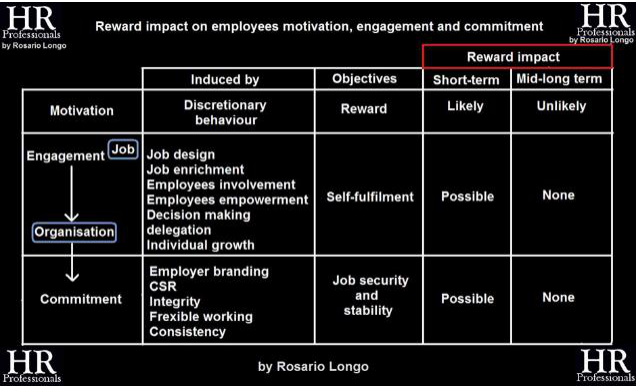
Be proud to be part of an organisation, rather than of another, very much depends on these factors; believing that a person may feel gratified to work for an employer only for the financial reward packages this offers, would represent a massive blunder (Longo, 2011).
The Influence of Exogenous Environment
The reason for jobseekers’ preference having shifted from ‘increase job satisfaction’ to ‘increase salary/benefits’ when looking for a new job, can very likely be explained by the deterioration of employee standard of living at large. The same study suggests that only 7 percent of the respondents reported that their standard of living has improved, whilst 56 percent said that it has remained the same and 36 percent reported a worsening situation (CIPD, 2011).
The grim financial exogenous context can clearly make a negative impact on the employees’ mood and sometimes, albeit inadvertently, these could bring with them to work their personal problems and feelings. This occurrence may clearly affect their level of performance; the employer’s support can hence definitely help. Since employees are prone to forget in the long-term what an employer has done for them and to keep, by contrast, long-term memory of any even tiny accident, such a help should absolutely be considered within the array of the initiatives producing short-term effects. Yet, during downturn and slowdown periods it is unlikely that employers may afford extra-budget expenses, but this clearly depends on the different circumstances.
Benefits and salary, as part of a total reward model where the different components of financial and non-financial reward play a coordinated role to implement an organisation’s reward philosophy and strategy, can clearly reveal to be significant contributors to employee engagement, commitment and motivation. To motivate, engage and commit staff employers should develop a plan of action based on the simultaneous implementation of a series of harmonised initiatives basically aiming at offering employees: learning and development opportunities, an appropriate working environment, a fair and equitable pay scheme and a suitable benefits programme, in other words a consistent and well-developed and well-designed total reward scheme, never neglecting that execution invariably is of paramount importance. (Longo, 2011)
How to Develop Employee Retention Strategies
Succeeding in employee retention efforts requires to think about things from the team's point of view. All employees are different, of course, and each has unique desires and goals. However, it is a safe bet to assume that all of them want to know they are being paid at or above market rates and have good benefits. Employee wants to feel that they are appreciated by their employer and treated fairly. They want to be challenged and excited by the job they may asked to do.
An effective employee retention programme addresses these concerns. Nonetheless, it also goes beyond the basics. In fact, efforts should start on a new hire's first day on the job. The training and support business provide from Day One sets the tone for the employee's tenure at the company and boosts job satisfaction. (Robert, 2017)
Ways to improve staff retention
By adopting a mix of the following methods, you should see an improved staff retention rate, some recommendations are as follows:.
- Ensure those being recruited have a realistic idea of what the job entails.
- Improved career development opportunities.
- Effective appraisals.
- Strong diversity policies.
- A practicable means of dealing with bullying.
- A good work/life balance.
- A mechanism for staff to register dissatisfaction, whether it be appraisals, grievance proceeding and so on.
- Leadership training for managers.
- Competitive benefits package that fits your employees’ needs
- Open communication between employees and management.
- Employee development programmes
- Hire a suitable human-resources professional.
Conclusion and Recommendations
Employee retention techniques go a long way in motivating the employees for them to enjoy their work and avoid changing jobs frequently. Likewise, other secrets are hiring the most suitable employees, training and education opportunities in staff, maintaining a good and effective communication and company transparent policy. The HR department must take the initiative to discuss the several issues disturbing an employee and try to sort it out as soon as possible. An organisation must work hard towards retaining those who really are important for the organisation. Likewise, an ethical dimension of person-organisation fit may go some way in explaining superior acquisition and retention of staff by those who are attracted to specific organisations by levels of corporate social performance consonant with their ethical expectations, or who remain with them by better personal ethical fits with extant organisational ethical values.
Every area of the employer-employee relationship in an organisation deserves employer’s attention. Embrace these key strategies to improve your organisation's employee retention and boost employee satisfaction:
On-boarding and orientation - Every new hire should be set up for success from the very start, from the first day of work to the first week and beyond. The job orientation is just one component of on-boarding, which can last for weeks or months, depending on your organisation. Aim to develop an on-boarding process where new staff members not only learn about the job but also the company culture and how they can contribute and thrive, with ongoing discussions, goals and opportunities to address questions and issues as they arrive.
Mentorship programs - Pairing a new employee with a mentor is a great idea for on-boarding. New team members can learn the ropes from a veteran with a wealth of resources, and the new hire offers a fresh viewpoint to experienced staff. Mentors shouldn't be work supervisors, but they can offer guidance and be a sounding board for newcomers, welcoming them into the company culture.
Employee compensation – It is essential in this competitive labour market for company to offer attractive compensation packages. That includes salaries, of course, but also bonuses, paid time off, health benefits, retirement plans and all the other perks that can distinguish one workplace from another. Every employee should have a full understanding of all the benefits they receive from your organisation.
Recognition and rewards systems - Every person wants to feel appreciated for what they do. Make it a habit to thank your direct reports when they go the extra mile, whether it's with a sincere email, a gift card or an extra day off. Show your employees you appreciate them, and share how their hard work helps the organisation. Some companies set up rewards systems that incentivise great ideas and innovation, but you can institute recognition programs even on a small team with a small budget.
Work-life balance - What message is your company culture sending? If staff are expected to regularly work long hours and be at your beck and call, you'll likely run into issues with employee retention. Burnout is very real. A healthy work-life balance is essential, and people need to know that management understands its importance. Encourage staff to take vacation time, and if late nights are necessary to wrap up a project, see if you can offer late arrivals or an extra day off to compensate and increase job satisfaction. Many companies offer telecommuting or flexible schedules to improve work-life balance for their employees.
Training and development - In any position and industry, professionals want the possibility for advancement. Smart managers invest in their workers' professional development and seek opportunities for them to grow. Ask each of your direct reports about their short- and long-term goals to determine how you can help achieve them. Some companies pay for employees to attend conferences or industry events each year, or provide tuition reimbursement or continuing education training.
Communication and feedback - Keeping open lines of communication is essential for employee retention. Your direct reports should feel that they can come to you with ideas, questions and concerns, and likewise, they expect you to be honest and open with them about improvements they need to make in their own performance. Make sure you connect with each staff member on a regular basis — don't let issues build up for the annual review.
Dealing with change - Every workplace must deal with unpleasant changes occasionally, and the staff looks to leadership for reassurance. If your organisation is going through a merger, layoffs or other big changes, keep your staff informed as much as you can to avoid feeding the rumour mill. Make big announcements face to face, and make sure you allow time for their questions.
Fostering teamwork When people work together, they can achieve more than they would have individually. Foster a culture of collaboration that accommodates individuals' working styles and lets their talents shine. Do this by clarifying team objectives, business goals and roles, and encouraging everyone to contribute ideas and solutions.
References
- Armstrong, M. and Armstrong, M. (2001). A handbook of human resource management practice.8-th edition London: Kogan Page
- Branham, L. (2005). The 7 hidden reasons employees leave. New York: American Management Association.
- Crowther, D., Lancaster, G. and Lancaster, G. (2009). Research methods, Amsterdam: Butterworth-Heinemann.
- CIPD-(http://www.cipd.co.uk/hr-resources/factsheets/retention-hr-records.aspx, accessed on 15/05/2015)
- CIPD- (http://www.cipd.co.uk/hr-resources/factsheets/employee-turnover-retention.aspx, accessed on 15/05/2015)
- CIPD- (http://www.cipd.co.uk/hr-topics/retention-turnover.aspx, accessed on 15/05/2015)
- Dawson, C. (2009). Introduction to research methods, Oxford: How To Books
- Longo, R., (2011). Employees’ motivation, engagement and commitment, can benefits packages help? HR Professionals, [online]
- Murray, R. (2011). How to write a thesis, Maidenhead: Open University Press
- Mondaq.com, (2015). Five Top Employee Retention Strategies - Strategy - UK [online] (available on: www.mondaq.com/x/155322/Five+Top+Employee+Retention+Strategies, accessed on 16/05/2015)
- MSG Experts (2017). How to Retain the Best Employee, Management Study Guide (http://www.managementstudyguide.com/employee-retention.htm, accessed on 8/12/2017)
- Robert Half (2017). Effective Employee Retention Strategies [https://www.roberthalf.com/blog/management-tips/effective-employee-retention-strategies, accessed on 25/08/2017]
- Torrington, D., Hall, L. and Torrington, D. (2008). Human resource management, 7th edition, London: Prentice Hall Europe.
- Taylor, S. (2008). People Resourcing (4th ed.), Staff Turnover and Retention (pp. 431-452) London: Chartered Institute of Personnel and Development.
- Westbrookstevens.com (2015). People in the Drivers of Change Model [online] available on: www.westbrookstevens.com/people.htm (accessed on 16/05/2015)
Notes
49. Bangabandhu Sheikh Mujibur Rahman Science and Technology University; all correspondence to taslim.ahammad@gmail.com
50. Fellow of Bangladesh University of Professionals; all correspondence to naim.jnu.bb@gmail.com
How to cite
Ahammad, T. and Naim, J. (2017) ‘Reflections on Consulting Staff Retention Policy’, Journal of Contemporary Development & Management Studies, 5(2), pp. 166–173.
Converted from the printed issue (vol05-no2-2017.pdf, PDF pages 90–97). The PDF is the version of record.