Abstract
Healthcare-seeking behaviour among people with disabilities in low- and middle-income countries remains insufficiently understood, particularly in contexts where biomedical, traditional and religious systems of care coexist. This study examines how people with disabilities in Bangladesh navigate formal and informal healthcare sectors before reaching specialised rehabilitation services. A sequential exploratory mixed-methods design was employed. Qualitative data were collected through in-depth interviews with 12 individuals with disabilities and four caregivers of children with disabilities, together with one focus group discussion with five individuals with disabilities. These findings informed a cross-sectional survey of 100 participants, comprised of people with disabilities and caregivers of children with cerebral palsy attending the Centre for the Rehabilitation of the Paralysed in Savar, Dhaka. Qualitative data were analysed thematically, and quantitative data were analysed using descriptive statistics, Chi-square tests and Fisher’s exact tests. Most participants initiated some form of treatment promptly after recognising illness; yet access to appropriate rehabilitation was often substantially delayed. Care pathways were dynamic and pluralistic: 82% of participants used both formal and informal sectors, and 36% used both concurrently. Healthcare-seeking decisions were shaped by illness interpretation, the influence of close kin, perceived treatment failure, gendered constraints and weak referral systems. Supernatural explanations of illness were significantly associated with informal healthcare utilisation. The findings suggest that delayed rehabilitation should not be understood simply as individual delay, but as the cumulative outcome of iterative therapeutic pathways produced through the interaction of cultural meanings, social relations and fragmented health-system responses. Disability-inclusive health systems require earlier referral, decentralised rehabilitation and culturally competent communication with patients and families.
Keywords
healthcare-seeking behaviourdisabilitymedical pluralismrehabilitationBangladesh
Introduction
Disability is a major public health, development and equity issue. The World Health Organization (WHO) estimates that 1.3 billion people, or around 16% of the global population, experience significant disability (WHO, 2022). Earlier estimates from the World Report on Disability placed global disability prevalence at approximately 15%, while also highlighting the disproportionate burden experienced in low- and middle-income countries (WHO and World Bank, 2011). Disability is closely linked to poverty, social exclusion and reduced access to education, employment and healthcare. A systematic review by Banks, Kuper and Polack (2017) found strong evidence of an association between disability and economic poverty across low- and middle-income countries, suggesting a mutually reinforcing relationship in which poverty increases the risk of disability and disability increases the risk of poverty. In Bangladesh, disability must be understood within a broader context of poverty, uneven service distribution, limited rehabilitation provision and socio-cultural interpretations of illness and impairment. Estimating disability prevalence remains challenging because disability measurement varies across surveys, definitions and data collection tools (Mont, 2007; Mitra, et al. 2021). However, there is broad agreement that people with disabilities in Bangladesh, as in many other low- and middle-income countries, face barriers to timely, appropriate and affordable healthcare. These barriers include cost, limited availability of specialist services, inadequate referral pathways, physical inaccessibility, stigma and poor communication with providers (Bright, et al. 2018; Hashemi, et al. 2022).
Healthcare-seeking behaviour provides a useful lens through which to understand how people interpret illness, evaluate treatment options and move through healthcare systems. In pluralistic health systems such as Bangladesh, individuals may seek care from multiple therapeutic sectors, including biomedical practitioners, hospitals, traditional healers, religious healers, homeopaths and informal providers. Medical pluralism is not merely the coexistence of multiple forms of care; it also refers to the ways people actively move between these sectors, often combining them in response to illness severity, perceived efficacy, cost, trust, accessibility and social advice (Leslie, 1980; Sudhinaraset, et al. 2013).
For people with disabling conditions, healthcare-seeking behaviour may be particularly complex. Conditions such as stroke, spinal cord injury and cerebral palsy may involve sudden or poorly understood symptoms, long-term functional limitations and uncertain expectations about recovery. Families may therefore move repeatedly between providers in search of a cure, an explanation or hope. Existing healthcare-seeking literature in Bangladesh and other low- and middle-income contexts has often focused on general illness, maternal health or acute conditions, with less attention to disability-specific trajectories. Evidence on access to healthcare for people with disabilities shows that they experience interacting barriers across attitudinal, informational, logistical and service-availability domains (Bright, et al. 2018; Hashemi, et al. 2022), but less is known about how these barriers shape sequential and concurrent movement between formal and informal care before accessing specialised rehabilitation.
This study addresses that gap by examining the healthcare-seeking behaviour of people with disabling conditions attending a specialised rehabilitation centre in Dhaka, Bangladesh. Specifically, the study explores patterns of healthcare utilisation, sequences of care, determinants of treatment choice and transitions between formal and informal sectors. The paper is theoretically informed by Kleinman’s explanatory model of illness, which emphasises culturally shaped understandings of illness causation and treatment through medical pluralism, by explaining how people move between multiple therapeutic systems within the same health context (Kleinman, 1980; Leslie, 1980; Sudhinaraset, et al. 2013). The contribution of the paper is to extend these frameworks to disability-related healthcare-seeking by showing that pathways to rehabilitation are not only pluralistic, but also iterative, relational and temporally prolonged. The study uses the term iterative therapeutic pathways to describe repeated and non-linear movement across care sectors, shaped by changing illness interpretations, family decision-making, perceived treatment failure and fragmented referral arrangements. It argues that delayed access to rehabilitation is not simply the result of individual delay or lack of knowledge, but emerges from the interaction between cultural interpretation, social relations and health-system fragmentation. In doing so, the paper contributes to medical pluralism scholarship by showing that, in the context of disabling conditions, pluralistic healthcare-seeking is not merely a matter of choosing between therapeutic systems, but a temporally extended process in which families repeatedly re-evaluate illness in terms of meaning, treatment efficacy and hope for recovery.
Methods
Study design
This study adopted a sequential exploratory mixed-methods design, in which qualitative data collection and analysis preceded and informed the development of the quantitative instrument. This design was appropriate because healthcare-seeking behaviour among people with disabling conditions remains under-researched in Bangladesh, and initial qualitative exploration was needed to identify locally meaningful categories, experiences and pathways. The qualitative component explored lived experiences, illness interpretation and treatment trajectories, while the quantitative component examined patterns and associations in healthcare-seeking behaviour (Creswell and Clark, 2018).
Study setting
The study was conducted at the Centre for the Rehabilitation of the Paralysed (CRP) in Savar, Dhaka, Bangladesh. CRP is a specialised rehabilitation facility providing multidisciplinary services for people with disabilities, including physiotherapy, occupational therapy and social reintegration support. As a referral centre serving people from different geographical and socio-economic backgrounds, CRP provided an appropriate setting to examine how people with disabling conditions reach specialised rehabilitation after navigating other forms of care. The facility-based design means that the study captures the experiences of people who reached CRP, rather than the experiences of all people with disabilities in Bangladesh, including those who never reach specialised rehabilitation.
Study population and sampling
The study population comprised people with disabling conditions (spinal cord injury and stroke) and caregivers of children with cerebral palsy attending CRP for treatment and rehabilitation. Individuals requiring emergency care and those unwilling to participate were excluded.
For the qualitative component, purposive sampling was used to ensure variation by gender, age, socio-economic background and type of disability. Twelve in-depth interviews were conducted with participants or caregivers, including people with spinal cord injury, people with stroke and mothers of children with cerebral palsy. One focus group discussion was also conducted with five men with spinal cord injury to explore collective experiences and shared interpretations of healthcare-seeking. Sampling continued until no substantially new themes were emerging from the qualitative interviews, consistent with the principle of thematic saturation (Guest, Bunce and Johnson, 2006).
For the quantitative component, a cross-sectional survey was conducted with 100 participants, including people with spinal cord injury, stroke, and caregivers of children with cerebral palsy. Random sampling was used for participants with spinal cord injury where feasible, while participants with cerebral palsy and stroke were recruited consecutively due to service access patterns. This pragmatic approach reflects the constraints of facility-based research in low-resource rehabilitation settings. Because participants were recruited from a specialised rehabilitation centre, the sample should be interpreted as representing people who successfully reached rehabilitation services, not the wider population of people with disabilities who may remain outside such services.
Data collection
Data were collected through a triangulated approach comprising one focus group discussion, in-depth interviews and a structured survey. The focus group discussion was conducted first and informed the development of the interview guide. Semi-structured interviews then explored illness recognition, treatment choices, family influence, transitions between providers, costs and pathways to CRP. Interviews were conducted in Bangla at times and locations convenient to participants within the CRP setting. Interviews and discussions were documented through detailed field notes and subsequently transcribed verbatim. Transcripts were reviewed for completeness and, where feasible, validated with participants.
The survey questionnaire was developed from the qualitative findings to ensure contextual relevance. It included structured and semi-structured questions on socio-demographic characteristics, diagnosis, treatment options used, sequence of care, reasons for selecting providers, costs, family influence and time taken to reach rehabilitation. The questionnaire was pre-tested and refined before administration. Trained research assistants administered the survey under the supervision of the principal investigator.
Data analysis
Qualitative data were analysed using thematic content analysis. Transcripts were read repeatedly to achieve immersion in the data. Codes were developed to capture treatment choices, illness interpretations, social influence, provider experiences, referral pathways and expectations of cure or rehabilitation. Codes were then grouped into broader categories and interpreted in relation to the social and cultural context of healthcare-seeking behaviour. This approach was informed by interpretive qualitative analysis, which emphasises the meaning of action within context (Dey, 1993).
Quantitative data were analysed using descriptive and inferential statistics. Frequencies and percentages were calculated for socio-demographic variables, treatment options and reported reasons for healthcare-seeking. Associations between healthcare-seeking behaviours and explanatory variables, including gender, diagnosis, education, residence, perceived economic status and perceived cause of disability, were examined using Chi-square tests or Fisher’s exact tests where appropriate. A p-value of <0.05 was considered statistically significant. Data were analysed using SPSS version 14.
Integration occurred at both instrument development and interpretation stages. Qualitative findings informed the survey instrument, while quantitative patterns were interpreted in light of interview and focus group data. For example, statistical associations between supernatural attribution and informal care use were interpreted alongside qualitative accounts of how families explained illness causation and evaluated treatment options. Similarly, quantitative findings on limited physiotherapy access were interpreted in relation to interview accounts describing weak referral, unclear communication and repeated movement between providers. This enabled the study to combine numerical patterns with contextual explanations of why participants moved between providers and sectors.
No multivariable modelling was conducted. The statistical analysis therefore identifies bivariate associations rather than independent predictors or causal relationships. This limitation is considered in the interpretation of findings.
Ethical considerations
Ethical approval was obtained from the BRAC James P Grant School of Public Health and from CRP. Informed verbal consent was obtained from all participants, with study procedures explained in Bangla. Participation was voluntary, and participants were informed of their right to withdraw at any time without consequence. Confidentiality was maintained through the use of pseudonyms and secure storage of field notes and transcripts. Where participants had communication difficulties or where children with cerebral palsy were involved, caregivers were interviewed as appropriate.
Results
The results are presented by integrating quantitative patterns with qualitative interpretation. Survey findings describe the distribution of healthcare-seeking practices and associated factors, while qualitative accounts are used to interpret the social and cultural mechanisms underlying these patterns. The analysis therefore does not treat the qualitative and quantitative components as separate datasets, but as complementary evidence for understanding healthcare pathways.
Sample characteristics
The study included 100 participants, comprising individuals with disabling conditions and caregivers of children with cerebral palsy attending the Centre for the Rehabilitation of the Paralysed (CRP). Participants were drawn from 36 districts across Bangladesh, reflecting broad geographical representation among those who accessed CRP services.
As shown in Table 1, the sample was predominantly male (83%) and rural (69%). Over half (56%) had been primary earning members prior to disability, indicating substantial socio-economic disruption. The age distribution was concentrated among economically productive adults (20–57 years: 56%), alongside a substantial proportion of children (30%), primarily those with cerebral palsy.
Participants were socio-economically disadvantaged. Most were engaged in manual labour, service work or agriculture prior to disability, and household income levels were low. Among households reporting income (n=84), the median monthly income was BDT 3,500 (146.14 PPP dollars), with 75% earning BDT 5,000 (208.77 PPP Dollars) or less, while 16% reported no current income. These characteristics indicate a population facing significant financial vulnerability, likely shaping healthcare access and decision-making.
Overall, the sample represents a socio-economically disadvantaged group of rehabilitation users, characterised by rural residence, reliance on manual occupations and limited financial resources. Because all participants had reached CRP, the sample should not be interpreted as representative of all people with disabilities in Bangladesh.
Table 1. Socio-demographic characteristics of participants (n=100)
| Variable | Category | %/Stat | Variable | Category | %/Stat |
|---|---|---|---|---|---|
| Age group | ≤12 years | 30 | Education (n=70*) | None | 24 |
| 13–19 years | 7 | Primary | 20 | ||
| 20–57 years | 56 | Secondary | 30 | ||
| >57 years | 7 | Higher secondary | 16 | ||
| Gender | Male | 83 | Bachelor+ | 10 | |
| Female | 17 | Occupation (n=70*) | Manual labour | 31 | |
| Diagnosis | Spinal cord injury | 42 | Service | 21 | |
| Stroke | 28 | Farmer | 13 | ||
| Cerebral palsy | 30 | Small business | 10 | ||
| Role before disability | Earning member | 56 | Housewife | 11 | |
| Housewife | 3 | Student | 7 | ||
| Dependent | 41 | Other | 7 | ||
| Residence | Rural | 69 | Key earner education (n=68†) | None | 22 |
| Urban | 31 | Primary | 19 | ||
| Religion | Muslim | 91 | SSC | 37 | |
| Hindu | 8 | HSC | 13 | ||
| Christian | 1 | Bachelor+ | 9 | ||
| Perceived economic status | Poor | 31 | Key earner occupation (n=68†) | Manual labour | 28 |
| Non-poor | 69 | Service | 28 | ||
| Household monthly income (BDT) (n=84‡) | Mean | 5435.7 | Farmer | 19 | |
| Median | 3500 | Small business | 16 | ||
| Other | 9 |
*CP excluded; † no additional earner; ‡ 16% no income.
Illness recognition, care initiation and financial burden
Most participants initiated some form of treatment promptly after recognising illness, with 83% seeking care within 24 hours. However, prompt initiation did not necessarily mean timely access to appropriate care. Qualitative accounts suggested that recognition of disabling conditions could itself be delayed, particularly in children with cerebral palsy. Families often interpreted early signs through non-biomedical explanations, and some reported that providers did not adequately explain the nature or prognosis of the condition. Thus, delay was not located only at the point of deciding whether to seek care, but also in recognising the condition and being directed towards appropriate rehabilitation.
Healthcare financing imposed a substantial burden. Participants used multiple sources to pay for treatment, including current income, savings, loans, sale of assets and support from relatives. The median expenditure on treatment was BDT 50,000 (2,087.7 PPP dollars), with some participants reporting substantially higher costs. Qualitative narratives indicated that families were often willing to incur severe financial hardship in pursuit of cure, particularly when prognosis was unclear and social expectations of recovery remained strong.
These findings suggest a distinction between early care initiation and timely access to appropriate rehabilitation. Most participants were not delaying care in the sense of doing nothing; rather, many entered a sequence of treatment attempts that did not immediately connect them to rehabilitation.
Patterns of healthcare utilisation: medical pluralism
Participants reported extensive engagement with both formal and informal healthcare providers prior to admission for rehabilitation (Table 2). Within the informal sector, treatment from traditional healers (kabiraj) (60%) and religious venues (57%) was highly prevalent, while a smaller proportion engaged in self-care (9%).
In parallel, utilisation of the formal sector was widespread, particularly independent allopathic practitioners (92%) and government hospitals (64%), followed by private clinics (44%). Access to rehabilitation-related services remained limited, with only 26% of participants reporting physiotherapy use prior to admission. Homeopathic treatment was also utilised by a minority (19%).
Importantly, healthcare utilisation was not confined to a single sector. A substantial majority of participants (82%) reported using both formal and informal healthcare systems at some point, while over one-third (36%) engaged with both concurrently (Table 2). These findings demonstrate a pronounced pattern of medical pluralism, characterised by overlapping, sequential and sometimes simultaneous engagement across multiple therapeutic systems. Qualitative accounts helped explain this pattern: participants and families often moved between providers when recovery was slower than expected, when explanations were unclear, or when relatives and neighbours recommended alternative options.
Table 2. Utilisation of formal and informal healthcare sectors prior to admission to CRP (n = 100)
| Healthcare sector | Treatment modality | % of participants |
|---|---|---|
| Informal sector | Kabiraj (traditional healer) | 60 |
| Religious venue (spiritual healing) | 57 | |
| Self-care | 9 | |
| Formal sector | Allopathic practitioner | 92 |
| Government hospital | 64 | |
| Private clinic/hospital | 44 | |
| Physiotherapy services | 26 | |
| Homeopathic practitioner | 19 | |
| Cross-sector utilization | Used both formal and informal sectors | 82 |
| Concurrent use of formal and informal care | 36 |
Note: Multiple responses were allowed.
Determinants of healthcare-seeking behaviour
Healthcare-seeking behaviour was shaped by a dynamic interaction between illness interpretation, family and community influence, perceived treatment effectiveness, cost, access and referral practices. Across all treatment modalities, the influence of close kin emerged as one of the most consistent determinants (52–90%) (Table 3). Illness causation was also central: biomedical interpretations tended to direct participants towards formal care, whereas spiritual or supernatural explanations were strongly associated with informal care.
Self-care was uncommon (9%) and was primarily associated with the perception that the illness was not serious (67%) and with suggestions from close kin (78%). This pattern reflects initial misrecognition of illness severity rather than deliberate avoidance of care. Participants who were not earning members of the household were more likely to report self-care than earning members (p = 0.041), suggesting that social role within the household may influence early care decisions.
Use of kabiraj (60%) was shaped by close kin advice (90%), perceived effectiveness (68%) and beliefs in spiritual or supernatural causation (64%) (Table 3). Kabiraj use was significantly associated with gender (p = 0.039), diagnosis (p = 0.009) and supernatural illness causation (p = 0.003). Qualitative findings indicated that conditions with less visible or less clearly understood biomedical causes—particularly cerebral palsy and stroke—were more likely to be interpreted through supernatural frameworks, whereas traumatic conditions such as spinal cord injury were more readily understood in biomedical terms. This integration of statistical and qualitative evidence indicates that informal care use was not simply a matter of low formal-service access, but was embedded in explanatory models of illness and family interpretation.
Religious healing (57%) was similarly driven by religious belief (88%) and close kin influence (53%), with additional contributions from perceived spiritual causation (21%) (Table 3). Its use was significantly associated with gender (p = 0.047) and diagnosis (p = 0.033), suggesting that engagement with religious care is shaped both by social norms and by the perceived nature of the condition. These findings indicate that informal care forms part of a culturally embedded therapeutic system rather than functioning as a simple alternative to biomedical care.
Formal healthcare utilisation was widespread. Independent allopathic practitioners were the most frequently used providers (92%), driven by perceived effectiveness (79%), close kin advice (72%) and perceived severity (44%). Notably, no significant socio-demographic predictors were identified for allopathic practitioner use, suggesting that this form of care was broadly used across population groups. However, access to higher-level formal care was more socially differentiated. Use of private clinics or hospitals (44%) was significantly associated with diagnosis (p = 0.001), urban residence (p = 0.001) and higher education (p = 0.020), and was driven by perceptions of better service quality (55%) and provider referral (36%). Government hospital utilisation (64%) was significantly associated with diagnosis (p = 0.002), with individuals with spinal cord injury more likely to access these services. Participants reported choosing government facilities due to accessibility (42%), referral (39%) and lower cost (16%), although qualitative findings highlighted dissatisfaction with service quality in some cases.
Homeopathic treatment (19%) was influenced by perceived effectiveness (68%) and close kin advice (63%), and was more commonly used for children, particularly those with cerebral palsy (Table 3). This pattern reflects caregiver perceptions that homeopathic medicines are milder and more suitable for children. Statistically, homeopathy use was significantly associated with diagnosis (p = 0.002) and education of the key earning family member (p = 0.036).
Access to rehabilitation-related care prior to admission to CRP was limited. Only 26% of participants had accessed physiotherapy, and this was overwhelmingly driven by referral from doctors or healthcare facilities (92%) (Table 3). Physiotherapy use was significantly associated with diagnosis (p < 0.001), with children with cerebral palsy more likely to receive such care. This indicates that rehabilitation services were not routinely integrated into earlier stages of care and were typically accessed only after prolonged engagement with other providers. Qualitative accounts suggested that participants often encountered formal providers without receiving clear explanation or timely referral to rehabilitation.
Taken together, these findings demonstrate that healthcare-seeking behaviour was not determined by a single factor but emerged from the interaction of explanatory models of illness, social influence, prior treatment experience and structural features of the health system. These mechanisms are synthesised in Table 3 and further illustrated in Figure 1, which shows how illness interpretation and family influence shape entry into formal or informal care, while perceived treatment failure, search for cure and social recommendation drive movement between sectors before eventual access to specialised rehabilitation.
Table 3. Key determinants of selected health-seeking behaviours
| Health-seeking behaviour | Main reported determinants (% of respondents) | Significant associations |
|---|---|---|
| Self-care | Close kin advice (78%); illness perceived as negligible (67%); lower cost (11%) | Previous household role (p = 0.041) |
| Kabiraj / traditional healer | Close kin advice (90%); perceived effectiveness (68%); spiritual/supernatural causation (64%); low cost (5%) | Gender (p = 0.039); diagnosis (p = 0.009); supernatural causation (p = 0.003) |
| Religious healing | Religious belief (88%); close kin advice (53%); perceived effectiveness (22%); spiritual causation (21%) | Gender (p = 0.047); diagnosis (p = 0.033) |
| Homeopathy | Perceived effectiveness (68%); close kin advice (63%); easy access (21%); low cost (5%) | Diagnosis (p = 0.002); key family earner’s education (p = 0.036) |
| Allopathic practitioner | Perceived effectiveness (79%); close kin advice (72%); perceived severity (44%); prior treatment failure (14%) | No significant socio-demographic association identified |
| Private clinic / hospital | Perceived good service (55%); close kin advice (52%); referral (36%); easy access (30%) | Diagnosis (p = 0.001); residence (p = 0.001); education (p = 0.020) |
| Government hospital | Close kin advice (59%); easy access (42%); referral (39%); perceived good service (25%); low cost (16%) | Diagnosis (p = 0.002) |
| Physiotherapy | Referral from provider (92%); close kin advice (12%); prior treatment failure (12%); perceived effectiveness (8%) | Diagnosis (p < 0.001); previous household role (p < 0.001) |
Note: Multiple responses were allowed.
Determinants of initial treatment choice
Initial treatment choice reflected illness interpretation and family-level decision-making rather than structural access factors alone (Table 4).
Participants who attributed their condition to biomedical causes were significantly more likely to initiate care within the formal sector (p < 0.001), particularly when these interpretations were shared by close kin. Conversely, spiritual or supernatural interpretations were associated with initial use of informal care.
Diagnosis influenced entry pathways (p = 0.014), with traumatic conditions more likely to be interpreted biomedically. Previous household role was also significant (p = 0.004), with earning members more likely to initiate formal care.
These findings suggest that entry into the health system is governed by collective interpretation of illness, rather than socio-demographic position alone. However, because these are bivariate associations, they should not be interpreted as independent predictors.
Table 4. Determinants of initial treatment choice (formal vs informal first contact)
| Determinant | Association with initial treatment choice | p-value |
|---|---|---|
| Perceived biomedical causation (patient) | ↑ Likelihood of formal care as first option | p < 0.001 |
| Perceived biomedical causation (close kin) | ↑ Likelihood of formal care as first option | p < 0.001 |
| Diagnosis | Variation by condition (SCI → formal; CP/stroke → mixed/informal) | p = 0.014 |
| Previous household role | Earning members → more likely formal; non-earning → more likely informal/self-care | p = 0.004 |
| Gender | No significant association | NS |
| Education | No significant association | NS |
| Residence (rural/urban) | No significant association | NS |
| Perceived economic status | No significant association | NS |
Note: Associations based on Chi-square and Fisher’s exact tests, as appropriate. NS indicates non-significant (p > 0.05).
Care pathways and sectoral movement
Analysis of treatment sequences revealed that healthcare-seeking behaviour was highly dynamic and iterative. Although a majority of participants initiated care within the formal healthcare sector, many subsequently transitioned to informal providers before eventually accessing specialised rehabilitation services. This pattern indicates that initial engagement with biomedical care did not necessarily result in sustained utilisation or timely access to appropriate services.
Movement between formal and informal sectors was not unidirectional. Participants frequently navigated back and forth between these sectors, often simultaneously, reflecting ongoing uncertainty and the search for effective treatment. These transitions were shaped by illness interpretations, social influence and prior treatment experiences. This pattern is best understood as an iterative therapeutic pathway: participants did not simply move from no care to formal care to rehabilitation, but cycled through multiple systems as explanations, expectations and assessments of treatment effectiveness changed.
Figure 1 synthesises these pathways, illustrating how illness recognition is mediated through explanatory models (Kleinman, 1980), which guide entry into either formal (biomedical) or informal (spiritual/supernatural) care. The figure further highlights the iterative nature of movement between sectors and the key drivers underpinning these transitions, including search for cure, perceived treatment failure and influence of close kin.
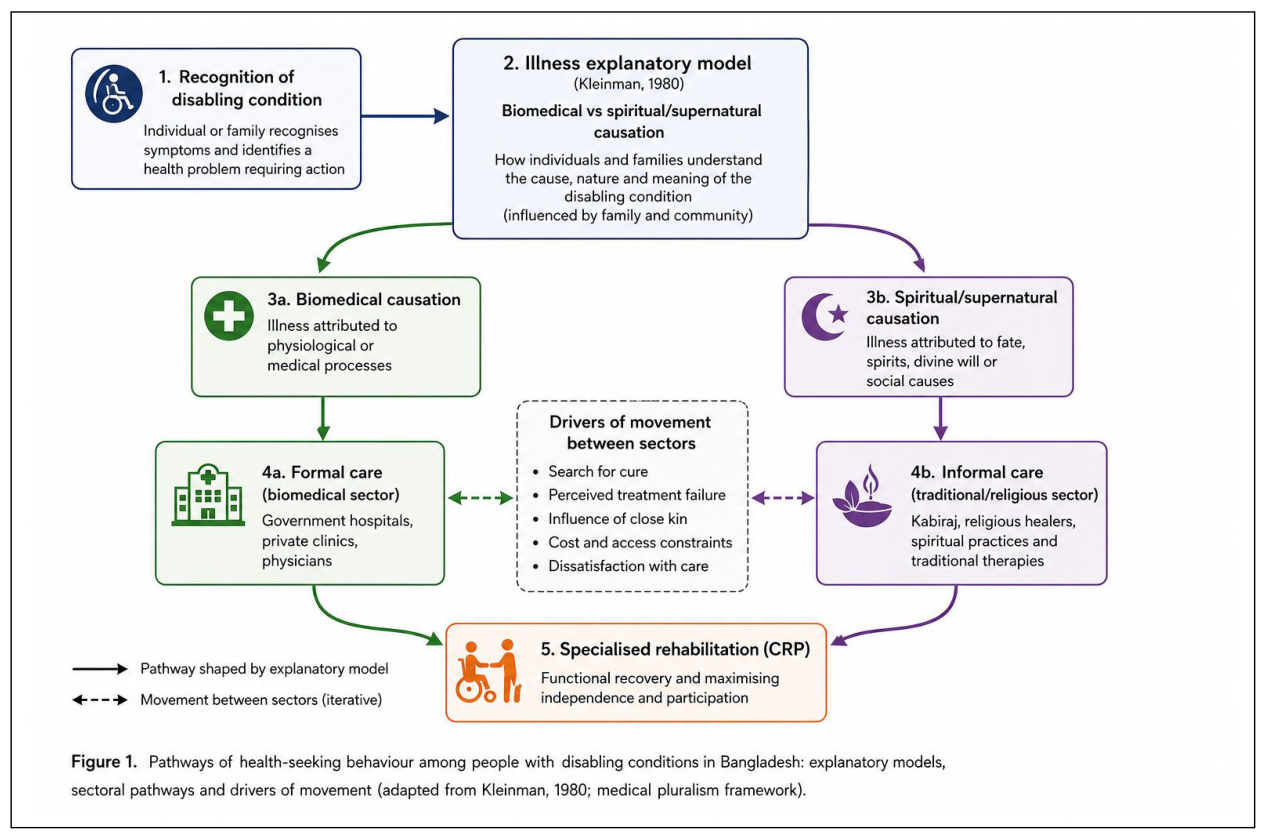
Figure 1. Pathways of health-seeking behaviour among people with disabling conditions in Bangladesh: explanatory models, sectoral pathways and drivers of movement (adapted from Kleinman, 1980; medical pluralism framework).
Delayed access to appropriate healthcare
Despite early initiation of some form of care, many participants experienced prolonged delays before reaching appropriate rehabilitation. More than half reported delays exceeding three months. Participant accounts suggest gaps in referral and communication, limited awareness of specialised rehabilitation, and continued engagement with multiple providers, all of which appeared to prolong access to rehabilitation. These delays increased financial burdens and prolonged uncertainty for families.
The findings suggest that delay should be understood in three interrelated ways. First, there may be delays in recognising a condition as requiring biomedical or rehabilitative intervention, particularly when symptoms are gradual, ambiguous or interpreted through supernatural explanations. Second, there may be delays in accessing appropriate care, where treatment is sought promptly but does not address rehabilitation needs. Third, there may be delays in referral, where contact with formal healthcare does not lead to timely direction towards rehabilitation. This distinction is important because the data show that most participants were not inactive; rather, they were active care-seekers within a fragmented and pluralistic system.
Discussion
This study contributes to the literature on healthcare-seeking behaviour in low- and middle-income countries by showing that people with disabling conditions are not passive recipients of care, but active navigators of complex, socially embedded and pluralistic health systems. The key finding is not simply that participants delayed care. Rather, most initiated treatment rapidly after recognising illness, but their subsequent pathways were prolonged, iterative and often poorly aligned with appropriate rehabilitation. This shifts the analytical focus from individual delay to the wider problem of misalignment between illness trajectories, social interpretation and health-system responsiveness.
The findings are usefully interpreted through Kleinman’s explanatory model of illness, which emphasises that patients and families interpret illness through culturally situated understandings of causation, severity, prognosis and appropriate treatment (Kleinman, 1980). In this study, explanatory models were not fixed. They changed over time as participants encountered different providers, received conflicting advice, experienced treatment failure and were influenced by close kin and community members. Biomedical explanations often supported entry into formal care, whereas supernatural or spiritual explanations, including beliefs such as batash laga, were associated with traditional healers and religious venues. This shows that care-seeking cannot be adequately understood as a simple matter of knowledge deficit. Rather, people acted within locally meaningful systems of interpretation while also responding to the practical limitations of health-system encounters.
The study also demonstrates the continuing relevance of medical pluralism, while extending it in the context of disability-related rehabilitation. Participants did not treat biomedical, traditional and religious care as mutually exclusive. Instead, they moved across these sectors sequentially and sometimes simultaneously. This finding is consistent with classic work on medical pluralism (Leslie, 1980), but also with more recent empirical work showing that therapeutic itineraries in pluralistic settings are shaped by perceived efficacy, access, trust, illness severity and social recommendation (Sudhinaraset, et al. 2013; Sundararajan, et al. 2020). The additional contribution of this study is to show that, for disabling conditions, pluralistic care-seeking is often temporally extended and repeatedly reworked. The concept of iterative therapeutic pathways captures this process: families moved between providers not as a single choice between systems, but as an ongoing response to uncertainty, unsatisfactory explanations, high expectations of cure and limited access to rehabilitation.
A central contribution of the study is that early formal-sector contact did not ensure appropriate care. Most participants accessed what they perceived to be formal healthcare, but many were not referred promptly to rehabilitation. Participant accounts suggest gaps in referral pathways, patient–provider communication and availability of rehabilitation services, which may have contributed to repeated movement between providers. This aligns with global evidence that people with disabilities face interacting barriers to healthcare, including informational, attitudinal, logistical and service-availability barriers (Bright et al., 2018; Hashemi et al., 2022). WHO similarly argues that health inequities for people with disabilities are generated by health-system barriers, including inaccessible services, inadequate provider training, poor coordination and exclusion from health planning (WHO, 2022). The findings therefore support a structural interpretation, although this must be stated cautiously. Because the study is based on patient and caregiver accounts rather than provider- or system-level data, it indicates perceived and experienced fragmentation rather than directly measuring health-system performance.
The role of close kin was particularly important. Decisions about care were rarely individualised; they were negotiated within families and communities. Close kin shaped the interpretation of symptoms, recommended providers, financed treatment and influenced transitions between formal and informal sectors. This challenges individualistic models of healthcare-seeking behaviour and supports a more relational understanding of care. In contexts of uncertainty, family and community networks can provide emotional, informational and financial support. However, when biomedical communication is weak, these same networks may reinforce supernatural explanations or prolong engagement with ineffective treatment. The issue is therefore not whether family influence is beneficial or harmful, but how it interacts with uncertainty, trust and the quality of formal healthcare encounters.
Gendered patterns in the findings also require sociological interpretation. Women were more likely to use traditional healers, whereas men were more likely to use religious venues. This may reflect gendered differences in mobility, financial autonomy, social prioritisation of illness and acceptability of travelling to providers outside the home. Prior research from Bangladesh has shown that gender, poverty and social position shape healthcare-seeking behaviour and access to care (Ahmed, et al. 2000). In disability contexts, these inequalities may be compounded, as women with disabling conditions may face both gendered devaluation and disability-related exclusion. Disability-related healthcare-seeking should therefore be analysed not only through service access, but also through intersecting social relations of gender, dependency, mobility and household decision-making. However, given the small number of female participants in this study, these gendered interpretations should be treated as suggestive rather than definitive.
The findings further highlight the marginal position of rehabilitation within the wider health system. Despite extensive use of biomedical services, only a minority of participants had accessed physiotherapy before admission to CRP. This suggests that rehabilitation was not sufficiently integrated into earlier points of care for many participants. Recent evidence indicates that people with disabilities continue to face substantial inequities in access to general healthcare and rehabilitation services across income settings (Gréaux et al., 2023; Kuper et al., 2024). The World Health Assembly resolution WHA76.6 calls for rehabilitation to be expanded and integrated into health systems as part of universal health coverage (WHO, 2023). The present findings provide empirical support for this policy agenda by showing how delayed referral and limited early rehabilitation access may contribute to prolonged therapeutic wandering, unnecessary expenditure and delayed functional support.
Another important finding is the transformation of expectations over time. Many participants initially sought a complete cure, and this expectation drove repeated provider-switching. However, after engagement with specialised rehabilitation, expectations shifted towards maximising independence and learning to live with impairment. This shift reflects a reconfiguration of illness meaning through interaction with rehabilitation professionals. It also shows the importance of communication in shaping realistic expectations. Evidence on patient–clinician communication suggests that effective communication can influence understanding, trust, adherence and health outcomes (Street, et al. 2009). In this study, weak communication earlier in the pathway appears to have created a vacuum in which alternative explanations and repeated provider-switching became more likely.
The implications are both cultural and structural. Interventions should not simply attempt to replace local beliefs with biomedical information. Such approaches risk misunderstanding the social logic of pluralistic care-seeking. Instead, disability-inclusive health systems should combine culturally competent communication with practical referral mechanisms. Providers need to explain diagnosis, prognosis and rehabilitation options clearly and early. Referral systems should be standardised so that people with stroke, spinal cord injury and cerebral palsy are directed promptly to appropriate rehabilitation. Rehabilitation should also be decentralised beyond specialist centres and integrated into district-level and primary healthcare systems.
This study has limitations. As participants were recruited from a specialised rehabilitation centre, the findings may not represent people with disabling conditions who never reach such services. This is not a minor limitation; the study captures the experiences of people who successfully reached rehabilitation, and therefore may underestimate barriers among those who remain outside specialised care. Recall bias is possible because participants reconstructed past treatment pathways retrospectively. In addition, the boundaries between formal and informal care were sometimes blurred, particularly where participants perceived providers as formal even if their qualifications were uncertain. The quantitative analysis was limited to descriptive and bivariate statistics; without multivariable analysis, the study cannot establish independent predictors of care-seeking behaviour or control for confounding. The study also did not include provider interviews or health-system data; so claims about referral weakness and service fragmentation are based on participant experience rather than direct assessment of provider practices. Nevertheless, the mixed-methods design, inclusion of participants from 36 districts and integration of qualitative and quantitative evidence provide a nuanced account of care-seeking trajectories among people who reached specialised rehabilitation.
This case study indicates that healthcare-seeking behaviour among people with disabling conditions in Bangladesh is dynamic, relational and pluralistic. Participants moved across care sectors not because they were passive or irrational, but because they were attempting to make sense of disabling conditions in the context of uncertainty, social pressure and limited rehabilitation access. For health systems, the challenge is not simply to increase service use, but to ensure that early contact with care leads to timely, coordinated and disability-appropriate rehabilitation. This requires a shift from individualised explanations of health-seeking behaviour towards a broader analysis of how cultural meanings, social relations and health-system structures jointly produce pathways to care.
Conclusion
This study demonstrates that people with disabling conditions and their caregivers in Bangladesh actively seek care across multiple therapeutic systems, but they often experience delayed access to appropriate rehabilitation. The findings show that care pathways are shaped by explanatory models of illness, social influence, gendered constraints, perceived treatment failure and fragmented referral systems. The paper contributes to medical pluralism scholarship by conceptualising disability-related healthcare-seeking as an iterative therapeutic pathway rather than a linear sequence of treatment decisions. For disability-inclusive health systems, improving outcomes requires more than increasing formal healthcare contact. It requires ensuring that early contact leads to appropriate explanation, referral and rehabilitation. Policies should prioritise decentralised rehabilitation services, provider training in disability and communication, and culturally competent engagement with families and communities.
References
- Ahmed, S.M., et al. (2000). Gender, socioeconomic development and health-seeking behaviour in Bangladesh. Social Science & Medicine, 51(3), 361–371. https://doi.org/10.1016/S0277-9536(99)00461-X
- Banks, L.M., Kuper, H. & Polack, S. (2017). Poverty and disability in low- and middle-income countries: A systematic review. PLOS ONE, 12(12), e0189996. https://doi.org/10.1371/journal.pone.0189996
- Bright, T. & Kuper, H. (2018). A systematic review of access to general healthcare services for people with disabilities in low and middle income countries. International Journal of Environmental Research and Public Health, 15(9) 1879. https://doi.org/10.3390/ijerph15091879
- Creswell, J.W. & Plano Clark, V.L. (2018). Designing and conducting mixed methods research. 3rd edn. Thousand Oaks, CA: Sage.
- Dey, I. (1993). Qualitative data analysis: A user-friendly guide for social scientists. London: Routledge.
- Gréaux, M., et al. (2023). Health equity for persons with disabilities: A global scoping review on barriers and interventions in healthcare services. International Journal for Equity in Health, 22, 236. https://doi.org/10.1186/s12939-023-02035-w
- Guest, G., Bunce, A. & Johnson, L. (2006). How many interviews are enough? An experiment with data saturation and variability. Field Methods, 18(1), 59–82. https://doi.org/10.1177/1525822X05279903
- Hashemi, G., et al. (2022). Barriers to accessing primary healthcare services for people with disabilities in low- and middle-income countries: A meta-synthesis of qualitative studies. Disability and Rehabilitation, 44(8), 1207–1220. https://doi.org/10.1080/09638288.2020.1817984
- Kleinman, A. (1980). Patients and healers in the context of culture: An exploration of the borderland between anthropology, medicine, and psychiatry. Berkeley: University of California Press.
- Kuper, H., et al. (2024). Building disability-inclusive health systems. The Lancet Public Health, 9(5), e316–e325. https://doi.org/10.1016/S2468-2667(24)00042-2
- Leslie, C. (1980). Medical pluralism in world perspective. Social Science & Medicine. Part B: Medical Anthropology, 14B(4), 191–195. https://doi.org/10.1016/0160-7987(80)90044-7
- Mitra, S., et al. (2021). Inclusive statistics: Human development and disability indicators in low- and middle-income countries. Washington, DC: World Bank.
- Mont, D. (2007). Measuring disability prevalence. World Bank Social Protection Discussion Paper No. 0706. Washington, DC: World Bank.
- Street, R.L., et al. (2009). How does communication heal? Pathways linking clinician–patient communication to health outcomes. Patient Education and Counseling, 74(3), 295–301. https://doi.org/10.1016/j.pec.2008.11.015
- Sudhinaraset, et al. (2013). What is the role of informal healthcare providers in developing countries? A systematic review. PLOS ONE, 8(2), e54978. https://doi.org/10.1371/journal.pone.0054978
- Sundararajan, R., et al. (2020). Conceptual model for pluralistic healthcare behaviour: Results from a qualitative study in southwestern Uganda. BMJ Open, 10(4), e033410. https://doi.org/10.1136/bmjopen-2019-033410
- World Health Organization (2022). Global report on health equity for persons with disabilities. Geneva: WHO.
- _____________________ (2023). Strengthening rehabilitation in health systems: WHA76.6. Geneva: WHO.
- World Health Organization and World Bank (2011). World report on disability. Geneva: World Health Organization.
How to cite
Mahmud, I. (2026) ‘Navigating pluralistic health systems: Healthcare-seeking behaviour among people with disabilities in Bangladesh’, Journal of Contemporary Development & Management Studies, 10(2), pp. 25–41.
Converted from the printed issue (vol10-no2-2026.pdf, PDF pages 26–42). The PDF is the version of record.