Abstract
Test results in many lower-income countries in Africa as well as in Latin America show that the percentage of students meeting achievement criteria (however defined) is often 15% or less. World Bank evaluation missions often find public-school students in these countries who cannot read fluently until grades 4-6. Particularly in francophone Africa, cohorts of functionally illiterate students may be graduating. An important reason is wastage of instructional time and limited basic skills practice, particularly in the schools of the poor. They may be open only 70% of the expected days, instructional time may be split to accommodate all who enroll, teachers may be absent 25-30% of the days the schools are open, and significent portion of class time may be spent on copying. When an official language of instruction has complex spelling (e.g. English and French) students may not learn reading well enough in the short class time to learn material in it during primary school. Also, teaching methods may not be very helpful in consolidating the learned material and enabling its use it when needed. The ‘Education for All’ (EFA) initiative includes donor aid to expand access and enable all the world’s children to complete primary school by 2015. But the average brain cannot learn the national curricula in the timeframe that some low-income schools provide. Thus, these schools mainly benefit those who are smarter or better off. Financing gaps for various countries have not been calculated by taking instructional deficiencies into account. To provide basic skills just to 85% of the students, the real costs of EFA may be 4-5 times greater than projected. The donor community should insist on financing country programs that use school time productively and facilitate information processing for the poorest students.
Keywords
accessequal opportunitylow incomepoorPrimary educationsmart
Introduction and context
This article documented the difficulties in 2003 of converting donor funds into usable information in students' brains. The amount of time and information offered in the schools of the poor could only help educate those who had social or mental advantages (Abadzi, 2016). The situation does not seem to have improved appreciably. From 2004-2017, scores of peer-reviewed articles and publications have confirmed the continuing low outcomes of schools in poor countries. Abadzi, who retired from the World Bank in 2013, has also written multiple publications on instructional time loss, teacher neglect of low performers and on the cognitive science applications that may improve learning outcomes for the very poor ³⁰.
Does “Access for All” Give Students Enough Time to Learn?
It is March 2003 in Guinea. The World Bank’s Operations Evaluation Department (OED), a semi-autonomous entity, is evaluating the performance of a completed primary education project, partly through unannounced visits to randomly chosen schools.³⁰ Guinea has been valiantly implementing the international Education for All (EFA) initiative, and in 20 years it has increased enrollments from 35% to about 80%. The country has many languages, so students must master French to learn reading and basic information. However, the donor-financed textbooks have been largely worn-out or stolen, so schools have hardly any left. Due to various problems, new textbooks are not forthcoming. Teachers must write the lesson on the board and students spend most of the class hour copying it. Many only spend five minutes per class hour actually learning something. Though the early grades are often packed with over 70 students, the later graders have 20 or so. Many fourth graders are unable to read fluently, and most sixth graders observed demonstrate no comprehension of what they read. A sample-based learning assessment in 1998 showed fewer than 3% of 6th graders scoring acceptably (Barrier et al., 1998).
It is November 2003 and an OED mission is in Honduras, a country considered ready for the Education for All (EFA) fast-track initiative. This country has had almost universal primary education since 1990 (OED 2003), declining repetition rates, and much teacher training. All children speak Spanish, which has a very simple orthography. Textbooks exist in classes though they are fewer than the students. However, many schools are open for 110 days out of the 200 they should function. In grade 1 rural students typically only read letters and syllables, and many do not become fluent readers until grade 3. Since 81% of the Honduran schools are multi-grade, most students depend on fluent reading to learn while the teacher works with other grades. Yet, many third graders cannot read arithmetic problems well enough to understand them and solve them. In 2002, just 12.6% of students attained mastery (considered 60% of items correct) in reading, math, and science (Secretaría de la Educación, 2002).
The world has made great strides in providing primary education to the poor, and the donor community has financed much of the effort. However, the standardized achievement tests developed in many countries show unbelievably low outcomes.³¹ In Pakistan, only 34% of 11-12 year olds who completed primary school could read with comprehension, and fewer than 20% could write a simple letter. In 22 states of India, the average grade 4 achievement level was 32% in mathematics and science, compared to a pass mark of 35%, and most children must reach grade 5 to be able to read the newspaper (PROBE, 1999). In Zambia only 25% of grade 6 pupils reached the minimum-performance benchmark, and only 2% reached the desirable performance level (Nkamba and Kanyka, 1998); thus 75% of sixth graders may leave primary education functionally illiterate (Watkins, 1999). In Namibia only about 7.6% grade 6 students perform satisfactorily (Menges, 2003), while in Niger only 4% reached the required score of 70%. near roads are often visited, so samples may focus on better-than-average schools.
| Guinea | Uganda | Honduras | |
|---|---|---|---|
| Mastery criterion: | 75% items correct | adequate+, % items correct | 60% items correct |
| Gr. 2 | Gr. 3 (1999) | Gr. 3 | |
| Language (reading) | 15% | 18% | 9.6% |
| Math | 11% | 39% | 15.9 |
| Science | 14.9% | ||
| Gr. 4 | |||
| Language | 10% | ||
| Math | 5% | ||
| Gr. 6 | Gr. 6 (1999) | Gr. 6 | |
| Language | < 3% | 15% | 10.2% |
| Math | < 3% | 42% | 8.2% |
| Science | 17.2% |
Fig. 1. Percentage of students meeting test developers’ criteria
Source: Uganda - National Assessment of Performance in Education, 1999 (cited in OED 2004b)
Student abilities typically show a normal curve distribution, and normally most children should perform satisfactorily in school. In relatively effective schools using a mother tongue, children usually read fluently by the end of grade 1;³² but in poorer countries dealing with linguistic and spelling complexities, most children may read fluently only after three or four years of schooling (PIRLS, 2001)³³. In the African countries where language of instruction is usually French or English, primary-school graduates may merely may puzzle out a few words and be unable to make sense of paragraphs. Adults with five or six years of primary schooling may be functionally illiterate (Bruns, Mingat and Ratakomala, 2003). Overall, it seems that those scoring acceptably in many lower-income countries constitute a small minority of 3-15% of students. It is noteworthy therefore that satisfactory student performance is not something the average students can achieve; it is a privilege of those scoring 1-3 standard deviations above the mean.
Classroom observations make it possible to match empirically test results and student performance. When we watch the children read, it becomes clear that indeed many would not correctly respond to test items, partly because many cannot decode and understand the questions fast enough. But have they had enough reading practice?
Basically students learn what they practice and think about (Doyle, 1983), so the human brain needs time to process and consolidate information. Several studies have shown that exposure to content is a very significant or the most significant predictor of test scores (Fredrick and Walberg, 1980; Walberg 1988, Wang, 1998). Other things being equal, the amount of time students are engaged in learning distinguishes between students who learn a lot about a topic and students who learn little about it. However, the schools that serve the poor often have lower time on task (Taylor et al., 1998). In the US, the schools of the poor have more interruptions and disruptions (Stevens, 1993); students of high socioeconomic status (SES) were found to be engaged 15 minutes per day longer than low SES students in writing, reading, and talking about academics; low SES students would need to attend school 1.5 months during summer break to get an equivalent amount of engaged time (Greenwood, 1991).
Time is not the only variable significantly related to student achievement (Quartarola, 1984); many other variables matter, as shown below. Nevertheless, the amount of time students get to process information emerges as a central concept in the acquisition of basic skills. The limited and inefficiently used time in the schools of the poor is the hallmark of the pedagogy of poverty.
The Evanescent Instructional Time
Education Ministries define the number of days or hours schools should function and teach specific material (Figure 1). Research and school observations suggest that in the schools of the poor time is not spent engaged in learning. Some problems are:
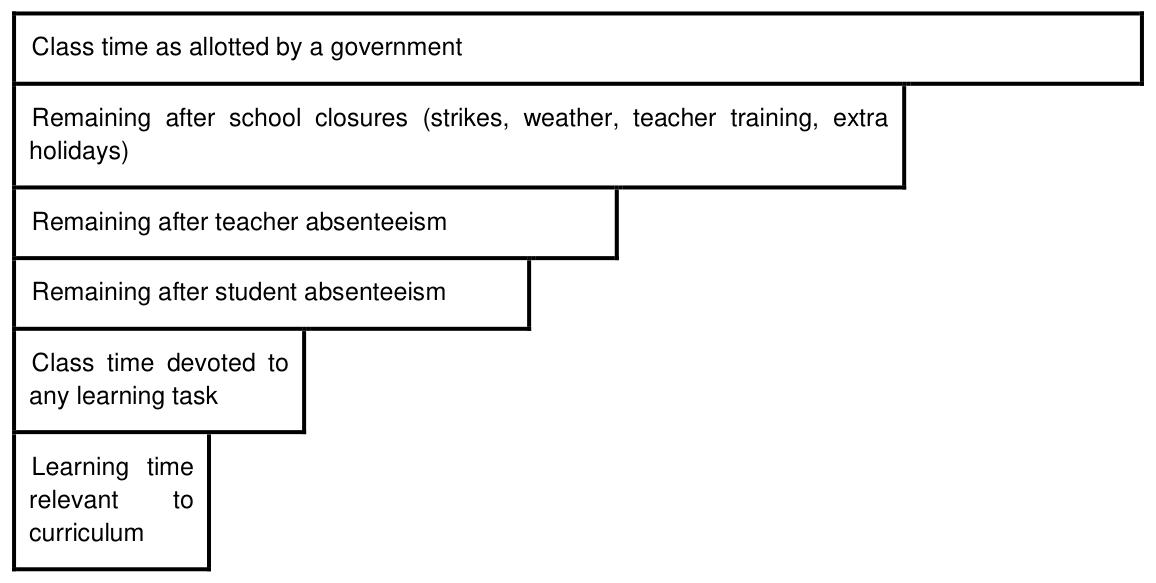
Fig 2. Instructional Time Wastage (modeled from classroom observations)
Schools open fewer than the official number of days.
Nearly all countries expect their schools to be open for a certain number of days, but schools may be open for far fewer (Table 2). Reasons often include strikes, long matriculation periods, teacher training, and climatic conditions. For example, in Mali, schools were found to function 70% of the time they should be (Kim, 1999). In Honduras, schools were open 114 days of the official 200 in 2001 (OED, 2004a). In Bangladesh, some primary schools close for a month at a time to serve as examination centers for older students.
Table 1: Instructional Time Indicators in Basic Education of some Middle East Countries
| Annual no. of hours | Egypt | Lebanon | Morocco | Tunisia | Yemen | Average |
|---|---|---|---|---|---|---|
| Potential time | 1554 | 1050 | 1155 | 950 | 990 | 1140 |
| Official time | 1374 | 728 | 930 | 700 | 828 | 912 |
| Presence time | 1284 | 658 | 875 | 650 | 761 | 845 |
| Actual learning time | 1143 | 581 | 768 | 553 | 649 | 739 |
Sources: Amadio (1997), Millot and Lane (2002)
Fewer class hours to accommodate more students.
EFA creates pressure on educational systems that traditionally had low enrollments or are losing teachers to AIDS. Countries such as Senegal, Guinea, Bangladesh, and Niger may often have over 100 students in class. When it is impossible to hire more teachers, the students and the class time may be split in two. Thus, a school day of five class periods may be reduced to three. In multigrade classes that are common in small rural schools, students share the class but get only a fraction of the teacher’s time. Predictably, split-shift classes have lower test scores. In Guinea, students from such classes scored 3.6 percentage points lower in French and 5.6 points lower in math (Barrier et al., 1998; p. 25, 74-75).
Teacher absenteeism
Studies from India (PROBE, 1999), Indonesia, Nigeria, Zambia, Ghana (EARC, 2003), and Lebanon have shown that teachers are absent 25-30% of the time or work fewer hours (El Hachem,1998). They may also come late or dismiss class early, thus shortening students’ engaged time.
Teacher absence may be due to second jobs, health problems, housework, assignment away from home (therefore travel every weekend and effective teaching for 3-4 days a week), need to collect their salary, training and educational leave. They may also be entitled to lengthy leave periods (such as a total of 1.5 month in Sri Lanka). Schools typically lack resources for substitutes, so classes are either dismissed or are partly attended by other teachers. Unless students can afford tutors, they cannot cover the national curriculum and pass high-stakes examinations.
Student absenteeism
Pupil attendance rates depend on pupils’ opportunities to learn (Fuller et al., 1999). Family issues and a need for children’s labor are important factors (Wolfe and Behrman, 1984; Buchman and Hannum, 2001; Jamison and Lockheed, 1987), but US studies (Stallings1975; 1980; Stallings et al., 1979) suggest student absenteeism may also be due to boredom in classes devoid of materials, and a lack of comprehension by students falling behind. Mistreatment and sexual harassment also affect student attendance, particularly of girls (World Bank, 1996).
Wastage of class time
Students in efficient classrooms may be engaged 90% of the time, but in lower-income countries students may do so only about 25% of the time. Even less time may be spent engaged with material appropriate for students’ level and curriculum. Sometimes there is no class activity. Often one student may solve a problem on the blackboard while others are uninvolved; a teacher may ask questions to just those in the front rows or be satisfied with choral answers of just a few people. Students may do seat work, while teachers grade papers or rest. When textbooks are scarce, teachers may spend much class time writing material on the board for students to copy or dictating the lesson.
Time Use and Information Coding in Students’ Minds
Poorer students must learn a national curriculum in a fraction of the time it was meant to be delivered and usually without coaching classes. How feasible is this undertaking and how effectively can one minute be used? To some extent it depends on the curriculum of different countries and on the mix of teaching activities used. Some create more durable memory tracks than others (Figure 2).
To be remembered, knowledge must be organised
Information is more likely to be retained and recalled if it is organized on the basis of meaning and what students already know rather than given in unrelated pieces. It is also more memorable if it is coded through multiple nerve networks (e.g. visual, auditory, psychomotor) rather than merely heard. Students should “elaborate” the material, that is actively make connections of new material with what they already know. If they merely repeat it verbatim (“maintenance rehearsal”), they may later be able to recognize it or get a vague feeling of familiarity but not recall it (Reisberg, 2001 p. 174).
Or, given children’s facility for memorization, they may be able to reproduce it if given a cue, such as the beginning sentence of a chapter. Also, information is encoded in very specific ways, and it may be hard to retrieve certain items in writing that have been encoded auditorily. All repetition is not bad; plain facts (such as dates) should be memorized, and intermediate operations (such as multiplication tables) should be automatized for faster overall processing. However, to encode anything, students must pay attention to it, and children’s attention is maintained better when activities vary.
Densely seated students in crowded classes who hear teachers lecture with little interaction and variation have limited opportunities for ‘elaborating’, and their attention may wander.
They may repeat verbatim or give standardized answers in chorus to teachers’ questions. Presented thus, all information may not be connected to existing knowledge. It may sound the same to children, so items are not distinctively coded and cannot be easily retrieved later. Particularly hard to retrieve may be the items taught in the middle of a class hour or a day. As a result of instructional inefficiencies, much daily instruction may be lost or coded in inaccessible networks.
Tailoring instruction to the ways people processes information produces better retention.³⁴ Classes that do more reading have better reading scores than classes with more copying and dictation (Fuller et al., 1996). Direct teaching by a teacher may provide the organisational framework children need to attach newly presented concepts. Thus greater amounts of teacher-directed activity (e.g., letter-sound instruction) were found to predict greater growth for low-ability children, while greater amounts of child-directed activity (e.g., sustained silent reading) predict better growth for high-ability children but not for low-ability children (Christian et al., 2000). This finding suggests that directive methods like ‘direct instruction’³⁵ may be more effective for poor children than the discovery-oriented methods predicated by constructivists (e.g. von Glasersfeld, 2001). However, there is limited understanding of these issues as applied to lower-income countries.
Some donor agency staff consider classroom processes a ‘black box’, too unpredictable or individualised for policy dialogue with governments. Unfortunately, much educational financing disappears into this black box.
Instructional languages with orthographic complexities spell trouble
If all students know one language and it has a simple phonetic script (such as Spanish, Romanian, Bahasa, Armenian) basic reading can be taught in a short period of time, and information is imparted in that language. When a different language is used for instruction, students must learn vocabulary, grammar, and spelling before acquiring information in it. Because official languages have often been written for centuries, their spelling may be irregular. For example, children learning to read through English must memorize words spelled unpredictably, even when they do not know their meaning or how to pronounce them. In French they must learn how to deal with dashes, accents, and endings that were significant about 400 years ago. The more complex the spelling, the more reading time students need in order to read effortlessly. Perhaps most of the school time in sub-Saharan Africa is taken up with language and spelling instruction, such as putting the right accents on French.³⁶ (Ironically, African languages tend to be phonetic and very suitable for reading instruction.) Students’ ability to comprehend material taught in a foreign language is more limited than commonly believed; in the US, children taught only in a second language tend to fall behind early and not catch up (Thomas and Collier, 1997). Since instructional time is often limited, students may fail to acquire by the end of primary school the fluency and vocabulary needed to deal with abstract concepts, such as science. Furthermore English (and to a lesser extent French) may bring out reading difficulties in brains susceptible to dyslexia (Paulesu et al., 2001).
Continuing textbook shortages
Despite large-scale financing by the donor community and private-sector involvement, textbook shortages continue in some of the poorer countries. The reasons may involve lengthy procurement, theft, political disagreements, affordability, and government tendencies to skimp on books in order to pay teacher salaries. Where textbooks are sold, they may be unaffordable to the poorest. Thus there may be one text for every 3-4 students and available only during class time. Students may have nothing other than their notes to read at home and thus may read infrequently. In some countries (e.g. Uganda, Kenya, certain states in Brazil) grades 1-2 may not even have assigned textbooks. (Constructivist theory suggests that students should learn from their environment, but poorer students have fewer opportunities.) It is not easy to use time effectively and provide the required amounts of practice when students have limited interaction with texts. Unless they are dyslexic, halting reading performance is the cumulative effect of limited time devoted to reading.
Automatic promotion
This policy, which donors often support, is meant to reduce the high repetition rates that result when students fail to master the expected skills. Research has been ambivalent about its effects. Although children are kept in schools, they go on to higher levels without having mastered the earlier ones and may inhibit the learning of others. Rarely are policies set in place to offer remediation during after-school or vacation hours.
Teacher expectations
Teachers, who have themselves experienced inefficient use of class time as students, may consider students’ low performance to be normal. In interviews during OED missions, teachers often express satisfaction with their students’ levels. In Brazil, where the first four grades form a cycle with nearly automatic promotion, several teachers expressed the view that children have four years to learn to read (OED, 2002). In Honduras, teachers interviewed typically attributed low performance to poverty and malnutrition rather than lack of instruction (OED, 2004a).
Entering grade 1 two years behind
The frequent belief that school performance in many countries has gradually deteriorated may be partly justified; increasingly poorer students enroll worldwide, and they come with developmental delays, health problems, and little home support. With fewer information processing opportunities, low-income first graders may be two grades behind in terms of vocabulary use, complex grammar, reasoning, or psychomotor development. Such children may suffer from cognitive deficiencies as a result of young maternal age, difficult births, low birth weight (St. Sauver, 2001), repeated parasitic infections that reduce cognitive ability (Sternberg et al., 1997), violence (Delaney-Black et al., 2002), exposure to toxins, anemia, or malnutrition, stunted growth (Berkman et al., 2002), low iron (Tamura et al., 2002, Levinger, 1992). Iodine deficiency in areas of heavy rainfall (as in Bangladesh) is associated with reduced intelligence.
Protein-energy malnutrition particularly affects girls’ cognitive functions, such as the ability to learn categories, to process and structure information, to learn and react to social and environmental cues, and to identify and solve relevant problems. The influence of health factors on the ability to process information is complex, but they seem to be a significant problem for the poor.
Preschool programs
These can help prepare children for school but despite efforts to finance early childhood development and kindergartens in many countries, the vast majority of poor children remain unserved.
Some projects have attempted health interventions, such as micronutrients, deworming, and vitamin A, but the health component usually has not worked well. The interface with health agencies is often not smooth, and procurement problems can arise even among donors. Financing school feeding is also often problematic due to logistics and corruption, so this set of potentially very powerful tools of student performance is underused.
Because of developmental delays, young poor children should have longer class hours and receive much stimulation. However, the opposite happens, and in many countries their school days are shorter. Teachers may spend little time with immature children and thus let them fall further behind. Grades 1-2 in effect screen out many children, who drop out by grade 3. Those who survive to later grades are in effect selected, possibly better cared for and more able to perform. But even this select group receives too little time to master the expected skills. In countries such as Niger, Chad, Mali, Guinea, or Uganda, survivors to grade 6 may be products of automatic promotion in foreign-language classes without textbooks, whose time was split in half to accommodate more – whenever schools were open and teachers were there. It takes a genius to learn basic skills under these circumstances.
Financial Simulations for the ‘Black Box’
With instructional time wastage and inefficient teaching methods, beneficiaries are not getting their money’s worth from public schools. However, governments pay for 100% of teachers’ salaries, buildings, and materials, while communities pay with contributions and children’s forgone earnings. Low time use distorts educational finance indicators. If only 15% of available time³⁷ is used for learning in a country and the percentage of GDP devoted to education is 3%, donor community initiatives to increase it to 5% are tantamount to asking for more wastage. The wastage creates more demand for schooling by those who manage to stay in school. Repeaters need more schools and teachers, while promoted students must go on to higher levels of schooling until they learn basic skills. For example, it takes 10 years of basic education in Guinea to get skills sufficient for vocational training (OED, 2003) Time wastage may be one reason why educational expenditures have tripled in the last three decades but student performance has not improved (Hanushek and Kim 1995; Hanushek, 1997).
If basic skills are acquired mainly by students performing one or more standard deviations above the mean, donor funds are mainly helping educate the exceptional students. Is this what EFA donors intended? However, various local benefactors have supported the ‘meritorious poor’ for centuries, there is no need to spend scarce international donor funds for them. Instead, the Education for All initiative should finance the amounts necessary to educate at least the students who have no learning disabilities (although EFA is interpreted to include special education as well). The World Bank has conducted detailed simulations to estimate the financing gaps and amounts needed by various countries. These do not factor in the loss of instructional time or students’ failure to acquire basic skills. Thus, the true costs of providing basic skills to “all” have not been calculated. To offer basic skills just to students scoring 1-2 standard deviations below the mean (about 85% of the area under the normal curve), the real cost might be 3-4 times more than budgeted.
Is the donor community prepared to pay the true cost to educate the average or below-average students? Donors may become discouraged by the real magnitude and difficulty of EFA and divert their funds to more promising sectors. Oxfam International has expressed concern that donors are not keeping their promises and that considerable shortfalls remain for Fast Track Initiative countries.³⁸ To send every child in the world to school, an additional US$5.6 billion may be needed, but this amount does not take into account improvements needed for actual acquisition of basic skills.
“I am not an educator but I think that…”
Why have the donors not pushed for quality as hard as they have pushed for access? Donor staff working in the sector may overestimate human ability to process information. They are often hired for their ability to manage projects or strategize and most have no teaching experience or educational knowledge. In the World Bank, for example, only 20-25% of those working in the sector had any degrees in education in the 1990s (Heyneman, 2003). Bright economists, who have experienced mainly elite schools, may fail to link the test scores found in evaluation reports with observable student behaviors and may focus on provision of access and educational commodities. One manager expressed the belief to an evaluation mission that mere access to school equals poverty alleviation. With limited knowledge of the subject matter, discussions about improving educational quality are vague and focus on ‘best practices’ rather than applicable cognitive or educational research.
Donors have justifiably encouraged countries to administer achievement tests; but if scores fail to show improvement over five years, some staff argue that quality improvement is a long-term process, whose outcomes will surely appear later. Not surprisingly, an evaluation of donor assistance to basic education suggests limited donor effects in improving quality (Joint Evaluation of External Assistance to Basic Education, 2003).
Lack of educational knowledge and limited donor effects echo criticisms that donor agencies are not often held accountable for long-term outcomes or for the effects of misguided recommendations to poor countries (e.g., Heyneman, 2003). For example, the World Bank for years focused on limiting textbook expenditures in the 1970s and 1980s, and generations of students in some countries lost the opportunity to practice reading and learn. With limited comprehension of how learning takes place, economists monitor variables that make sense to them, such as such as internal and external efficiency, macroeconomic indicators, and rates of return. As many authors have shown, these methods and measures have many flaws. Also, pressure to show results may lead to overly optimistic forecasts and avoidance of negative messages.
Some World Bank staff argue that their institution is primarily economic in nature and should not have to provide leadership in classroom-level issues; improving quality should instead be a task for agencies with a broad educational mandate, like UNESCO. However, UNESCO is governed by Ministries of Education and requires considerable consensus from governments to operate. Without large amounts to finance educational projects or programs, UNESCO has limited leverage in policy dialogue, and its activities often lack a clear operational focus. Its employees are well intentioned and motivated, but real experts are few, so UNESCO may lack the know-how to that every child could go to school, which is the equivalent of just three days’ global military spending. However, donors provide only $1.4billion annually. (“Donors at Norway education meeting let down the world’s children.” Press Release, 22 November 2003; http://www.oxfam.org/eng/pr031122\_educ\_norway.h tm) change behaviors in the schools of the poor. Bilateral donors such as USAID offer more technical expertise, but their focus is determined by national political priorities. Other bilaterals may implement excellent projects on a small scale, but their methods are not adopted more widely. The current strategy of providing general budget support may not strengthen quality-oriented interventions. Despite good intentions, therefore, the donor community does not have a clear plan on how to improve the quality of education in countries at risk for missing Education for All.
A Chance for Every Child?
The main book that outlines EFA plans (Bruns et al., 2003) has a very positive title, but in reality some children have an infinitesimally small chance. It seems impossible to have both access and equity for all as outlined in EFA goal no. 4 (text box 1); there is a tradeoff between the two. Countries of traditionally low enrollments have neither the management nor the infrastructure capacity to do much more than rotate students in and out of classroom seats. The poor children who are already in school lose opportunities to learn as their instructional time is cut, classes are inundated by newcomers and repeaters, and teachers are tired from dealing with the crowds in multiple shifts. Those failing to learn under these circumstances may suffer personally and socially if they are perceived as dunces.
Are there benefits to attending school even if students graduate functionally illiterate? Some staff of international organisations consider this a temporarily acceptable outcome. Schools help social relationships, train students to stay quiet and be disciplined, and keep them off the streets. Eventually quality will improve, so presumably, in 20 years one will look back and see the wisdom of the access-first strategy. Since most of the instructional time is wasted however, this optimistic outlook is not exactly justified. It is hard to improve quality of future generations when the future teachers are graduating functionally illiterate. And for how long will cohorts of low-skill graduates be acceptable? 10 years? 15-20 years? Data from Ghana suggest that at least 40 years will pass before student performance returns to the level attained by fewer and better-off students in the 1950s (OED, 2004c; p. 40). What will happen to the cohorts until then? It is unknown whether generations of students in some lower-income countries will keep on going to public schools if they learn to read about as often as they win soccer forecasts. They may lose more than knowledge; they forgo earnings for the years spent in school, so primary education may ultimately have a negative rate of return for them.
Text Box 1: Can “All” Realistically Attain The “Education for All” Goals?
| 1. | Expanding and improving comprehensive early childhood care and education, especially for the most vulnerable and disadvantaged children; |
|---|---|
| 2. | Ensuring that by 2015 all children, particularly girls, children in difficult circumstances, and those belonging to ethnic minorities have access to and complete free and compulsory primary education of good quality; |
| 3. | Ensuring that the learning needs of all young people and adults are met through equitable access; |
| 4. | Achieving a 50% improvement in levels of adult literacy by 2015, especially for women and equitable access to basic and continuing education for all adults; |
| 5. | Eliminating gender disparities in primary and secondary education by 2015, with a focus on ensuring girls full and equal access to basic education of good quality; |
| 6. | Improving all aspects of the quality of education so that recognized and measurable learning outcomes are achieved by all, especially in literacy, numeracy and essential life skills. |
Note: Updated version from the 2001 Dakar Framework for Action.
Applying Learning Research to the Education of the Poor
Monitoring reports admit that Education for All is probably not possible by 2015.³⁹ However, many more students can acquire basic skills than is possible with the ‘default’ level of educational quality, if (a) instructional time is used better, (b) teaching methods are better tailored to the ways brains process information, and if (c) the donor community encourages countries to improve on these issues. The donor community should focus its scarce funds on helping government implement instructional activities that improve basic skills. If countries for various reasons chose not to enforce more effective instruction, they should not receive funds for EFA activities. .
Recent cognitive psychology and brain imaging research (a field called cognitive neuroscience) provide insights and a rationale for pursuing certain strategies. It is now clear, for example, that students must become automatic and effortless readers in order to read large amounts of material; that they must perceive print in ever-increasing chunks. Therefore they cannot be taught without textbooks or reading-to-sound correspondences. One textbook for every three students to be read only in class does not constitute a satisfactory input; every student should have a book to take home for maximized exposure, and the cost will be worth the benefits. This means that donors should not finance the EFA expenses requested by a country that postpones or delays textbook provision, because the funds may not be used effectively.
Research provides guidance for setting behavioral and monitorable goals for effective skills acquisition early on as well as the means to get to them. By the end of grade 1, students should read at least one word per second on average, and their speed should rapidly increase (Barr et al., 2002; Abadzi, 2003a and 2003b).⁴⁰ It is reasonable to demand, even in the schools of the poor, that by the end of grade 2, 85% percent⁴¹ of students in all countries and schools should become automatic readers (e.g. read at least one word per second). Inexpensive computers (such as the Indian Simputer) and technologically advanced toys such as the Leap-Pad⁴² may help reach this goal. They can pair sound and print multiple times and support tired teachers teaching basic skills to populous classes. Bilateral donors could arrange for large-scale pilots of such technologies.
If donor funds are involved, the language of basic-skills instruction should not be merely considered the cultural prerogative of a country. Certainly logistical and political issues are involved in multiple language instruction and cannot always be solved. But if the donors continue to finance situations where poor children must learn a language in order to learn basic information, they risk wasting their money and disappointing constituents on all sides. Mother tongue (or a similar language with simple spelling) should be used at least in the first 2-3 years of schooling. Students should certainly learn the official language, as a second language starting in grade 1. The switch to an official language could be determined through research indicating when students scoring one standard deviation below average acquire fluent reading and sufficient vocabulary in the official language to understand the information provided. Campaigns should inform parents, who often demand foreign-language instruction, of the necessity to learn reading and basic concepts in a mother tongue.
Increasing Instructional Time
The action not to take in most cases is to lobby for longer hours or more school days (Millot, 1994). Instead, the donor community discussing EFA goals with various countries must set time-use goals and finance the actions necessary to attain them. For example, schools should actually operate 95% of the stated number of days, on average; 95% of the teachers should be in school on a given day, and the time engaged in learning in classes should increase to 75% (excluding mindless copying). Since instructional time is a good proxy for achievement, the EFA secretariat should monitor related variables. It could carry out instructional time surveys to monitor changes and provide feedback to schools.⁴³
Actions to increase instructional time include strengthening the supervisory chain from central to regional to school levels, training and feedback to teachers on use of time, and empowering communities to monitor teacher activities (as has been the case in Honduras and El Salvador). The main challenge, however, is negotiations with teacher unions that governments are loath to undertake. Teachers represent a large wage bill for any government, and their strikes cause severe political problems. Unions demanding more benefits may get concessions on leave policies; thus it is possible for teachers to be legally absent from school 1-2 days per month, while there are no substitute teachers.
Part of the problem may lie in the information processing problems of the teaching profession that may require innovative interventions. Teaching and learning require some effort, and everyone is happy to be let off school for the short term. The tasks of teaching are infinite and endless, while apathetic poor children and limited resources may delay reinforcement for teachers. Some teachers become burned out and avoid these tasks, while others, particularly those poorly educated, may be challenged to find answers fast and monitor the assimilation of information they have hardly mastered themselves (such as advanced arithmetic). Formulating differential goals, providing incentives, helping teachers work towards achievable and personally satisfying goals may help increase attendance. More research and thought needs to be given to this issue.
Confronting the Health and Developmental Problems of the Poor
There seems to be an inverse relationship between grade level and expenditures, with the lowest grades getting the fewest resources. But the real obstacles to EFA are found in the lower grades, and the donor community should be prepared to spend extra for early and continuing health interventions (e.g. against diarrheal infections), preschool programs, and remediation after hours or during vacations. Rather than receive fewer hours of instruction, the early primary grades should receive more, particularly when a second language must be learned. The large classes could be assisted by paid aides, who might be older students. Much dropout and repetition can be prevented if young brains are cared for even before grade 1.
It is not possible to rotate students in classroom desks and expect to meet EFA goals. Nor does it make much sense to send even poorer children to school if most current students cannot learn basic skills. Unfortunately, political desirability seems to run ahead of human cognitive processing. Ironically, the donor community buys commodities for students, but has not bought them time to learn. But there are still 11 years left to 2015. The EFA secretariat could calculate scenarios of higher costs and higher efficiency resulting from increased time on task. With attention to how class time is spent, part of the loss can be recuperated. and collaboration with UNESCO’s International Bureau of Education.
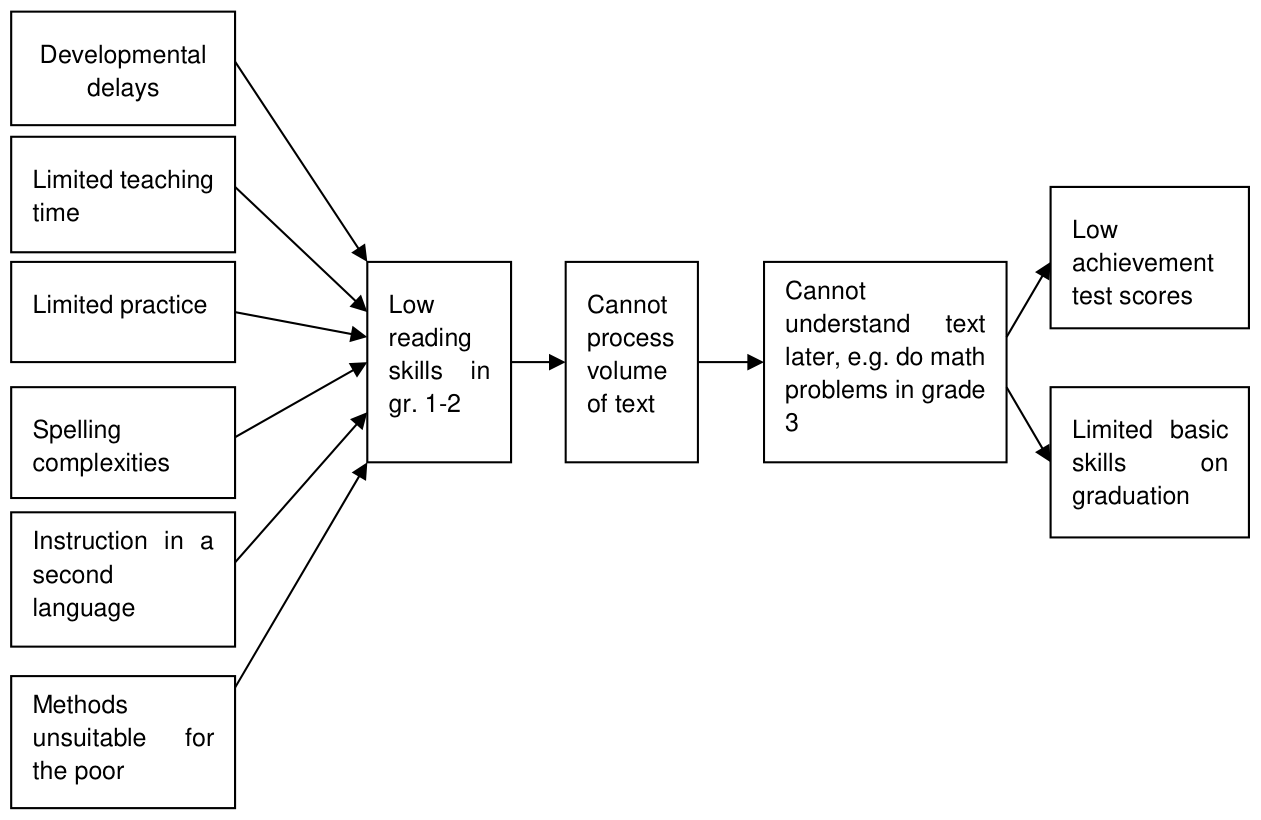
Fig 3: Some Determinants of Educational Outcomes
References
- Abadzi, H. (2003a). “Improving Adult Literacy Outcomes: Lessons from Cognitive Research for Developing Countries”. Operations Evaluation Department. Washington, D.C.: World Bank.
- Abadzi, H. (2003a). “Adult Literacy: A Review of Implementation Experience”. Operations Evaluation Department. Washington, D.C.: World Bank
- Abadzi, H. (2003b). “Teaching Adults to Read Better and Faster: Results from an Experiment in Burkina Faso.” Policy Research Working Paper Series. Washington, D.C.: World Bank.
- Abadzi, H. (2006). “Efficient Learning for the Poor: Insights from the Frontier of Cognitive Neuroscience”. World Bank: Directions in Development.
- Abadzi, Helen. (2007). “Absenteeism and Beyond: Instructional Time Loss and Consequences”. World Bank Policy Research Working Paper Series no. WPS4376
- Abadzi, H. and S. Llambiri. (2011). “Selective teacher attention in lower-income countries: A phenomenon linked to dropout and illiteracy? Prospects, 41:491-506
- Abadzi, H. (2016). “Training the 21st century worker: Facts, fiction and memory illusions”. International Review of Education. 1-26. DOI: 10.1007/s11159-016-9565-6 https://doi.org/10.1007/s11159-016-9565-6
- Abadzi, H. (2017). Turning a molehill into a mountain? Why reading programs are failing the poor worldwide. Prospects, 177.
- Amadio, M. (1997). Primary Education: Length of Studies and Instructional Time. Educational Innovation and Information, 92, 2-7.
- Barr, R., C. Blachowicz, C. Katz, and B. Kaufman. (2002).Reading Diagnosis for Teachers: An Instructional Approach (4th ed.). Boston, MA: Allyn and Bacon.
- Barrier Emilie, Sekou Fernández, Jeannot Saa Tinguiano, Gononan Traore. (1998). Evaluation du Systeme Educatif Guinéen. Centre International d’ Etudes Pédagogiques – Sèvre et Cellule Nationale de Coordination de l’Evaluation du Systeme Educatif – Conakry.
- Berkman, Douglas S., Andres G. Lescano, Robert H. Gilman, Sonia L. Lopez, and Maureen M. Black. (2002). “Effects of stunting, diarrhoeal disease, and parasitic infection during infancy on cognition in late childhood: a follow up study”. The Lancet, February 16. (Johns Hopkins University Bloomberg School of Public Health (http://www.jhsph.edu)
- Bruns, Barbara, Alain Mingat, and Ramahatra Rakotomalala. (2003). Achieving Universal Primary Education by 2015: A Chance for Every Child. Washington, DC: World Bank (Report no. 26605)
- Buchmann, C. and E. Hannum. (2001). “Education and stratification in developing countries: A review of theories and research,” Annual Review of Sociology. 27,.77-103.
- Christian, Kate, Frederick J. Morrison, Julie A. Frazier, and Greta Massetti. (2000). “Specificity in the Nature and Timing of Cognitive Growth in Kindergarten and First Grade”. Journal of Cognition and Development: Volume 1, Number 4, October-December, 429-448.
- Delaney-Black, Virginia et al. (2002). Violence exposure linked to lower IQ in children. Archives of Pediatrics and Adolescent Medicine,156, 280-285.http://archpedi.ama-assn.org/issues/v156n3/abs/poa10277.html (reutershealth.com, March 12, 2002).
- Doyle, W. (1983). Academic Work. Review of Educational Research, 53, 159-200.
- EARC. “Educational Assessment and Research Centre (2003). Teacher Time-on-Task. United States Agency for International Development, Grant No. 641-G-00-03-0055 unpublished report. Accra, Ghana.
- EFA Global Monitoring Report. (2002) Education for All: Is the World on Track? Paris: UNESCO Publishing.
- El Hachem, T. (1998). La gestion du corps enseignant et administratif dans l’enseignement pré-secondaire du secteur public: Aspects du déséquilibre et rationalisation. Beyrouth: Ministère de l’Education Nationale, de la Jeunesse et des Sports.
- Fredrick, W. and Walberg, H. (1980). “Learning as a Function of Time,” Journal of Educational Research, 73, 4, 183-194.
- Fuller, B. Dellagnelo, L, Strath, A, et al. (1999). How to raise children’s early literacy? The influence of family, teacher, and classroom in Northeast Brazil. Comparative Education Review, 43, 1-35.
- Greenwood, C. (1991). “Longitudinal Analysis of Time, Engagement, and Achievement in at-Risk Versus Non-Risk Students.” Exceptional Children. 57, 521-535.
- Hanushek, E. (1997).“The Productivity Collapse in Schools,” in William J. Fowler, Jr. (ed.), Developments in School Finance, 1996 (Washington, D.C.: National Center for Education Statistics, U.S. Department of Education, 1997), 183-195.
- Hanushek, E. and D. Kim (1995).Schooling, Labor Force Quality and Economic Growth, NBER working paper 5399.
- Harris, M. and G. Hatano, (1999) .“Introduction: A Cross-Linguistic Perspective on Learning to Read and Write.” In Harris, M. and G. Hatano (Eds) Learning to Read and Write: A Cross-Linguistic Perspective. Cambridge, U.K:.Cambridge University Press.
- Heyneman, S. (2003). "The History and Problems in the Making of Education Policy at the World Bank: 1960 - 2000". International Journal of Educational Development. 23, 315 - 337.
- Horton, S. and J. Ross. (2003). The economics of iron deficiency. Food Policy 28 (2003) 51–75 (www.elsevier.com/locate/foodpol)
- Jamison D. and Lockheed,M. (1987). “Participation in Schooling: Determinants and Learning Outcomes”. Economic Development and Cultural Change, 35, 279-306.
- Joint Evaluation of External Support to Basic Education in Developing Countries (2003).Local Solutions to Global Challenges: Towards Effective Partnership in Basic Education. Netherlands Ministry of Foreign Affairs.
- Kim, Kyeh. (1999). Comparative Study of Instructional Hours in West Africa. Informal report, World Bank, AFTHR.
- Levinger, B. (1992).Nutrition, Health, and Learning. School Nutrition and Health Network Monograph Series 1. Newton, Mass.: Education Development Center.
- Menges, Werner. (2003). Only One in 14 Grade 6 Pupils Literate, Says UNICEF. The Namibian (Windhoek) December 16 (http://allafrica.com/stories/200312160264.html ).
- Millot, B. (1994). Macroeconomics of Educational Time and Learning,International Encyclopedia of Education, 6(2), 3545-3550.
- Millot, Benoit and Julia Lane. (2002). “The efficient use of time in education.” Education Economics, 10, p. 209-228.
- Nkamba, M. & Kanyka, J. (1998). The quality of primary education some policy suggestions based on a survey of schools. SACMEQ (International Institute for Educational Planning, UNESCO and Ministry of Education Lusaka, Zambia).
- OED (2002). Project Performance Assessment Report. Brazil. Innovations in Basic Education Project (Loan 3375–BR); Second Northeast Basic Education Project (Loan 3604–BR); Third Northeast Basic Education Project (Loan 3663–BR); School Improvement Project—FUNDESCOLA I(Loan 4311–BR). Washington, DC: World Bank, Operations Evaluation Department.
- OED (2003). Project Performance Assessment Report. Guinea. 20 Years of IDA Assistance. Washington, DC: World Bank, Operations Evaluation Department.
- OED. (2004a). Project Performance Assessment Report. Honduras 20 Years Of IDA Assistance. Rural Primary Education Management Project (Ln. 2804) Basic Education (Cr. 2694). Washington, DC: World Bank: Operations Evaluation Department.
- OED. (2004b). Project Performance Assessment Report. Uganda. Primary Education and Teacher Development Project (Credit 2493) and Education Sector Adjustment Credit (Credit 3049). Washington, DC: World Bank: Operations Evaluation Department.
- OED. (2004c). Books, Buildings, and Learning Outcomes. An Impact Evaluation of World Bank Support to Basic Education in Ghana. Washington, DC: World Bank: Operations Evaluation Department.
- Paulesu, E., F. Demonet, F. Fazio, E. McCrory, et al. (2001). “Dyslexia: Cultural Diversity and Biological Unity.” Science (GSCI) 291(n5511): 2165–2167.
- PROBE - Public Report on Basic Education in India, (1999). New Delhi: Oxford University Press.
- Quartarola, B. (1984). A Research paper on Time on Task and the Extended School Day/Year and their Relationship to Improving Student Achievement, Sacramento, CA: Research, Evaluation, and Accreditation Committee, Association of California Administrators (ERIC Document Reproduction Service No. ED 016 890).
- Rao, G. V. L. Narasimha. (1999). Teachers Absenteeism in Primary School : A Field Study in Select Districts of Madhya Pradesh and Uttar Pradesh. New Delhi: District Primary Education Programme.
- Reisberg, D. (2001). Cognition: Exploring the Science of the Mind. (2nd ed.) New York: Norton.
- Royer, J. (1997). “A Cognitive Perspective on the Assessment, Diagnosis, and Remediation of Reading Skills.” In G. Phye (ed.), Handbook of Academic Learning. New York: Academic Press.
- Secretaría de Educación. (2002). Informe Nacional de Rendimiento Académico 2002. Tercero y Sexto Grados. Tegucigalpa, Honduras.
- St. Sauver, Jennifer L. (2001). “Roots of Reading Problems May Differ by Sex.” American Journal of Epidemiology 154:787–794.
- Stallings, J.A. (1975). “Implementation and child effects of teaching practices in follow through classrooms”, Monograph of the Society for Research in Child Development, 40, Serial # 163.
- Stallings, J., Needles, M., & Stayrook, N. (1979). How to change the process of teaching basic skills in secondary schools: Phase II and III. (Final Report for National Institute of Educational.) Menlo Park, CA: SRI International.
- Stallings, Jane. (1980). “Allocated Academic Learning Time Revisited, or Beyond Time on Task,” Educational Researcher, 9, 11-16.
- Sternberg, R., McGrane P., Powell C., Grantham-McGregor, S. (1997). Effects of a parasitic infection on cognitive functioning. Journal of Experimental Psychology: Applied, 3, 67-76.
- Stevens, Floraline E. (1993). “Applying an Opportunity-to-Learn Conceptual Framework to the Investigation of the Effects of Teaching Practices via Secondary Analyses of Multiple-Case-Study Summary Data.” The Journal of Negro Education. Vol. 62, No. 3, Summer 1993, pp. 232–248.
- Taylor, Dianne L., Charles Teddlie, John Freeman, and Mickey Pounders. (1998). “A Child's Day at School: Variations in More and Less Effective Schools in Low- And Middle-Socioeconomic Status Contexts,” Journal of Education for Students Placed At Risk, 3, 115-132.
- Thomas, Wayne P. and Virginia Collier. (1997). School Effectiveness for Language Minority Students (http://www.ncbe.gwu.edu).
- Tsunenobu,Tamura, Robert L. Goldenberg, Jinrong Hou, Kelley E. Johnston, Suzanne P. Cliver, Sharon L. Ramey, Kathleen G. Nelson. (2002). “Cord serum ferritin concentrations and mental and psychomotor development of children at five years of age.” The Journal of Pediatrics,140, 165-170.
- Von Glasersfeld, Ernst. (2001). Radical constructivism and teaching. Prospects. 31, 161-173.
- Walberg, Herbert J. (1988). "Synthesis of Research on Time and Learning." Educational Leadership, 45, 76-85.
- Wang, Jia. (1998). “Opportunity to Learn: The Impacts and Policy Implications,” Educational Evaluation and Policy Analysis 20, 3, 137-156.
- Watkins, Kevin. (1999). Income inequality and education in the UK. Oxfam. www.caa.org.au/oxfam/advocacy/education/report/chapter2-3.html
- Wolfe, B. and J. Behrman. (1984). “Who is Schooled in Developing Countries? The Roles of Income, Parental Schooling, Sex, Residence and Family Size,” Economics of Education Review, 3(3), pp. 231-245.
- World Bank. (1996). Guinea - Beyond Poverty: How Supply Factors Influence Girls' Education in Guinea. Washington, DC. Report No. 14488-GUI.
Notes
²⁸ Dr. Helen Abadzi is an educational psychologist and was the senior evaluation officer at the Operations Evaluation Department of the World Bank. A native of Greece and a polyglot, she is interested in applying the research findings of cognitive neuroscience to improve outcomes in the classrooms of the poor. Dr. Abadzi’s correspondence address is habadzi@gmail.com
²⁹ In private correspondence Dr. Abadzi advises ‘The article provides an outlook of 2003. I wrote it when I was an evaluator at the World Bank and was surprised to find how little of the donor money was getting converted into information in students' brains. Since then, an entire testing industry has arisen to document the poor outcomes. Scores of peer-reviewed articles and publications have confirmed that schools in poor countries teach too little content, so inevitably teachers interact with those few smarter or more privileged children that can learn it with minimal exposure’.
³⁰ OED is a semi-autonomous department of the World Bank that conducts project performance appraisal reviews of many completed projects. Missions that document education project results, typically make unannounced visits to beneficiary schools at random. Due to time limitations, schools near roads are often visited, so samples may focus on better-than-average schools.
³¹ Absolute test scores are not comparable, but one can compare the percentage of students meeting the developers’ criteria, however set.
³² E.g. Italian children achieve near perfect mastery of coding skills around the middle or close to the end of the first grade (Harris and Hatano 1999, p 17). In the US, children need longer to become expert decoders, but they so by grade 4 (Royer 1997).
³³ Project in International Reading Literacy Study (PIRLS). 2001. National Center for Educational Statistics.www.pirls.org; http://nces.ed.gov/surveys/pirls/resources.asp
³⁴ For example, experiments with groups of poor Indian children teaching themselves to use public computers have shown striking results when group interaction is combined with pattern recognition and fine motor coordination, that have not been put sufficiently to educational use. (http://www.niitholeinthewall.com)
³⁵ This method prescribes in considerable detail what teachers say to students and the responses expected; it has raised test scores in the US but is rarely used in other countries (for information see the National Association for Direct Instruction, www.nifdi.org, www.adihome.org)
³⁶ Ideally, instruction in a mother tongue should be used not merely to transition into a foreign language but also to learn the mother tongue.
³⁷ Considering 70% of school days in operation, 75% teacher absenteeism, and about 25% use of class time engaged in learning.
³⁸ According to Oxfam International, in November 2003, Gambia still needed $26.3m, Guyana $27.2, Honduras $60.2m, Mauritania $9.2m, Mozambique $264.2m, Nicaragua $64.1m, Niger $66.8m and Yemen $96m. Without these funds 100 million children lack access to education and another 150 million will be unable to complete primary school. It would take an additional $5.6 billion in aid to ensure that every child could go to school, which is the equivalent of just three days’ global military spending. However, donors provide only $1.4billion annually. (“Donors at Norway education meeting let down the world’s children.” Press Release, 22 November 2003; http://www.oxfam.org/eng/pr031122_educ_norway.htm)
³⁹ Twenty-eight countries are at a high risk of not achieving EFA. These include sub-Saharan Africa and South Asia and cover 25% of the world’s population (EFA Global Monitoring Report, 2002, p. 16).
⁴⁰ Silent reading norms in the United States are: Second grade 60–100 words per minute, third grade 90–120, fourth grade 110–140, fifth grade 140–170, and six grade 160–190 words per minute. Oral reading norm for grade 1 is 30–70 words per minute. (Barr et al. 2002, p. 76)
⁴¹ This percentage roughly covers students with abilities from –1 standard deviation under a normal curve.
⁴² Produced by the US-based Leapfrog (www.leapfrog.com), similarly by Fisher Price (fisher-price.com)
⁴³ Some World Bank staff (including the author) are carrying out research in 2004-2005 on improving time use through a grant from the Dutch government and collaboration with UNESCO’s International Bureau of Education.
How to cite
Abadzi, H. (2017) ‘Education for All or Just for the Smartest Poor?’, Journal of Contemporary Development & Management Studies, 5(1), pp. 40–55.
Converted from the printed issue (vol05-no1-2017.pdf, PDF pages 39–54). The PDF is the version of record.