Abstract
The objective of the study is to understand the ecological consumers’ behaviour and intention in purchasing and consuming of organic food products. The study aims to define the features that influence consumer behaviour towards organic food. As the objective of this study is to provide an overview of consumer behavior towards organic food consumption, a secondary research project has been conducted to investigate the related impact of awareness on health consciousness consumer behaviour specifically on organic food consumption. To identify and recognise the drivers of the demand for ecological food and how these have transformed over time, the study focused on the previous literatures on organic food. The review of studies resulted in defining the features influencing consumer behavior towards organic food. According to the result of the reviewed study, the consumers’ attitude towards purchasing organic food products are strongly influenced by the variables namely Demographic Factors, Knowledge, Health Consciousness, Environmental Concerns, Price, Quality & Test, Government Support & Policy, Availability of the Product, Perceived beliefs & attitudes and Subjective norms. This study suggests that the marketers can develop effective marketing program and strategies to influence consumers positively. Marketers can emphasize the health benefits and quality of organic food which can also make these products easily available to attract consumers to buy. This study provides valuable insight into consumer behaviour regarding organic food by examining the factors that influence consumers’ intention to purchase organic food.
Keywords
Consumer BehaviourConsumer AttitudeOrganic FoodsHealth ConsciousnessEnvironmental concerns
Introduction
Organic food is the food product of the farming system which avoids the use of man-made pesticides; fertilizers; growth regulators and livestock feed additives (Yadav, et al., 2013). The use of GMO (genetically modified organisms) or products produced from or by genetically modified means and radioactivity are generally prohibited by organic legislation (Andersen, et al., 2015). ‘Food which is produced without using conventional pesticides can be considered as organic food. In terms of food that comes from living animals – meat, eggs and dairy products, the animal must not be fed antibiotics or growth hormones’ (Paul & Rana, 2012: 413). Organic agriculture has been adapted since the 1920s, initially in response to the industrialization of agriculture and it has developed from an alternative movement to a key initiative for the agricultural development (Torjusen, et al., 2001).
A consumer is a person who primarily purchases any products or services with the intent to consume. Consumer behaviour mainly defines why and how people purchase consumer goods and services (Khan, 2007). Throughout the world, the awareness and interest in organically produced food has increased among consumers because consumers are becoming increasingly aware of their health and protection of the environment. Awareness of the harmful effects of highly pollutant contaminant food products are growing among consumers, and as an alternative, people are turning towards organic food products (Basha, et al., 2015). Organic food consumption has increased in the world in response to concerns about conventional agricultural practices, food safety and human health concerns, animal welfare considerations and concerns about the environment. This observed organic-focused consumer behaviour led to several classifications of organic consumers, namely environmentalists, food phobic, healthy eaters, humanists and welfare enthusiasts, and hedonists (Yiridoe, et al., 2005). Individuals who take interest in health benefits, taste and protect the environment and rely on improving their lifestyle could be the potential consumers of organic food. Additionally, the consumers are willing to “pay for the privilege of buying green” (Paul & Rana, 2012: 412).
There are many factors that can be included in the list of influences for organic food purchases such as demographic factors, health concerns and lifestyle, environmental care, quality of products, availability and subjective norms on consumers’ intention to purchase the organic food. In the demographic portrayal of consumers, the age, income, education can be considered important for influencing the purchase of organic food.
Most existing research focuses on the significance of demographic factors, but some of the studies have shown contradictory results which indicated that intention to purchase can be slightly affected with age and education level (Yin et al., 2010). Customers are very much concerned about their health and wellbeing and their food choice for staying healthy. Health concerns have influenced consumer attitude towards organic food. Health implications have influenced consumers’ attitude towards organic food and their willingness to pay premium prices (Mohamed et al., 2012). On the other hand, according to Goleman, (2009) throughout the last four decades, a progressive growth in environmental consciousness has developed as the environment moved from an outlying to a mainstream issue. But Paul & Rana, (2012) added that the consumers are worried about the effect of environmental damage on their health and safety. The anxiety of the consumers compelled the marketers to include environment issues in their decision making. The two important attitudes, i.e. confidence in food and health consciousness have emerged as main attractions for the consumers towards organic food.
Availability is also one of the key features which encourages the purchase of organic food, conventional supermarkets have noticed the growing popularity of organic products, and have added organic food to their shelves (Paul & Rana, 2012). In countries where there are significant social interactions, the subjective norms are one of the important factors which influence the customer to purchase certain products; i.e. people tend to follow the reference group, a leader who in turn influences the group towards a certain behaviour and action (Basha, et al., 2015).
The main objective of the study is to determine what motivates the consumer to turn towards organic food products. This study focused on the factors which influence the intention of consumers to purchase organic food. These factors create awareness and develop preferences among consumers which influence the intention of consumers to purchase.
Literature Review
The environmentally friendly products are gaining popularity among consumers who are more aware of their health and protection of the environment. Marketers are also keen to sell the organic goods with the increasing awareness of factors such as environment, naturopathy and green world. Those involved in sales of organic food have to segment their market scientifically in order to maximize the market share (Paul & Rana, 2012).
The area of organic land, the number of organic farmers and the organic market continued to grow in Europe. “In Europe, 11.2 million hectares (EU: 10 million), constituting 2.3 percent (EU: 5.6 percent) of the agricultural area, were under organic management in 2012, an increase of six percent compared to 2011. There were more than 320’000 producers (EU: more than 250’000). The value of the European organic market in 2012 was 22.8 billion Euros (EU: 20.9), and the overall growth rate was approximately six percent” (Willer, 2014). According to “UK Organic Market March 2016” report by Finn Cottle and Cottle Consulting, “The UK organic market has been back to a steady growth since 2012, showing +4% value increases for 2014 and 4.9% for 2015. During the same time period, sales of organic produce have continued to increase in major markets across the world. Notably, the US posted a +11.3% gain in 2014 with organic at almost 5% share of the total food market, whereas it is approximately 1.5% of the UK food market”. This growth rate is expected to continuously rise in the coming years and indicates potential progress for this sector in the future. Specifically, Europe and North America are the two largest markets for organic food in which vast majority of organic products are consumed. However, Asia is considered as a potential market with the highest growth rate per annum (Sheng et al., 2009).
Organic foods are often considered as healthier, more ethical, and tastier than food grown with pesticides. A survey of more than 3,000 shoppers in the United States, United Kingdom, and Australia assessed why people make the choice to buy organic -- or, in some cases, why they did not. The survey results showed that most people bought organic for health reasons in America and Australia, whereas a few people buy organic to ensure improved conditions for farm workers. Consumers in the UK are less likely to buy organic because of the high cost. Concern for environmental safeguarding, taste, and animal welfare fall in the middle (Martinko, 2017). The organic food market has grown significantly over recent years across the world. Several causes have been proposed for this move towards purchasing organic within the literature from studies in the UK, Europe, Australia and America. These include: a concern for health, ethical, moral, political, or religious motives, the quality or safety of conventional food products, environmental consideration, and personal values (Michaelidou & Hassan, 2008).
Consumer Attitude towards Organic Food
The human behaviour is motivated by a set of basic needs and is arranged according to their importance for survival, the most basic needs such as food, water, shelter, and clothing constitute the lowest level of needs hierarchy. These needs must be satisfied before other higher needs become important (Ooi, 2009). The consumers’ attitude and preferences for purchasing of a specific product are based on their attitude and personal desirability of performing behaviour, and the attitude towards certain behaviour is based on the expectations and beliefs of the consequences as a result of a particular behaviour (Chen, 2007).
Previous studies claimed that attitude could be influenced by different factors and have found that health is strongly connected to the concept of organic food and that it is the strongest purchasing motive, while purchasing organic food. Organic foods are also perceived to have better taste than the conventional foods and also perceived to be more environmental-friendly. Numerous studies have acknowledged a clear connection with the importance consumers attach to the environment and their attitude built on organic food products (Aertsens et al., 2009).
The study will determine the factors that influence consumers to purchase organic food in emerging markets using the theory of planned behaviour (TPB) model.
Theory of Planned Behaviour (TPB) Model
The theory of planned behavior (TPB) has been employed in the study to address the research objective. The theory of planned behaviour (TPB) by Ajzen (1991) can be utilised to measure human actions, it can be adapted to predict consumer behaviour. For considerable variance in actual behaviour there are three main determining factors to predict an intention to perform behaviours such as, (1) attitudes, (2) subjective norms and (3) perceived behavioural control. Many studies have shown that this model had been successfully applied to consumer behaviours as well as health behaviours. According to the model, the immediate antecedent of behaviour is the intention to perform the behaviour. Therefore, when the customers have greater intention to engage in behaviour, they are more likely to perform the behaviour (Hossain, & Lim, 2016).
The TPB model can be used to predict the purchasing intentions for organic food since it had been used in many organic studies such as Aertsens, et al in 2009. TPB theory had been proven to provide an outstanding framework in conceptualising, measuring and recognising factors to define the behaviour and behavioural intention (Hossain, & Lim, 2016).
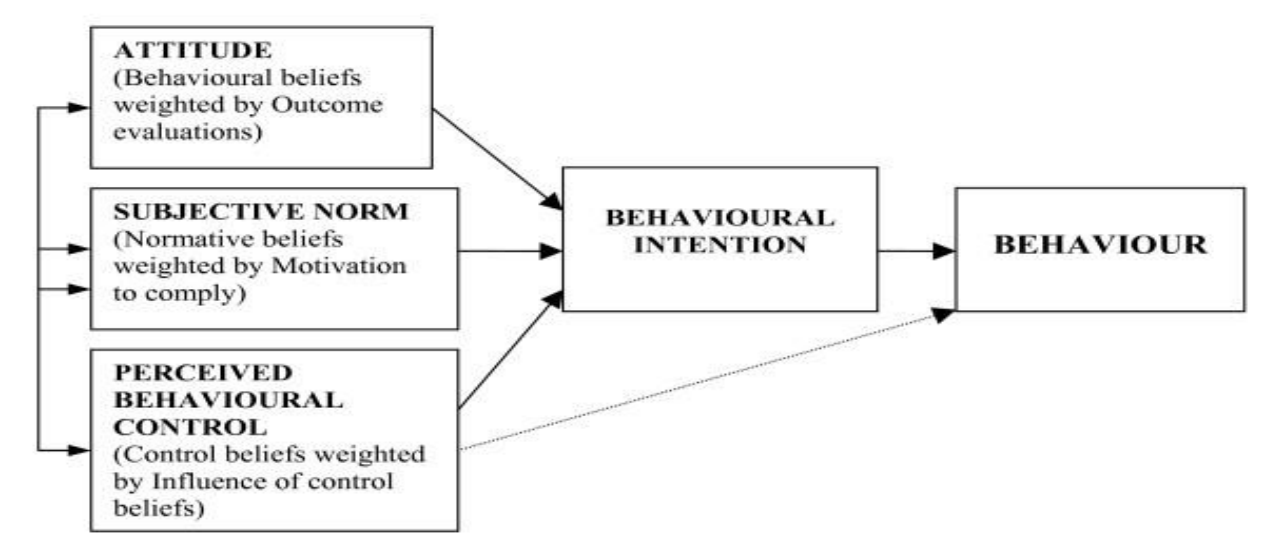
Figure 1: Theory of Planned Behavior (TPB); Ajzen (1991)
The TPB model has been used successfully to predict and explain a wide range of health behaviours and intentions such as drinking, smoking and health services utilisation. Thus, consumer’s buying intention towards organic food can be predicted by adopting the TPB model (Leong, & Ng, 2014).
Factors affecting the consumers’ purchase intentions towards organic food
There are a number of factors that influence customers to purchase organic food. These factors include demographic factors, awareness and knowledge, health concerns and lifestyles, test, environmental concerns, pricing, quality of products, government support and policy, accessibility and availability, perceived beliefs and attitudes, and subjective norms that influence buying intention of organic food. Based on the review of the available body of previous literature and relevant articles, a summary and discussion of the influencing factors on consumer attitude towards organic food consumption have been outlined.
Demographic factors
Women aged 30-45 with children having high disposable income, include organic food in their purchase (Dettmann and Dimitri, 2007). Younger households and females have been found to consider organic food as more important and include it in their purchase (Van Doorn and Verhoef, 2011). “The UK organic consumer has changed over the last decade and a higher percentage of sales are coming from the younger market, the Millennials (aged up to 40). Older, more affluent, shoppers are still estimated to account for just fewer than 50% of the market. This presents an interesting opportunity for organic food. Millennials are much more likely to use technology, they are much more aware of health, they want ‘food on the go’ and they want to be much more informed about food” (UK Organic Market, 2016: 10).
Income
Earning is a factor considered important for influencing the purchase of organic food; higher income families purchase organic produce more often (Loureiro et al., 2001). In both Germany and the United Kingdom, consumer surveys by Booth 1992 and Mintel 1995 showed that the primary reason for purchasing organic food is health and safety concerns, these motives are strongly influenced by the factors such as age and income (Turnbull, 2000).
Purchase of organic food is affected by education. The consumers with higher education are more interested in purchasing organic food than those with less education (Dettmann and Dimitri, 2007). The educated consumers tend to buy more organic products as they are more exposed to health information sources and diet. They are willing to pay for organic products even if it is more expensive compared to non-organic products (Rodriguez, et al., 2006). Some of the previous studies have revealed conflicting results and which indicated that intention to purchase is slightly affected by age and education level (Yin et al., 2010). Dettmann and Dimitri, (2009), also added that women without a college degree and those in higher income brackets were most likely to purchase organic produce (Dettmann and Dimitri, 2009)
Knowledge
Carlson et al., (2009) considered the consumer knowledge as an important aspect of explanation of the consumer decision making. The knowledge can influence the trust level towards the new products in the market because the lack of knowledge always results in low trust in customers about the information they receive. Knowledge is a characteristic that can affect the phases of the decision process and can be related to how much information is being used in making and how consumers evaluate products and services. Adequate knowledge can have a satisfactory impact on food choice by the consumers. The inadequate knowledge about organic products influences organic food purchase and consumption (Hossain, & Lim, 2016). For example, according to Aertsens et al., (2011) the subjective knowledge affects the strength of the attitude towards purchasing organic food and “the transformation of consumers’ attitudes into intention to buy and to actual behavior”. The knowledge is the only instrument that customers have to separate the attributes of organic from conventional products and to form positive attitudes towards these products (Gracia & de Magistris, 2008).
Concern and Lifestyle
The term “Health conscious” defines an attitude in which one has the awareness of the healthiness of one's diet and lifestyle. It includes body weight, fitness, proper abilities in sight and hearing, mental abilities etc. An increasing number of health-conscious consumers are seeking natural, unprocessed foods, including fresh, locally grown produce, eggs, poultry, and meats. Nowadays the consumers are very much concerned about their health and their food choice in order to stay healthy.
There has been an extensive amount of research carried out into the relationship between organic food and health concerns as an influencing factor towards attitudes and intentions to purchase organic food. The overwhelming majority of which find ‘health’ to be one of the primary reasons consumers buy organic foods (Dickieson, et al., (2009). The most recurrent motives for buying organic food is consumers’ perception that organic food is healthy, and also the earlier studies have shown healthiness of organic food is an important buying motive of organic food (Tarkiainen, & Sundqvist, 2005).
Deterioration in human health was the main reason to influence consumers to think about organic food, and on the other side, consumers bought organic food as an investment in good health (Grossman, 1972 cited by Basha, et al., 2015). The nutritive attribute of organic food provided the competitive advantage to organic food over conventionally produced foods (Bourn and Prescott, 2002). The nutritional value is one of the independent variables which affect the decision for purchasing organic food products. The nutritional value of food can be defined as what the food is made of and its impact on the human body. As the organic products are defined as non-chemical, non-pesticides and non-coloring products. It is originally produced and the production process does not involve any of the chemical material (Leong, & Ng, 2014). Leong, & Ng, (2014) also cited from Dauncey, (2002) that the organic products have a better nutritional value and healthier if compared to other non-organic products. About 20 percent of the conventional food is contaminated with chemical pesticides. These toxic contaminants can lead to potential health effects such as cancer and birth defects (Picard, 2002).
According to “UK Organic Market March 2016” reported by Finn Cottle and Cottle Consulting Holland & Barrett is the UK’s leading retailer of vitamins, minerals and herbal have been in operation for over 145 years and are known for providing concise product information to help customers make informed choices about the products they want to include in a nutritional regime – this gives great opportunity to organic brands who operate in the VMS and health food arena. The market size for other independent retailers is approximately £300m, 15% of the overall organic sales in the UK, it is growing at a fast pace approximately 7.5% for 2015. In addition, there are 1000s of UK health food stores, delis, farm shops and farmers markets who are selling a range of organic within their overall selection. Ranges are increasing as health becomes a bigger consumer concern. The organic consumer both the affluent older segment and the ‘millennials’ in the UK has become more obsessed with health and wellbeing.
In conclusion, nutritional value and concerns for a healthier lifestyle are the significant determinants in determining the choice of food and subsequently influence the consumption of organic products (Leong, & Ng, 2014).
Taste
Besides the nutritional value, taste also plays an important role in organic food buying. The organically produced food or products are generally safer, more nutritious, and better tasting than the non-organically produced products (Krystallis & Chryssohoidis, 2005). One of the motivations that motivate consumers to consume in organic products is the belief that it has a superior taste compared to non-organic products (Radman, 2005). According to Leong, & Ng, (2014: 16) even though, ‘one may claim that the taste of a certain thing is a subjective view, it may be different from person to person. It means that if the assumptions underlying the taste of organic products are not supported by scientific findings, it can be irrelevant. Nevertheless, taste still remains a significant determinant in influencing consumer’s decision for consuming organic products’.
Environmental Concerns
The consumers are more involved in organic and environmental friendly related issues, such as environmental protection tend to have a positive attitude towards organic food consumption and strong intention to purchase (Chen, 2007).
The customers who wish to take environmental concerns into consideration buy and consume organic products because the organically produced products are usually safer for the environment. Even in global crisis, consumers who are in the green mindset are willing to spend more on organic products as they want to become more environmentally conscious (Leong, & Ng, 2014).
The environmental concerned consumers understand that the goods that are produced in natural ways do not harm the environment. They also know that by buying and consuming organic foods, they can help to reduce nature contamination, defend the health of soil and water as well as reduce the use of chemical instruments in agriculture activities (Saleki and Seyedsaleki, 2012).
Price and Quality
The price of products had been shown to be a factor that influences demand for organic products (Tshuma, et al., 2010). The Japanese consumers are willing to pay an extra 10 percent for the organic products compared to conventional foods, but they preferred domestic organic products over imported organic products. Price was not considered as a negative factor if consumers perceived that organic foods are more nutritious compared to conventional foods (Kim, et al., 2008). Compared to occasional organic consumers the higher prices of organic foods are mentioned less challenging by the regular consumers (Zanoli & Naspetti, 2002, cited by Hossain, & Lim, 2016).
The quality of product refers to the value for money and generally, the organic consumers are less cost sensitive and more concerned over quality. The analysis by Ozguven, (2012) showed that most of the respondent consumers’ preferred organic milk, fruit and vegetables, and the results revealed that quality and price were found to have a more significant relationship than other factors.
Government support and policy
As a consequence of growing demand for organic products in the market, there is a rising attention from the community as well as the government. The consumers’ attitude towards organic products as well as their purchase intention of organic food products in Taiwan had been affected by government policy (Chen, 2007). The Malaysian government has implemented a few strategies to ensure sustainable consumption and development in the country (Chen & Chai, 2010). With reference to the research of Wahid et al. (2011), the campaign by the Malaysian government to promote public awareness of eco-labels demonstrated that the trustfulness of eco-labels can have a major impact on green purchasing behavior.
Availability
The conventional supermarkets have added organic food to their shelves making it available to the consumers because of the rising demand for the organic foods. The lack of organic food availability in the store is considered as one of the obstacles for customers to purchase organic products (Beardworth et al., 2002 cited by Hossain, & Lim, 2016). The organic foods are now more available to the consumers because of greater marketing strategies involved in promoting organic products through conventional supermarkets and large retail stores (Dettmann & Dimitri, 2007).
Perceived Beliefs and Attitudes
The attitudes refer to the degree to whether an individual has a favorable or unfavorable estimation of the behavior of interest and it involves a “consideration of the outcomes of conducting the behaviour” (Leong and Ng, 2014). For example, customers will have a positive attitude towards organic foods only if they believe that it is healthier than the conventional foods. As a consequence, the chances to purchase organic products will be higher as well (Ahmad and Juhdi, 2008).
‘Perceived behavioral control can be defined as a person’s perception of the ease or difficulty of performing the behavior of interest. To solve the environmental problems consumers’ beliefs in their ability have been directly linked to the purchase of green products and it becomes one of the major predictors of ecologically conscious behavior’ (Hossain, & Lim, 2016: 09). According to TPB model by Ajzen (1991), belief can influence attitude, which in turn can influence the purchase intention. As the organic foods are believed as healthier, nutritious, natural than the conventional foods thus the attitude to the organic foods of the consumers is believed to be positively related. The individual attitudes towards organic foods are typically based on beliefs about its benefits (Thogersen, 2009). Honkanen et al. (2006) established the significant relationship between selected ethical value dimensions and the attitude, and also found out the relationship between attitude and intention to consume organic food by using the modified TPB model.
The perceived behavioral control has motivational inferences on behavior through intentions. It refers to the customer’s perception of personal control over what to buy and eat. Consequently, the perceived behavioral control can influence the consumer’s intention on the buying of organic foods and it covers the ‘effects of external factors, such as place, time, and labeling’ (Leong and Ng, 2014: 12). All the external factors affect the consumers’ judgment of risks and benefits when buying the organic products (Chen, 2007). If a customer perceived that he/she can easily get the organic products or easily identifying the organic products labels, then the intention to purchase it will be higher (Leong and Ng, 2014).
Subjective norms
The subjective norms are one of the important reasons which stimulus the consumer for purchasing the certain product. The research by Thorgosen et al., (2015) discovered that the influence of attitudes and the importance of others (subjective norms) on intention to the consumer were explored. They examined the factors influencing organic food consumptions in China market. The findings exposed that both the attitude and the subjective norms influenced intention to consume (Basha, et al., 2015). According to Leong and Ng, (2014: 16), the subjective norms are ‘refers to the belief in whether most people approve or disapprove of the behaviour’. They can be their family, friends, relatives or the social norms. The norms affect an individual’s belief about whether the person should or should not perform the behaviour. For instance, if the person is important to them or people around them think that organic goods are good, then most likely he/she will buy it. They will tend to have a positive view towards the organic products.
Discussion and Conclusion
This article aims at discussing the result presented in the reviewed literature which was connected and referred back to previous research. It first started with the consumers’ attitude towards organic food, followed by discussing the influencing factors on attitude respectively.
Based on the reviewed literature, it indicates that the prior researchers have found that consumers in general hold a positive attitude towards organic foods, and they considered that buying organic food is important and wise, and their positive attitude is determined by the consumers’ belief that organic food is good for health.
The preference for organic food could be affected by the demographic profile of the consumers. It can be interpreted that the age, income and education of consumers are positively related with the quantity of organic food purchasing.
In this review, the results from the previous surveys showed that the more consumer knowledge about the organic foods the more it has a positive impression and positive attitude towards organic foods consumption. In terms of the subjective knowledge, it could be interpreted that the more information that consumers know about organic food such as production, positive effects on health, natural ingredients and so on, it results in individual confidence regarding organic foods consumptions. On the other hand, if the consumer had a positive experience of organic food consumption, it will essentially contribute to their positive attitude towards it. The consumers also consider the nutrition value and taste as influencing factors in purchasing organic food products.
It can also be explained that people who are more concerned about the food safety and its effect on their health tend to hold a positive attitude towards organic food. In other words, the more consumers are conscious of health, they have the most positive attitude towards organic food. Based on the previous studies, it can be stated that the consumers believe that organic food contains more natural ingredients and has positive benefits to their health in comparison to conventional food. The health consciousness is determined to have an impact on consumer attitude.
Environmental care is one of the main motivational factors towards purchasing organic products. Several studies have revealed that organic production causes less harm to the environment. The consumers are increasingly becoming environmental aware and are willing to contribute to protecting the environment. However, this will not be adequate for them to hold a positive attitude towards organic food. It can be described that there are many different ways and means to protect the surrounding environment; selecting organic food is one choice.
The price of organic foods seems to be a barrier for the consumers. But the majority of the reviewed studies stated that the health and environment conscious customers are willing to pay a premium for quality of organic products. It basically depends on the consumers to prioritize the criteria in purchasing organic foods, whether to focus on quality, taste or only the price of the products.
The government will need to implement consideration to organic food agriculture, with such control the country people will expect to purchase high-quality organic foods with safety and health provided as well.
Availability is one of the significant factors in encouraging the buying intention of organic foods. When organic foods can be easily available to the consumers, the probability for the consumers to consume organic foods will be higher.
The attitudinal component was observed to be an important predictor of organic food purchasing decisions. With strong views towards the benefits of organic foods, the customers will definitely arbitrate the influence of perceived beliefs on actual attitudes.
The subjective norms have a positive influence on consumer’s attitude towards organic food. Also, some of the reviewed data revealed holds a positive attitude towards organic food consumers that they do not feel social pressure to behave as others in their food choice.
Based on the findings from the reviewed literature a conceptual model can be illustrated by adopting the Theory of Planned Behavior (TPB) by Ajzen (1991). Figure 2 shows the relationship between the independent variables and dependent variables of this study. Based on the findings the researcher intended to determine the factors influence buying decision of the organic foods.
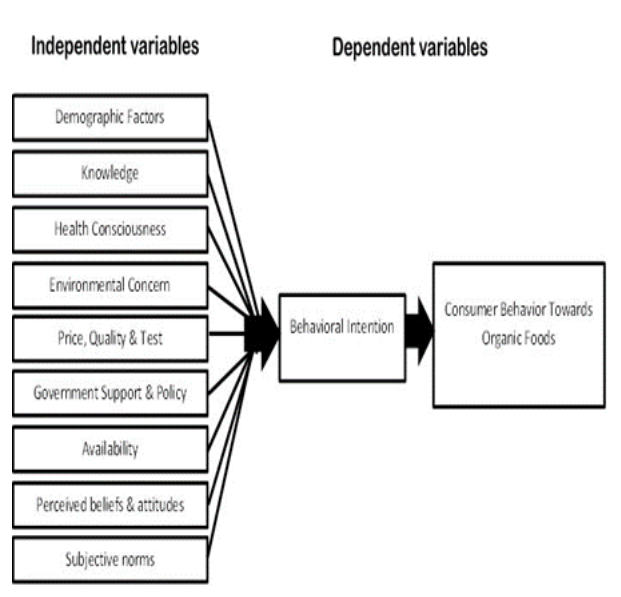
Figure 2: Conceptual Model
The above figure 2 demonstrates the factors that a consumer’s buying behavior which eventually lead to make the decision to purchase organic food. According to the model, consumers’ attitude towards purchasing organic food products are strongly influenced by the variables, namely Demographic Factors, Knowledge, Health Consciousness, Environmental Concerns, Price, Quality & Test, Government Support & Policy, Availability of the Product, Perceived beliefs & attitudes and Subjective norms.
Contributions
This paper has contributed to the previous research in the field of organic food. This paper has certainly contributed to the research area of organic food. Furthermore, on this research, the factors are determined to have the influence on consumer attitude. They are named as Demographic Factors, Knowledge, Health Consciousness, Environmental Concerns, Price, Quality & Test, Government Support & Policy, Availability of the Product, Perceived beliefs & attitudes and Subjective norms. To the best of the author’s knowledge, this result has not been explored by any previous secondary studies about organic food. Continuously, the next contribution of this study is to underline the positive relationship between consumer attitude and their purchase intention in terms of organic food.
Managerial Implications
The outcome of the study can be considered as the guidance for the marketers in regard to consumer attitude towards organic food. Based on previous researches this study particularly indicates the factors which are determined to have an impact on consumer attitude. For example, the health-conscious aspects should be emphasized more in advertising organic foods. To increase the consumer knowledge, the information about the products should be widespread in public through various ways of media. The message should be clear and in detail focusing on the ingredients, production process and the positive effects to the consumer’s health. Furthermore, the review also points out that the impact of demographic factors as one of the control variables on consumer attitude and purchase intention. So, the demographic factors should be essentially considered by the company in order to adapt their potential target groups of consumers based on age and income.
Further Research
This reviewed study could be helped as a foundation for further research about the organic food in the future. It would be of interest for forthcoming research to go deeper into each factor and explain about their positive impact on consumer attitude towards organic food. The connection between consumer attitude and purchase intention of organic food could be in-depth considered by using quantitative method.
Future studies could repeat it in another context such as different countries and cultures in terms of the influencing factors on consumer attitude.
Finally, since this paper was conducted as a qualitative study, further researchers could carry out a quantitative study in order to get a deeper understanding on the influencing factors on consumer attitude towards organic foods.
References
- Aertsens, J., Mondelaers, K., Verbeke, W., Buysse, J. & Van Huylenbroeck, G. (2011), The influence of subjective and objective knowledge on attitude, motivations and consumption of organic food. British Food Journal, 113, 1353-1378.
- Aertsens, J., Verbeke, W., Mondelaers, K. and Van Huylenbroeck, G. (2009), “Personal determinants of organic food consumption: a review”, British Food Journal, Vol. 111 No. 10, pp. 1140-1167.
- Ahmad, S.N.B. and Juhdi, N., (2008), July. Consumer’s perception and purchase intentions towards organic food products: Exploring the attitude among Malaysian consumers. In 16th Annual Conference on Pacific Basin Finance, Economics, Accounting and Management, Brisbane, Australia.
- Andersen, M.M., Landes, X., Xiang, W., Anyshchenko, A., Falhof, J., Osterberg, J.T., Olsen, L.I., Edenbrandt, A.K., Vedel, S.E., Thorsen, B.J. and Sandoe, P., (2015). Feasibility of new breeding techniques for organic farming. Trends in plant science, 20(7), pp.426-434.
- Basha, M.B., Mason, C., Shamsudin, M.F., Hussain, H.I. and Salem, M.A., (2015). Consumers attitude towards organic food. Procedia Economics and Finance, 31, pp.444-452.
- Bourn, D. and Prescott, J. (2002), “A comparison of the nutritional value, sensory qualities and food safety of organically and conventionally produced foods”, Critical Reviews in Food Science and Nutrition, Vol. 42 No. 1, pp.1-34.
- Chaudhury, A., (2006). Emotion and Reason in Consumer Behaviour. Elsevier Butterworth-Heinemann Publications, Oxford, p. 18.
- Chen, M., F., (2007), “Consumer attitudes and purchase intentions in relation to organic foods in Taiwan: moderating effects of food-related personality traits”, Food Quality and Preference, Vol. 18 No. 7, pp. 1008-1021.
- Chen, T.B. & Chai, L. T. (2010). Attitude towards the environment and green products: Consumers perspective. Management Science and Engineering,4, 27-39.
- Cottle, F. and Cottle Consulting, (2016). UK Organic Market March 2016. BordBia - Irish Food Board.
- Dettmann, R. and Dimitri, C. (2007), “Who’s buying organic vegetables? Demographic characteristics of US consumers”, Journal of Food Distribution Research, pp. 49-62.
- Dettmann, R.L. and Dimitri, C., (2009). Who's buying organic vegetables? Demographic characteristics of US consumers. Journal of Food Products Marketing, 16(1), pp.79-91.
- Dickieson, J., Arkus, V. and Wiertz, C., (2009). Factors that influence the purchase of organic food: A study of consumer behaviour in the UK. London: Cass Business School.
- Goleman, D., (2009). Ecological Intelligence, Broadway Books, New York, NY.
- Gracia, A., & de Magistris, T. (2008). The demand for organic foods in the South of Italy: A discrete choice model. Food Policy, 33(5), 386–396.
- Honkanen, P., Verplanken, B., Olsen, S. (2006). Ethical Values and Motives Driving Organic Food Choice. Journal of Consumer Behavior 5, pp 420-430
- Hossain, M.T.B. and Lim, P.X., (2016). Consumers’ Buying Behavior towards Organic Foods: Evidence from the Emerging Market.
- Karimi, S., (2013). A purchase decision-making process model of online consumers and its influential factor a cross sector analysis.
- Khan, M.A., (2007). Consumer behaviour and advertising management. New Age International.
- Kim, R., Suwunnamek, O. & Toyoda, T. (2008).Consumer attitude towards organic Labeling schemes in Japan. Journal of International Food and Agribusiness Marketing, 20(3), 55-71.
- Kotler, P., Wong, V., Saunders, J., Armstrong, G., (2005). Principles of Marketing. Essex: Pearson Education Limited.
- Krystallis, A., &Chryssohoidis, G. (2005). Consumers' willingness to pay for organic food: Factors that affect it and variation per organic product type. British Food Journal 107(5), 320-343.
- Leong, G.Y. and Ng, Y.L., (2014). The factors influence consumer behaviour on the purchase of organic products (Doctoral dissertation, UTAR).
- Loureiro, M., McCluskey, J. and Mittlehammer, R. (2001),“Assessing consumer preferences for organic, eco-labeled, and regular apples”, Journal of Agricultural and Resource Economics, December.
- Martinko, K. (2017). Why do people buy organic?. [online] Tree Hugger. Available at: https://www.treehugger.com/green-food/why-do-people-buy-organic.html [Accessed 27 Nov. 2017].
- Michaelidou, N. and Hassan, L.M., (2008). The role of health consciousness, food safety concern and ethical identity on attitudes and intentions towards organic food. International Journal of Consumer Studies, 32(2), pp.163-170.
- Mohamed, M.A., Chymis, A. and Shelaby, A.A., (2012). Determinants of organic food consumption in Egypt. International Journal of Economics and Business Modeling, 3(3), p.183.
- Ooi, S.K., (2009). Factors Influencing Consumer Purchase Intention Of Dietary Supplement Products In Penang Island (Doctoral dissertation, USM).
- Ozguven, N. (2012). Organic foods motivation factors for consumers. Procedia – Social and Behavioural Sciences, Vol. 62, pp.661-665.
- Paul, J. and Rana, J., (2012). Consumer behavior and purchase intention for organic food. Journal of consumer Marketing, 29(6), pp.412-422.
- Picard, A. (2002). Many Conventional Foods Contain Toxic Levels of Pesticides. Retrieved November 2017, from Organic Consumers Association: http://www.organicconsumers.org/Toxic/conventional101502.cfm
- Radman, M. (2005). Consumer consumption and perception of organic products in Croatia. British Food Journal, Vol. 107 No. 4-5, 263-273.
- Rodriguez, E., Lupin, B., & Lacaze, V. (2007). Willingness to Pay for Organic Food in Argentina: Evidence from a consumer survey. International Marketing and International Trade of Quality Food Products' Bologna, 1-24.
- Saleki, Z. S., & Seyedsaleki, S. M. (2012). The main factors influencing purchase behaviour of organic products in Malaysia. Interdisciplinary Journal of Contemporary Research in Business, 4(1), 98.
- Shepherd, R., Magnusson, M. and Sjo¨de´n, P.O. (2005) “Determinants of consumer behavior related to organic foods”, Ambio, Vol. 34 Nos 4/5, pp. 352-9.
- Sheng, J., Shen, L., Qiao, Y., Yu, M.M., and Fan, B. (2009),“Market trends and accreditation systems for organic food in China”, Trends in food science & technology, Vol. 20 No.9, pp.396-401.
- Solomon, M. R., Bamossy G., Askegaard, S. and Hogg, M. K. (2010), Consumer behaviour: a European perspective, 4th ed., New York: Prentice Hall/Financial Times.
- Tshuma, P., Makhathini, S., Siketile, P. N., Mushunje, A., &Taruvinga, A. (2010). Consumer perceptions on organic products in the Eastern Cape; The case of East London: South Africa. Electronic Journal of Environmental, Agricultural and Food Chemistry,9(3), 458-467.
- Tarkiainen, A. and Sundqvist, S., 2005. Subjective norms, attitudes and intentions of Finnish consumers in buying organic food. British food journal, 107(11), pp.808-822.
- Thogersen, J. (2009). Consumer decision-making with regards to organic food products. In Teresade Noronha Vaz et al. (Eds.), Traditional food production and rural sustainable development. A European challenge (pp. 173-194). London: Ashgate.
- Thogersen, J., Zhou, Y., Huang, G., (2015) How stable is the value basis for organic food consumption in China? Journal of Cleaner Production, 1-11
- Turnbull, G., (2000). Report on consumer behaviour in purchasing of organic food products in Australia. Master of Management thesis. Faculty of Business, University of Southern Queensland. Available at: dpi. qld. gov. au/extra/pdf/organicconsumers. pdf.
- Torjusen, H., Lieblein, G., Wandel, M. and Francis, C.A., (2001). Food system orientation and quality perception among consumers and producers of organic food in Hedmark County, Norway. Food quality and preference, 12(3), pp.207-216.
- Van Doorn, J. and Verhoef, P.C. (2011), “Willingness to payfor organic products: differences between virtue and vice foods”, IJRM, Vol. 28.
- Willer, H., (2014). Organic farming in Europe. The World of Organic Agriculture. Statistics and Emerging Trends.
- Yadav, S.K., Babu, S., Yadav, M.K., Singh, K., Yadav, G.S. and Pal, S., (2013). A review of organic farming for sustainable agriculture in Northern India. International Journal of Agronomy, 2013.
- Yang, H. Q., &Jie, Y. L. (2008), “ Recent development of organic farming in the world andthe development strategy of organic horticulture in China”. ActaHorticulturaeSinica, Vol. 35 No.3, pp. 447-454.
- Yiridoe, E.K., Bonti-Ankomah, S. and Martin, R.C., (2005). Comparison of consumer perceptions and preference toward organic versus conventionally produced foods: a review and update of the literature. Renewable Agriculture and Food Systems, 20(4), pp.193-205.
- Yin, S., W, L., Du, L. and Chen, M. (2010), “Consumers ’purchase intention of organic food in China”, Journal of the Science of Food and Agriculture, Vol. 90 No. 8, pp. 1361-7.
- Zanoli, R. & Naspetti, S. (2002). Consumer motivations in the purchase of organic food: Ameans-end approach. British Food Journal, 104(8), 643-653.
Notes
39. Correspondence to: kazi_salma80@yahoo.com
How to cite
Akter, S. (2017) ‘Review of Influential Factors Driving Organic Food Consumption’, Journal of Contemporary Development & Management Studies, 5(2), pp. 145–154.
Converted from the printed issue (vol05-no2-2017.pdf, PDF pages 69–78). The PDF is the version of record.