Abstract
According to current data, business failure rate is a significant issue in the UK. Between 2001 and 2015, the rate of business closure almost matched the rate of start-ups in any single year. The author finds it interesting that data throughout this period shows business births outnumbering business deaths by only 87,000. This narrow margin raises questions about the real reason(s) prompting the seemingly high death rate and closure of businesses. In this article, Schumpeter’s Theory of Economic Development is used to demonstrate the importance of small enterprises to the UK’s economic development, and data from ONS (Office for National Statistics) are provided to support findings. Results are analysed by reference to external and internal factors affecting businesses, particularly in start-up stages. On the basis of findings, the author presents a model framework, which he believes can be used to inform future research in achieving higher success rates in enterprises.
Keywords
EnterpriseInnovationBusiness FailureSchumpeter’s Theory of Economic Development
Introduction
Four major features of Schumpeter’s theory of economic development, particularly relevant to this article are: (1) Circular flow, a routine course of labour, land and flow that generates income in every economic period in order to convert into satisfaction of needs; (2) The role of the entrepreneur involved to be innovative or to develop something new, to demonstrate the willingness to prove superiority and to experience the joy of creating new product or processes; (3) Business cycle, the process through which economy suits itself to a new state of economic condition, commonly generated through crises, and (4) Creative destruction of capitalism which suggests that once the ‘new’ takes place, the ‘old’ ceases to be relevant and entails the destruction of the ‘old’ (Schumpeter, 1912). Based on this understanding of Schumpeter’s theory of economic development, small businesses are a significant tool that can develop innovative products and processes that can fundamentally change the economy (Wennekers and Thurik, 1999). Therefore, the author believes it is significantly important for the economy to have more start-up businesses to bring in the ‘new’.
Business closure
Current statistics indicate that business failure is a significant issue in the UK. The rate of business closure and the exodus of entrepreneurs almost matches the rate of start-ups in each year (see Table 1 below), and statistics show that from 2001 to 2016 the birth rate of new enterprises and the death rate of enterprises are very similar (Graph 1), with a differential of only 87,000 during the period. This scenario proposes that there is a significant gap in knowledge relating to business closure. As a result, despite having high rates of business formation, the reason behind the high rate of business closure has still to be established. The data shown in Table 1 includes those businesses that are VAT registered, meeting the turnover threshold; so the author considers it likely that the exact number of business failures is substantially higher if smaller businesses are also considered. Graph 1 The business birth rate in 2016 is the highest since at least 2001.
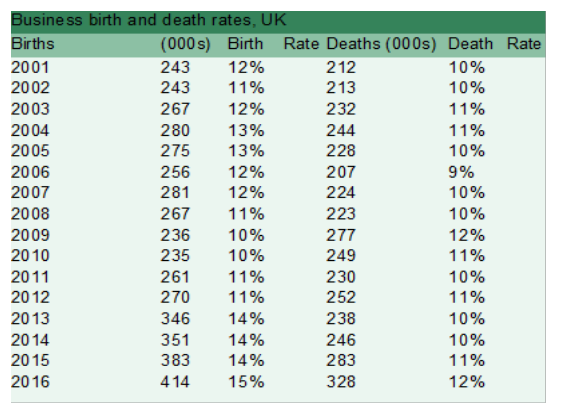
Table 1: The business birth rate in 2016 is the highest since at least 2001
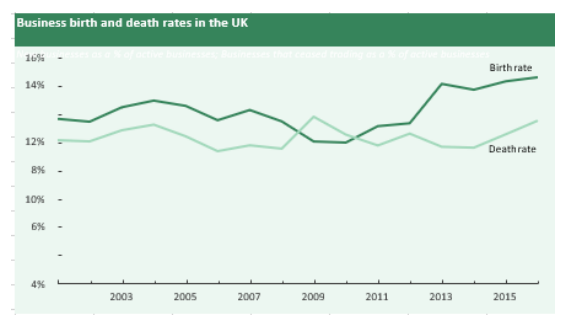
Graph 1 The business birth rate in 2016 is the highest since at least 2001.
Stokes and Blackburn (2001) suggest that ‘failure’, ‘closure’ and ‘exit’ from business are three inter-related terms in literature, with the failure to gain business objectives leading to closure and the exit of owners from the business. In this article, there is an attempt to analyse critically the different factors and relevant literature behind business failure and to identify the most and least convincing explanation of the scenario. It is important to analyse business failure as, in reality, more businesses close than successfully grow (Storey and Greene, 2010).
According to the ‘Circular Flow’ feature of Shumpeter’s Theory of Economic Development, the main objective of a business is to generate income. Thus, the primary reason for failure of new businesses is insolvency, due to insufficient profit margins, often caused by the unsuccessful level of sales (Marcella and Illingworth, 2012). Stokes and Blackburn (2001), suggest that factors of financial insolvency include indebtedness and pay- off for the owner. Dun and Bradstreet (2001) evidence (Table 2) that 10% of small businesses close due to bankruptcy. Healy and Lynas (1997) similarly opine, suggesting that, “…failure is generally regarded as the discontinuance of the business due to a lack of adequate financial resources...” (Stokes, D. and Blackburn, R. 2001:33).
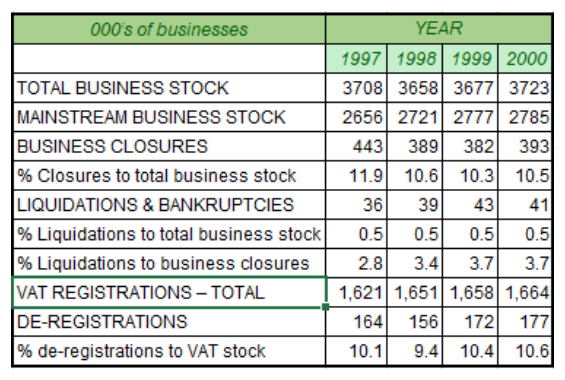
Table 2: UK statistics on business closures and liquidations
Source: Small Business Service, 2001; Dun & Bradstreet, 2001.
Watson and Everett (1996) accumulated possible reasons for business closure or discontinuation and proposed several ideas from various sources. According to Ulmer and Nielson (1947), for example, firms were sold or liquidated to avoid the consequences of future losses. That provides a view that many business owners sell or liquidate their business when the owner realises that the business will under- perform in the future and will not generate the income or objectives required to avoid the full consequences of insolvency.
Another study by Cochran (1981) suggests that when a business does not meet the owners’ expectations of earnings or generate the level of income or objectives expected, the business closes. Watson and Everett (1996), explored several other reasons for business closure, including: 30% of businesses were closed due to the owner’s retirement or ill health, 7% of business were closed due to low profit margins and 20% businesses closed due to the owner changing focus. Interestingly, the study made by Watson and Everett (1996) indicates that almost 50% of business closures were due to factors other than insolvency.
Further research (Reynolds and Miller, 1992; Sullivan et al., 1998) shows that when a business is in the development stage, it goes through many difficulties and may fail within the first twelve months of trading. Conversely, Conway (1996) shows that business size has a substantial impact on the growth of the small businesses, particularly in a micro-business environment.
On the basis of the literature reviewed, the author concludes that different issues exist, based on the types of business and the business closure factors that trigger the failure and closure of businesses, especially in the start-up stage, which seems to be a very vulnerable time. Both causal factors and vulnerability can be experienced very differently at other stages in the setting up of businesses. Mehralizadeh and Sajady (2005) suggest that business entrepreneurs face three major stages: (1) Developing the idea of the business, (2) Start-up activity and (3) Running and consolidating the business. Every stage has different points at which the business might struggle and can be impacted adversely by internal and external factors.
Internal Factors
The three Internal factors identified are personal characteristics of entrepreneurs, business planning and financial management. Sullivan et al. (1998) propose four personal characteristics, any one of which needs to be present in a successful entrepreneur: (1) an achiever, (2) an empathic trader, (3) an innovator and (4) a true manager. However, as the author notes, an achiever could tend to expand a business in a very short period of time, without gaining sufficient product knowledge or organisational skills; so the presence of additional characteristics is considered desirable. In this context McClelland (1967) describes the psychological characteristics of a successful entrepreneur, which include ‘…a need for achievement, [a] propensity for risk-taking, personal and interpersonal values and innovativeness…’ (Low and MacMillan (1998:147)
While many researchers are attempting to identify characteristic patterns of personality demonstrated in successful entrepreneurs, Brandstatter (1997) suggests that small businesses may fail within the first five years of their birth because of the misfit between the personal characteristics and the skills necessary for the tasks to be undertaken in the business: specifically, to demonstrate the risk-taking attitudes, flexibility and persistency required to achieve goals in the development stage. Dun and Bradstreet (2001) establish that 88 percent of business closures are the result of poor management skills and poor decision-making. The twelve leading mistakes made by business owners described in the study of Mehralizadeh Y. and Sajady S. (2005:3) and summarised by Paul Lewis are set out below:
1) Going into business for the wrong reasons, (2) Advice from family and friends, (3) Being in the wrong place at the wrong time, (4) Entrepreneur fatigue and/or underestimation of time requirements, (5) Family pressure on time and money commitments, (6) Pride, (7) Lack of market awareness, (8) The entrepreneur ‘falls in love’ with the product/business, (9) Lack of financial responsibility and awareness, (10) Lack of a clear focus, (11) Over-abundance of working capital and (12) Overly optimistic, realistic or pessimistic….
Business planning
One of the most significant stages of starting a business is its planning stage. Poor planning of business, management and marketing may lead the business to failure and subsequent closure. Business planning involves many activities: for example, undertaking market research that considers the scope of the business in the market, its audience or market demand, setting objectives for business expansion in the future, and anticipating cash flow.
Effective business planning can facilitate the opportunity to create the long-term vision, set the necessary objectives and provide sufficient resources to realise the vision of gaining income (Sullivan et al., 1998). This process involves research of the market, to collect necessary information and data and the production of a clear business plan which sets out long-term objectives that is comprehensive and well structured. However, Mintzberg (1994) argues that even though planning can be beneficial for a business, the value of business planning is context-dependent. Consequently, benefits are indeed variable, depending on the context of the business.
Financial Management
For start-up businesses, financing can be a struggle in the setting-up stage. Entrepreneurs often generate capital to fund their idea by savings from full-time or part-time employment, borrowing from relatives, selling or mortgaging properties or from employment loans. For example, there are opportunities in the UK to apply for start-up loans of up to £25,000. The question is, how much does it help? According to the UK Business Forum (2017), in the period 2013-2014, 49.6% of start-up loans were in default (Table 3, column 2). The author believes that the reason behind defaults in payments, defined as being three or more payments in arrears, is due to poor planning and the misfit between the characteristics of entrepreneurs and the business context. Whatever the source of the capital, entrepreneurs need to have resources available for planning and financial budgeting in the start-up process.
Table 3: Annual percentages of default in start-up loans (UKBF, 2017)
| Origination | No. | Value of loans | Payment default |
|---|---|---|---|
| 2012-13 | 1,820 | £9,631,751 | 45.70% |
| 2013-14 | 12,628 | £69,840,358 | 49.60% |
| 2014-15 | 13,488 | £66,525,878 | 32.80% |
| 2015-16 | 9,141 | £64,111,534 | 18.90% |
| 2016-17 | 8,541 | £81,979,030 | 4.00% |
External Factors
Any business operates in an environment and, to succeed, the business needs to adapt to the opportunities existing within that particular environment; therefore, it is essential to know the external constraints that might mitigate against the ability of a business to survive in the long-term (Kalleberg and Leicht, 1991). Existing literature suggests that economic, governmental, social and external factors have a substantial impact on the ability of businesses to become successful entities in the longer term. This is particularly the case in the start-up stage.
A majority of small businesses establish roots in the community where the owner already lives; therefore, to some extent, the probability of success is dependent on the geographical location (Sullivan et al., 1998). As a result, it is highly likely that small businesses, at start-up, will have a very limited opportunity to enter the large business sector and operate in a macro-environment. The author considers it easily understandable that business start-ups in localised micro-environments, where there is an absence of large businesses, are likely to secure the best opportunities for development. This view is confirmed by Keeble and Walker’s study (1994), which found that locality exerts a significant influence on the development of small businesses.
Small businesses play significant roles in encouraging the economic growth and development of local communities by expanding and maximising employment. Therefore, it is essential for central and/or local government to provide assistance and aid packages to help owners of small businesses. Other positive steps that governments can take to facilitate business start-ups include: minimising levels of bureaucracy by easing government regulations, ensuring discounted tax regimes, providing easily accessible start-up loan opportunities and offering subsidised training programmes. (Mehralizadeh and Sajady, 2005).
Access to social support can be an important factor in strengthening the abilities of small business owners to face issues and overcome obstacles when they start new businesses. According to Burden (1993), the sense of responsibility for supporting families assumed by some entrepreneurs of SMEs, may represent a serious disadvantage for owners who have high family commitments. For example, Loscocco et al. (1991) suggest that female entrepreneurs may be unable to devote as much time to their businesses as their male counterparts, as a consequence of family commitments, and, therefore, a negative impact on business growth may result.
Lussier (1996) suggests that a greater understanding of the particular industry and operational requirements for small businesses will increase small business owners’ prospects for success. They will acquire a wide knowledge of the business they want to operate, in addition to gaining an understanding of the environment in which they are planning to operate, the opportunities for and threats to the business, the barriers to trade, competition in the existing marketplace and other emerging issues developing in the external environment.
Conclusion
Reflecting on the above theoretical discussions, the author believes that both the fear of insolvency and the actuality of internal and external environmental factors must be considered in the business start-up stage, in addition to setting longer-term aims and objectives. An entrepreneur must be aware of the factors that influence the initiation of the process.
Therefore, the author proposes that insolvency alone cannot be a reason for a start-up business to fail and result in closure. There are many other factors that may trigger the failure of a start-up or small business. Consequently, the presence of other variables diminishes the value of the concept that failure in the discontinuance of the business is due primarily to the lack of adequate financial resources. As the data shows, more than 50% of start-up or small business failure and closure happens because of external and internal environmental factors.
The author has developed a model (Figure 4) based on the significance of information-flow between all the stages in the setting up process of a business, covering all aspects of impact factors. Business failure can provide essential information for the future growth of a successful business. After receiving support from the resources available within the internal and external environments, there are two possible outcomes for a business: (1) successful start-up, (2) failure and closure.
If the outcome is failure, then the author suggests that a full investigation should ensue to acquire knowledge that can then be applied to starting a successful small business venture in the future. The proposal is for the entrepreneur to use knowledge of external and internal environmental factors as a contribution to assist in the start-up stage and as a continuous process to help establish and expand the business. To this end, the author proposes a model framework that could be used to improve prospects for the survival of small businesses on the following page.
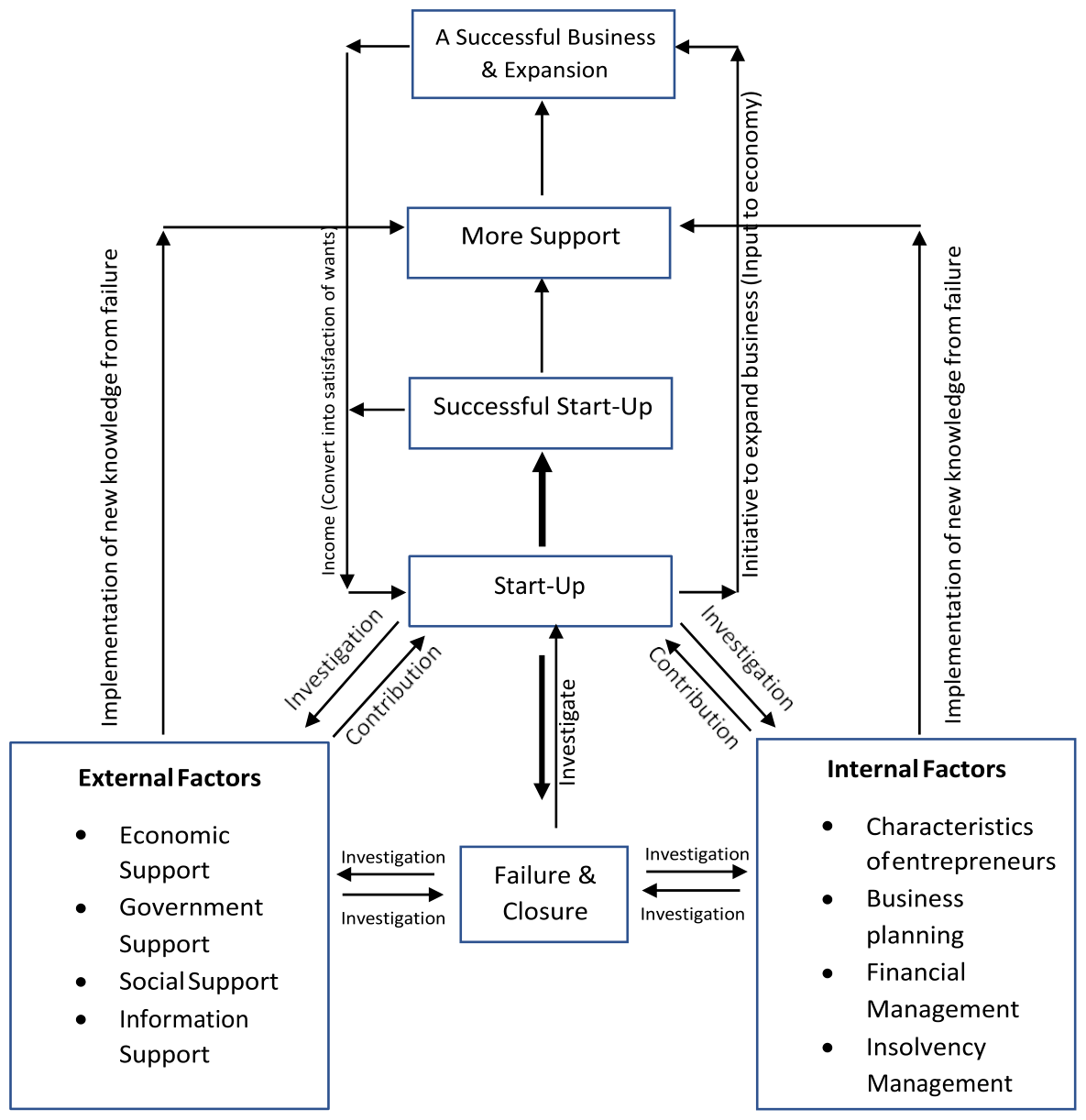
Figure 4: A model framework to contribute in Start-up Business survival by Author
References
- Brandstatter, H. (1997). ‘Becoming an entrepreneur - a question of personality structure.’ Journal of Economic Psychology, 18, pp 157-177.
- Healy, S.B., and Lynas, M.G. (1997). Success and failure in the small firm: an investigation of meaning. Aberdeen Business School, The Robert Gordon University, Aberdeen
- Kalleberg, A. L. & Leicht, K. T. (1991). ‘Gender and organizational determinants of small business survival and success.’ Academy of Management Journal, 34(1), pp 136-161.
- Keeble, D. & Walker, S. (1994). ‘New firms, small firms and dead firms: spatial patterns and determinants in the United Kingdom.’ Journal of Regional Studies, 28(4), pp 411-427.
- Losocco, K. A., Robinson, J., Hall, R. R. & Allen, J. K. (1991). ‘Gender and small business success: An inquiry into women’s relative disadvantage.’ Social Forces, 70(1), pp 65-85.
- Low, M. & MacMillan, I. (1998). ‘Entrepreneurship: Past research and future challenges.’ Journal of Management, 14(1), pp 139-162.
- Lussier, Robert N. 1996. Reasons Why Small Businesses Fail: And How to Avoid Failure. [ONLINE] Available at: http://www.alliedacademies.org/archive/aej/ee1-2/paper2.html. [Accessed 15 June 2018].
- Marcella, R. & Illingworth, L. (2012). ‘The impact of information behaviour on small business failure.’ Journal of Information Research, 17(3), pp 525.
- Mehralizadeh Y. and Sajady S. 2005. A study of factors related to successful and failure of entrepreneurs of small industrial business with emphasis on their level of education and training. [ONLINE] Available at http://www.leeds.ac.uk/educol/documents/143150.html. [Accessed 15 June 2018].
- Miller, D. (1983). ‘Correlates of entrepreneurship in three types of firms.’ Journal of Management Science, 29(7), p. 33.
- Mintzberg, H. (1994). The Rise and Fall of Strategic Planning. New York: Free Press.
- Schumpeter, J.A. (1912) The Theory of Economic Development, Oxford University Press.
- Stokes, D. and Blackburn, R. (2001). Opening up business closures: a study of businesses that close and owners’ routes: A research report for HSBC, p 1.
- Storey, P. D. J. and Greene, D. F. (2010). Small Business and Entrepreneurship. New York: Financial Times/Prentice Hall.
- Sullivan, T.A., Warren, E. and Westbrook, J. (1998). Financial Difficulties of Small Businesses and Reasons For Their Failure. Prepared for the Small Business Administration Contract # SBA-95-0403, Business Bankruptcy Project, Townes Hall, The University of Texas at Austin, Austin, TX 78705.
- Thurik, R. and Weneekers, S (2001). A Note on Entrepreneurship, Small Business and Economic Growth. Centre for Advanced Small Business Economics.
- UKBF (2017) Government-backed Start Up Loan default rates reach 50%. [ONLINE] Available at: https://www.ukbusinessforums.co.uk/articles/government-backed-start-up-loan-default-rates-reach-50.654/. [Accessed 15 June 2018].
- Ulmer, M.J. and Nielson, A. (1947). ‘Business Turnover and Causes of Failure.’ Survey of Current Business (April), pp 10-16.
- Watson, J. and Everett, J. E. (1996). ‘Do Small Businesses Have High Failure Rates?’ Journal of Small Business Management, 34(4), pp 45-62.
How to cite
Sunny, A.A. (2018) ‘Entrepreneurship and Innovation: Tackling business failures in the UK through developing a prior-learning model’, Journal of Contemporary Development & Management Studies, 6(1), pp. 57–65.
Converted from the printed issue (vol06-no1-2018.pdf, PDF pages 58–66). The PDF is the version of record.