Abstract
This paper aims to deliver the impact of collaborative learning and teaching on the HND learners studying in a Higher Education College in London, UK. The Higher National Diploma is the most significant component of formal professional development in a learner’s career that enables and enhances wider vocationally-focused opportunities for learning. The purpose of this paper is to present a primary example of how collaborative learning impacts positively and directly on the skills and abilities of learners to pursue future career options. The background research of the paper was conducted in the classroom during 2017-2018. In total, 25 learners from HND level four and level five were involved in the research project. Before collecting the data, the teachers shared the research information sheet with learners to seek their consent to be part of the background study. Excel 2018 was used to collect and analyse the data extracted. Analysis was undertaken in three categories: the impact of collaborative learning, the impact of group activities on the improvement of presentation/communication skills and the degree to which teamwork affected the confidence of learners. The findings of the paper are: (a) collaborative learning has improved the confidence of learners, (b) helped to develop critical thinking skills, (c) developed reading skills, (d) developed academic writing skills and (e) facilitated the development of soft skills requisite for career success, particularly in respect of leadership, interpersonal relationships and team-building. Findings support the authors’ view that a collaborative approach to learning exerts a positive impact on students’ prospects for the successful completion of higher national qualifications. Consequently, this approach should be adopted by all the teachers who are teaching at the higher national diploma level.
Keywords
Group ActivitiesHNDCollaborative Learning (CL)
Introduction
Collaborative Learning (CL) implies collaborative writing, group projects, and other assignment performances to meet the criteria to achieve a Higher National Diploma (HND). The Higher National Diploma is the most significant component of formal professional development in a learner’s career that widens access to higher education (Sorsby, 2004) and adds a sense of value to develop better skills (Kerry, 2005). In teaching, especially in higher education, where learners are mature adults returning to education mainly for career progression, collaborative teaching techniques have been found to be highly effective in building and improving skills and abilities in critical thinking, problem-solving, decision-making, rendering normative judgements, team-building, communication and social inter-action. However, inconsistent use of collaborative teaching and learning techniques has been witnessed especially in higher education which has created a practice gap in teaching mature students returning to education. For example, while some teachers have used the collaborative teaching technique to involve and engage learners in London Churchill College, a college delivering HND in Tower Hamlets, other teachers have not considered the importance of encouraging group activities on a transparent and regular basis. This then has widened the gap in teaching practice. Collaborative learning and teaching not only involves a crucial aspect of exploring skills and abilities through collaborative activities but also shapes the effective manner of learning and gaining subject knowledge.
The purpose of this paper, therefore, is to present a primary example to pinpoint how teaching and learning practices, through collaborative teaching, contribute to positive learning outcomes, particularly in respect of building professional and academic skills. Additionally, the paper also aims to highlight how, as part of collaborative learning, group activities and teamwork enhance the confidence of learners to undertake tasks independently. For this purpose, the paper has set three objectives. Firstly, the researchers are aiming to explore the impact of collaborative learning on the academic performance of learners. Secondly, the researchers will find out whether group activities can improve the skills of the learners to present or communicate the findings of their study assignments. Finally, the last objective intends to identify how teamwork will affect learners’ confidence as compared to learners working individually on assignments.
Literature Review
Definition of Collaborative Learning.
It is well known that collaborative Learning (CL) is one of the teaching approaches in higher education. This approach can be understood as a group of learners working together, learning together, sharing their knowledge and discussing the issues in order to find a solution to resolve the problem (Laal & Laal, 2012): for example, problem-solving in a case study carried out through group/team discussions.
In a Collaborative Learning environment, learners are challenged to develop and improve skills in interpersonal relations, writing and creative thinking. As it is an engaging process for learners to experience, to observe, to attend to, to discover, and to listen to peers, the learners begin to build their own conceptual frameworks utilizing their abilities for critical and analytical thinking without depending on conventional frameworks. Furthermore, learners have the perfect opportunity to share, express, and present their ideas when they are actively involved in group activities (Srinivas, H., 2011). Collaborative Learning normally happens when a small group of learners communicate and learn from each other (Laal & Laal, 2012). On one hand, collaboration in this manner increases the opportunities that learners have to use the target language and thereby to develop and improve leadership and communications skills through the process. On other hand, lecturers who identify themselves as professional communicators for transmitting knowledge to learners can feel more confident about their role as intellectual designers to coach learners through emergent learning, sharing their past experiences with learners (Smith, B. L. & MacGregor, J. T., 1992). Hence, Collaborative Learning contributes to the attainment of the mutual goals of both teachers and the learners (Janssen, 2014).
The Impact of Collaborative Learning
Collaborative Learning is about allowing the learners to feel more relaxed and open to learning (Yang, 2009). Learners normally are very shy to express their thoughts in large groups. However, when divided into small groups, learners have been found to overcome shyness and to communicate with each other. In this sense, group activities allow the learners to break the shyness barrier and create prospects for effective dialogue. The onus, therefore, remains on the teachers to design group work so that learners can become actively involved in some collaborative activities and learn to make use of different learning strategies exhibited by individuals within the group. Collaborative Learning also helps to develop intrinsic motivation, interpersonal skills, and self-esteem through small group activities. Consequently, learning opportunities have a better chance of being enhanced when such environments are created through inclusive and engaging group activities, in addition to other advantages identified by Johnson and Johnson (1989) and Pantiz (1999) set out below.
Social Benefits
- CL can help the learners to develop a system to support their social skills.
- CL can establish a platform for learners to learn from each other.
- CL can create a supportive environment for learners to cope with problems.
- CL can help to build good learning communities among the learners.
Psychological Benefits
- It is learner-centered rather than teacher-centered. In this way learners’ self-esteem can be boosted.
- Learners’ anxiety can be reduced.
- Teachers can really gain a positive attitude from CL.
Academic Benefits
- CL helps learners to improve their skills in critical thinking.
- CL encourages learners to be actively involved with the group activities during their learning process.
- CL can improve the classroom outcomes such as class attendance, inclusive learning, and inclusive teaching.
- CL models appropriate learner problem solving techniques.
- CL can encourage learners to progress with tasks/performances in a specific curriculum.
Benefits and Challenges for Teachers
- Collaborative learning is also a chance for teachers to modify teaching tools and techniques using the VARK (visual, aural, read/write and Kinaesthetic) method when they design for assessments and consider the scope of teaching.
- There are also some challenges in collaborative learning: for example, loss of autonomy in decision-making and loss of instructional oversight; decreased flexibility and creativity given a set schedule as to when additional instructional personnel may be present in classrooms; role shifts and confusion about how to share instructional time (e.g., who leads, who follows, how to co-teach) and how to share responsibilities (e.g., assessment, reporting), and the feelings of insecurity expressed by learners as a consequence of unfamiliarity with collaborative learning teaching methods (Giles and Boyle 2010).
Methodology
A quantitative approach was selected for the research project, as it allowed the researchers to collect the data easily, to analyse results in a short period of time and to generalise the findings beyond the particular group. (Creswell, 2002; Sheragy 2005). The research programme was carried out in the classroom in a natural environment, and learners and lecturers were both involved. Questionnaires (See Appendix 1) featuring close-ended questions were distributed to each student to gain individual impressions of the effectiveness of Collaborative Learning, including problems encountered in the experience (Kothari, 2004; Kumar 2006). In total, 25 students from HND level four and HND level five were involved in this research. Before collecting the data, the researchers shared the research information sheet with students, so that students were informed about the purpose of the research and why it was important for them to participate.
Data Analysis and Results
The data gathering process was conducted by distributing a survey questionnaire to 25 students from two different groups of HND studying at level four and level five. Responses of all nine closed form questions were coded systematically as main categories. Survey items incorporated in the research variable and subcategories are in the following sections. Four key categories relevant to collaborative learning were identified: a) Students’ views on CL, b) Key aspects of CL, c) Challenges of CL and d) CL and Interpersonal Skills.
Collaborative Learning engages students as active participants in the homework, projects, and assessment. Figure 1 confirmed the research question that the collaborative learning tools afforded a good learning experience for students. The perspectives from students on collaborative learning were positive in this research. In this particular category, students were asked to choose multiple options among six different options in terms of “I find them interesting”, “I don’t like it”, “I find them boring”, “I find them challenging in a positive way”, “I find them challenging in a negative way” and “I love them”.
About 68% of the respondents expressed the view that participatory learning tools were challenging in a positive way, and 6 more students which is about 24% stated that they just loved the tools. Only two students or 8% of the students thought that collaborative learning tools were boring.
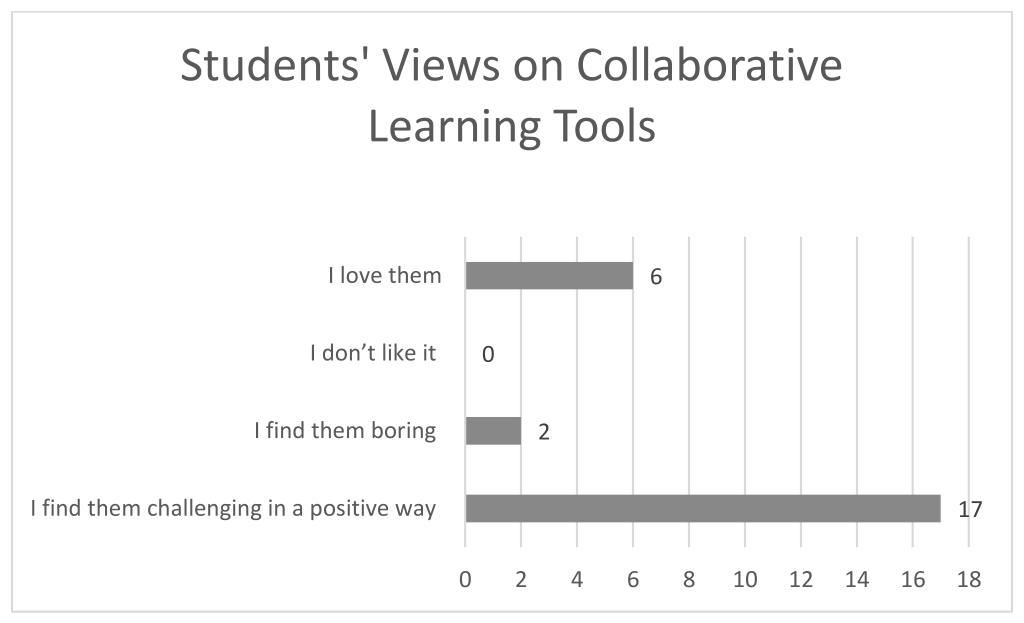
Figure 1: Student’s Views on challenging could be that group activities are difficult or challenging but could be positive in a good way
Key Aspects of Collaborative Learning
Table 1 below depicts student responses to key aspects of collaborative learning tools. 77% percent of the respondent strongly agreed that the collaborative learning tools should include academic referencing and 90% for task focused becomes very significant.
Table 1.
| Scale | It has to have Academic references | It has to answer the task | It has to have a clear allocation of tasks among team members | It has to keep good time management |
|---|---|---|---|---|
| Highly Disagree | - | - | - | - |
| Disagree | 7% | - | - | - |
| Don't Know | 6% | 4% | 8% | 8% |
| Agree | 10% | 6% | 62% | 62% |
| Highly Agree | 77% | 90% | 31% | 31% |
Challenges of Collaborative Learning
In this category, students were asked to select multiple challenges they have faced conducting team activities and group presentations. Seventeen of the 25 participants considered developing team spirit among team members to constitute a major challenge. Table 2 also indicates that a high percentage of 14 learners faced challenges in the areas of not everyone pulls the same weight, fighting with group members and group activities lack clear instruction.
Table 2: Challenges of Team Activities/Presentation
| Challenges | Number of students who responded |
|---|---|
| Encourage the development of team spirit | 17 |
| Fighting between team members | 7 |
| Unfair allocation of tasks | 10 |
| Lack of clear instructions | 4 |
| Not everyone pulls their weight | 14 |
The effectiveness of Collaborative Learning in developing skills
In this category, this study also looked for specific differences regarding the impact of collaborative methodologies in the research sample. Data provided in Table 3 indicates that students considered Collaborative Learning (CL) tools quite effective in improving interpersonal skills.
Table 3:
| Parameter | Strongly Agree | Agree | Don't Know | Disagree | Strongly Disagree |
|---|---|---|---|---|---|
| Give me a Boost in my confidence | 54% | 46% | 0% | 0% | 0% |
| Develop my critical thinking skills | 47% | 38% | 15% | 0% | 0% |
| Developed my reading skills | 46% | 54% | 0% | 0% | 0% |
| Develop my academic writing skills | 62% | 38% | 0% | 0% | 0% |
| Improved my leadership skills | 31% | 46% | 23% | 0% | 0% |
| Improved my interpersonal skills | 31% | 69% | 0% | 0% | 0% |
| Develop team building skills | 55% | 40% | 5% | 0% | 0% |
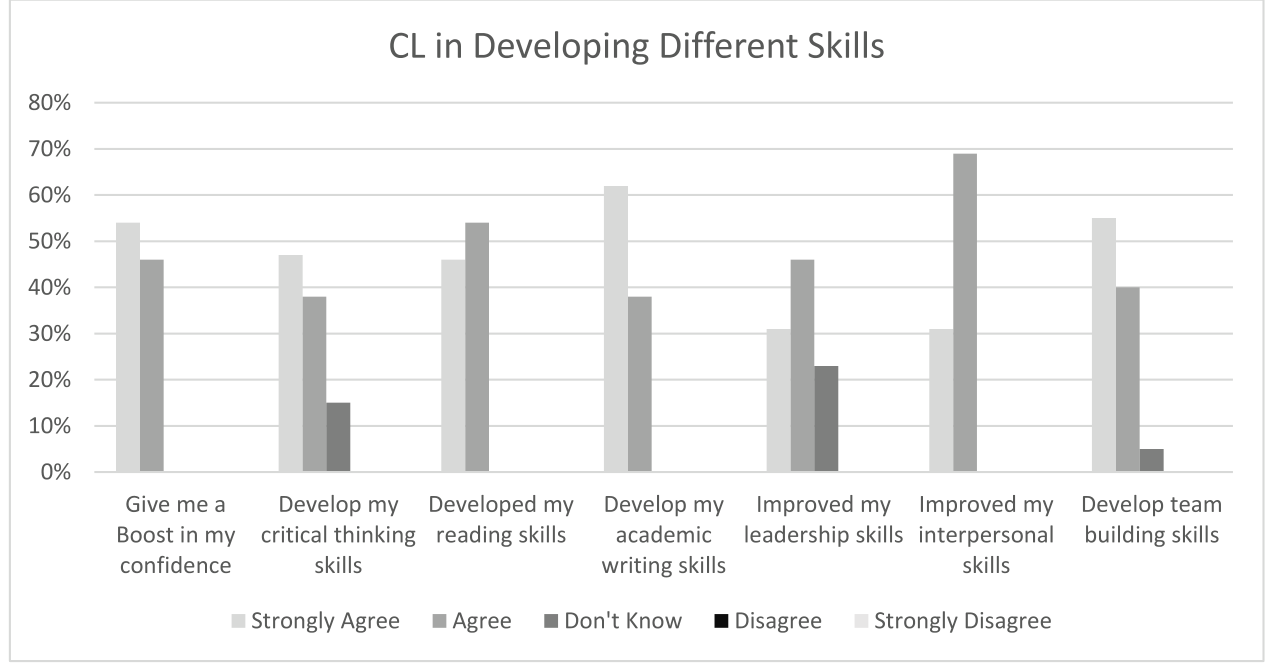
Figure 3: CL in Developing Different Skills
As demonstrated in Table 3 and Figure 3, 100% of the students surveyed either ‘strongly agreed’ or ‘agreed’ that Collaborative Learning had improved their learning in four of the seven categories surveyed. In the ‘strongly agreed’ category, for example, 62% indicated that CL had improved their academic writing skills, 55% thought that CL had helped them to develop team-building skills and 54% confirmed that self-confidence levels had risen as a direct consequence of participating in group activities. In the ‘agreed’ category, 69% of students surveyed thought that exercises undertaken in CL had improved their interpersonal skills.
We could deduce that Collaborative Learning would be of limited utility, if the same benefits could be accrued if implemented on a one-to-one basis, but the evidence collected in this research does indicate this to be the case. Students valued collaborative methodologies whether they were well-structured or not, whether active methodologies provided specific outcomes or not, and whether or not they were supervised by a tutor.
Limitations of the study
There are some limitations to this paper. The research was conducted during the fourth week of the second semester and covered a one term of 10 teaching weeks. A longer time frame could have improved the research findings to some extent. Therefore, the researchers recommend that if in the future similar research needs to be carried out, the researchers should have a longer time frame to cover a full year programme.
The background research for this paper identifies some challenges of the Collaborative Learning approach in respect of data collection, particularly in respect of students ranking difficulties encountered in respect of group activities. It is also very challenging for students to rank challenges encountered in cases where they feel that tasks were unfairly allocated or everyone failed to pull the same weight in undertaking and completing group activities. Consequently, it is essential for personal tutors and lecturers to be aware of such challenges when planning classroom activities, to take student needs fully into account in the preparation and to ensure that activities set are task-focused.
Conclusions
This research indicates that group activities can not only improve the confidence levels of students but also improve their academic performance and the acquisition of professional and life-long learning skills such as critical thinking, reading, academic writing, leadership, interpersonal relationships, building friendships with colleagues, effective communication and also class attendance. The findings indicate that students would like to engage more in group activities. The paper also pointed out that in the Collaborative Learning approach, students’ performance can be enhanced and achieved through mutually sharing their ideas and understandings.
Recommendations
Firstly, the tutor needs to be innovative in terms of creating different types of group activities to encourage students’ engagement.
Secondly, under Collaborative Learning arrangements, learners deserve equitable and equal opportunities to improve and to perform well in their studies. Consequently, it is crucial for teachers to be fair and accountable in distributing the group task equitably.
Thirdly Collaborative Learning has its own advantages and disadvantages. It is the teacher’s responsibility to identify the potential challenges that learners may experience and to pinpoint ways that they may be overcome.
Fourthly, learners should be provided with adequate and clearly-worded instructions for the task set and the requirements that are to be met.
Fifthly, lecturers should provide feedback to learners after group activities. It works in both ways; learners get their feedback and know how to improve next time. From the lecturer’s point of view, it is also important to know whether or not students have enjoyed the group activities set.
Finally, facilitating a Collaborative Learning environment in a classroom setting can improve learner’s attendance and prospects for academic performance. Therefore, the authors recommend that all programmes delivered in the college should adopt and implement the Collaborative Approach to learning. For a future research project, a wider range of participants could be surveyed. In that case, it could be interesting to see if responses varied among the different age groups.
Appendix 1: Questionnaire
Dear students,
Please fill out the following questionnaire addressing the issue of group work and presentations. The objectives of the study are:
- To identify how students feel about group activities and presentations.
- To identify the impact of group activities/presentations on student confidence.
Please answer ALL the questions.
-
How do you feel about academic/university group activity/presentation? (select all that apply)
a. I find them very challenging in a bad way (scary, difficult)
b. I find them challenging but in a good way
c. I find them boring
d. I love them
e. I don’t like it
f. I find them interesting -
To what extent do you agree with these statements (choose one option for each statements)
| Statement | Highly agree | Agree | Don’t know | Disagree | Highly disagree |
|---|---|---|---|---|---|
| It has to have academic references | |||||
| It has to answer the task | |||||
| It has to have clear allocation of tasks between team members | |||||
| It has to keep good time management |
-
What are the challenges of team activities/presentations based on your previous experience? (select all that apply)
a. Not everyone pulls their weight
b. Lack of clear instructions
c. Fighting between team members
d. Unfair allocation of tasks
e. Encourages the development of team spirit -
How do you feel about the group activities in this unit (select all that apply)
a. I find them interesting
b. I find them stimulating
c. I find them boring
d. I find them better compared to my previous experience
e. I find them better compared to other units
f. I them worse compared to my previous experience
g. I find them worse compared to other units
h. Don’t know -
To what extent do you feel this unit has helped you develop your group work and presentation skills and confidence? (Select all that apply)
| Statement | Highly agree | Agree | Don’t know | Disagree | Highly disagree |
|---|---|---|---|---|---|
| Gave me a boost in my confidence | |||||
| Developed my critical thinking skills | |||||
| Developed my reading skills | |||||
| Developed my academic writing skills | |||||
| Improved my leadership skills | |||||
| Improved my interpersonal skills | |||||
| Helped me bond and develop friendships with my colleagues | |||||
| If Other (Pease specify) |
Thank you for your participation!
References
- Brindley, J., Blaschke, L.M. and Walti, C. (2009). Creating effective collaborative learning groups in an online environment. The International Review of Research in Open and Distributed Learning, 10, 10(3).
- Creswell, J. (2002). Educational research: planning, conducting, and evaluating quantitative and qualitative research. Upper Saddle River, NJ: Merrill Prentice Hall.
- Dewey, J. (1940) Education Today, New York: Greenwood Press.
- Janssen, J. (2014). Opening the black box of collaborative learning: A meta-analysis investigating the antecedents and consequences of collaborative interaction. Report no. 411-11-632 commissioned by NWO-PROO and NRO. Utrecht: University of Utrecht.
- Johnson, D.W. & Johnson, R.T. (1989). Cooperation and Competition Theory and Research. Edina, Minnesota; USA. Interaction Book Co. publishing.
- Kothari. C.R. (2004). Research Methodology: Methods and Techniques. New Age International: (P) Limited, Publishers, Ansari Road, Daryaganj, New Delhi.
- Kumar, R. (1999). Research Methodology: A step-by-step guide for the beginner. 2nd ed. London: Sage.
- Laal, M. & Laal, M., 2012. Collaborative learning: What is it? Procedia-Social and Behavioural Sciences, 31(2011), pp.491-495.
- Panitz, T. (1999). Benefits of Cooperative Learning in Relation to Student Motivation", in Theall, M. (Ed.) Motivation From within: Approaches for encouraging faculty and students to excel, New directions for teaching and learning. San Francisco, CA; USA. Josey-Bass publishing.
- Sheragy K. (2005). Pros & Cons of Qualitative & Quantitative Research | Synonym. 2017. Pros & Cons of Qualitative & Quantitative Research | Synonym. [ONLINE] Available at http://classroom.synonym.com/pros-cons-qualitative-quantitative-research-8179604.html. [Accessed 18 June 2018].
- Smith, B. L. & MacGregor, J. T. (1992). What is collaborative learning? In Goodsell, A., Maher, M., Tinto, V., Smith, B. L. & MacGregor J. T. (Eds.), Collaborative Learning: A Sourcebook for Higher Education. Pennsylvania State University; the USA, National center on postsecondary teaching, learning, and assessment publishing.
- Srinivas, H. (2011 Oct. 21, last updated). What is Collaborative Learning? The Global Development Research Center, Kobe; Japan. Retrieved 5 Nov 2011, from: http://www.gdrc.org/kmgmt/c-learn/index.html.
- Yang, Y. (2009). The Relationship between Cooperative Learning and Second Language Acquisition, UWP Seminar Papers, PP.6-17.
Notes
¹ Programme Leader (HND-Hospitality Management), London Churchill College, Corresponding Author, Email: s.wang@londonchurchillcollege.ac.uk
² Programme Leader (HND-Business), London Churchill College.
³ Programme Leader (HND-Health and Social Care), London Churchill College.
⁴ Programme Manager (HND Provisions), London Churchill College.
How to cite
Wang, S., Hussain, A.M., Chakraborty, R. and Haque, M. (2019) ‘The Impact of Collaborative Learning on HND Students’, Journal of Contemporary Development & Management Studies, 7(1), pp. 14–25.
Converted from the printed issue (vol07-no1-2019.pdf, PDF pages 16–27). The PDF is the version of record. Text was recovered by OCR from an outlined-text PDF; check against the PDF before citing.