Abstract
The emergence of Mobility-as-a-Service (MaaS) as a transport paradigm offers an alternative to how personal mobility is derived in cities and could alleviate urban congestion, improve air quality, reduce carbon emissions and promote seamless and integrated travel. Nevertheless, concerns remain that emerging mobility services lack sufficient consideration of the societal impacts they can produce. The prerequisite for smartphone technology, the high cost of use, the cognitive and physical requirements and the propensity to operate in wealthier, more accessible locations threatens to exclude certain populations (Lucas et al, 2019). This presents a challenge to the current regulation of emerging mobility services. This article focuses on the role of governance in ensuring MaaS is inclusive for its users within the context of London and concludes with recommendations for policy-makers and MaaS operators on how to ensure MaaS can contribute towards an inclusive transport system, with areas identified for further research.
Keywords
GovernanceMaasMobilitySocial Equity TransportTravelUrban Congestion
Introduction and Context
Mobility-as-a-Service (MaaS) has received growing attention from planning practitioners, policy-makers, businesses and academics as a way to alleviate urban congestion, improve air quality, reduce carbon emissions, and, provide a seamless and integrated journey (Kamargianni et al, 2016). The concept emerged from the ‘as-a-service’ business model and focuses mobility around customer preferences (Datson, 2016). More specifically, MaaS is defined as:
‘A user-centric, intelligent mobility management and distribution system, in which an integrator brings together offerings of multiple mobility service providers and provides end-users access to them through a digital interface, allowing them to seamlessly plan and pay for mobility’ (Kamargianni et al 2018: 3).
This study aligns with this definition, and the potential for MaaS to offer a ‘paradigm shift’ in how citizens travel. However, concerns remain surrounding data sharing and the contract agreements required between operators and public authorities (Jittrapirom et al, 2018a; Hensher, 2017). The most prominent concern, and the focus of this article, is considered to be the potential impact MaaS may have on those currently excluded from transport services. The Campaign for Better Transport (CfBT, 2017) considers that a poorly-planned MaaS platform could proliferate private service competition for the agile and the affluent leading to more vehicles, while at the same time reinforcing the harmful pattern of social exclusion in poorer, isolated communities, whereas a well-planned MaaS platform could contribute to social inclusion by ‘filling in the gaps’ of existing transport services to offer mobility to those excluded from mainstream options (CfBT, 2017).
Governance, the ability to set, apply and enforce rules, is critical if mobility innovations are to serve the complex socio-economic challenges faced in cities today (Marsden and Reardon 2018a; Marique and Marique, 2018). However, the type of governance required remains unclear within MaaS literature (Smith et al, 2018). The lack of an appropriate regulatory framework for emerging mobility innovations means a set of non-state actors are entering an unregulated market (Pangbourne et al, 2019). This threatens to widen the gap for those currently excluded from mainstream transport and challenges how governments regulate disruptive mobility innovations (Pangbourne et al, 2019). The UK Government’s reliance on businesses to reduce public subsidies and stimulate innovation in service provision over the last 30 years suggests non-state actors will have an important role in the future of MaaS (Gray et al, 2017).
The most appropriate role for governance in the MaaS ecosystem raises the following research question:
“How does the role of governance ensure MaaS contributes to social inclusion in London?”
This article explores the viewpoints of stakeholders within the MaaS ecosystem to ascertain how governance can ensure MaaS contributes towards inclusion within London’s transport system. The following research objectives were derived to assist the composition of the article:
- To review existing literature on social inclusion and governance pertinent to MaaS.
- To understand stakeholders’ perspectives on the capacity for MaaS to promote social inclusion and the challenges faced when regulating the service.
- To set out the state intervention required to ensure MaaS contributes towards an inclusive transport system.
Literature Review
Literature collated for this study provides a critique to provide background and identify gaps for further research. Being concerned with the governance of new mobility services, also included are documents to ground the research question in current governmental practice.
Socio-Technical Transitions: Smart Mobility
Urban mobility presents a raft of economic, social and environmental considerations (Buscher et al, 2014). Having the capacity to become mobile provides opportunities to access the basic necessities of urban living, for example food, work or education (Kwan and Schwanen, 2016).
However, unfettered demand for mobility can lead to congestion, air pollution, and social exclusion (Mackett and Thoreau, 2015). This facilitates an unsustainable transport system centred on ever-increasing auto-mobility (Urry, 2004; Banister, 2008). To combat this scenario, Vergragt and Brown (2007) call for a fundamental rethink in how personal mobility is consumed.
The Transition Theory presented by Geels (2012) considers the ‘socio-technical’ challenge of rising car-use and carbon emissions. Geels claims an amalgamation of ‘technologies, infrastructures, organisations, markets, regulations, and user practices’ currently support the automobility regime (Geels et al, 2017:1242). However, ‘niche innovations’ in transport technology and user behaviour can combine to transition from auto-mobility towards a new socio-technical regime (Pangbourne et al, 2019). Marsden and Reardon (2018a) believe a ‘smart mobility’ regime is emerging from socio-technological innovations like ubiquitous Internet, mass smartphone usage, peer-to-peer data sharing, real-time information, and, advances in ticketing and payment methods. Docherty et al (2018: 118) highlight four elements of the smart mobility transition:
- A transition towards usership over ownership of transport.
- The commoditisation of individual journeys and the time they take.
- A transition from modal-centric to user-centric transport.
- As data sharing expands, citizens transition from users to stakeholders.
Dowling (2018) considers that transport technologies or ‘niche innovations’ associated with the smart mobility transition challenge regulation as they are often unaligned with existing governance structure. For example, Metz 2016) stresses ‘smarter travel’ must champion sustainable and active travel alongside technological innovation. Similarly, Lucas et al., (2019) contend that the continuing reliance on a car-dependent transport system may exclude those who cannot engage due to digital, cognitive and physical barriers.
Mobility-as-a-Service: a New Transport Paradigm?
MaaS is a ‘niche innovation’ within the smart mobility transition and promises a ‘paradigm shift’ in the provision of urban mobility (Li and Voege, 2017; Rantasila, 2015). The term refers to the combination of real-time data, wayfinding algorithms and a booking system under a single digital platform to integrate mobility services and provide a seamless user-centered travel experience; one which can occur across different modes (Marsden and Reardon, 2018a; Jittrapirom et al, 2018b). This combines public and private transport to remove the need for multiple tickets, offering a single service rather than multiple physical assets.
MaaS also introduces the concept of ‘bundling’, to offer a personalised service based upon travel preferences: for example, bundles could be specialised for families, regular commuters, or those travelling at weekends (Kamargianni et al, 2016).
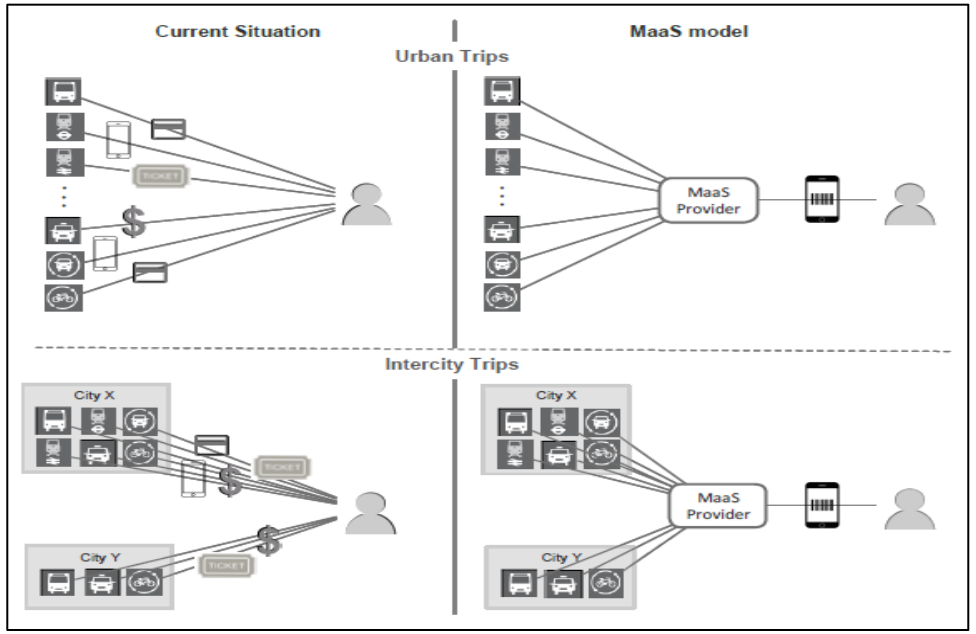
Figure 1: With and without MaaS - A Traveller’s Perspective (Kamargianni et al, 2018)
Pilot studies in Finland (Whim), Sweden (Ubigo) and Germany (Moovel) (Smith et al, 2018; Goodall et al, 2017) offer limited empirical observations of MaaS across entire cities. Studies by Kamargianni et al (2018) and Karlsson et al (2016), in London and Gothenburg respectively, suggest a willingness by participants to sell their car for flexible access to car-sharing, leading to a great propensity for sustainable travel. Smith et al (2018) identify varying ‘levels’ of MaaS adoption. For example, they consider UbiGo was employed by the Swedish government to encourage public transport use, whereas Whim formed part of a wider vision of national economic development in Finland. Limited research is available regarding the ability for MaaS to tackle mobility inequalities; the exception being ‘Bikes for All’, which sought to remove the barriers faced when accessing bike-share schemes in deprived areas of Glasgow (Lucas et al, 2019). The outcome of MaaS appears dependent on its conception: as an agent of economic development or sustainability; market-driven or state-driven.
Docherty et al (2018) point to the potential efficiency benefits MaaS offers to congestion when commodifying journeys and reducing the cost of travel, as observed through car-sharing. In contrast, Pangbourne et al (2018) believe MaaS is a model controlled by profit-seeking businesses, which maximise returns by encouraging more rather than less mobility, particularly in wealthier locations where demographics benefit from convenient access to transport services and digital technology. The juxtaposition of unfettered, instantaneous mobility on a finite transport system is reflected in the International Transport Forum’s MaaS scenario analysis (Enoch, 2018). The model applies several assumptions: replacing all private cars with car-share, a single transport system provider, one or two MaaS operators and imposed car-sharing. Although the model generates a reduction in car use, if one assumption is incomplete, i.e. 50% of private cars are replaced, then a doubling of road traffic was observed, as car-share increases without the benefits of altered travel patterns (Docherty, 2018). Pangbourne et al (2019) predict MaaS will increase mobility for those who can afford it whilst increasing automotive movements and worsening transport poverty. Similarly, Gullberg (2017: 4) believes hope for reducing mobility consumption is wrongly placed within packages like MaaS, instead the focus should be on substituting increased mobility with a ‘restrained orchestration of proximity and mobility as a means of creating accessibility’. In other words, Gullberg believes mobility innovations should create the right mobility rather than more. This has influenced research on the ability of MaaS to exclude certain groups, as populations become dependent on privately-run platforms for their travel (Wong et al, 2018; Snellen and de Hollander, 2017).
Social Equity and Mobility-as-a-Service
Social exclusion is a constraints-based process which precludes individuals from accessing aspects of society because of social circumstances (Preston and Raje, 2007). This is exacerbated by the ability to access transport services (Lucas et al, 2019). Accessibility can be limited by the proximity of neighbourhoods to transport services; the physical ability of travellers to use transport services; the cost of using transport; or the technological skill required for digital services (Snellen and de Hollander, 2017). A person is transport disadvantaged when these circumstances result in insufficient mobility and reduced accessibility compared with the general population (Lucas, 2012). Therefore, accessibility to services can be framed as a human capability (Pereira et al, 2017). Sen’s (2009) ‘Capability Approach’ explores the opportunities a person’s capabilities afford when accessing the basic functionings within a society, such as, being safe, having a well-paid job or being well-educated. Sen refers to functionings as the ability to participate effectively in society regardless of physical or social constraints (Nussbaum, 2011). Consequently, mobility is a capability because it satisfies a basic functioning; the ability to physically, socially and financially move from one place to another (Beyazit, 2011). This accords with Gullberg’s (2017) observation that opportunities arising from transport are more important than the means of transport itself, i.e., mobility is valuable for the opportunities it offers rather than the physical ability to move.
Nevertheless, Beyazit (2011) believes transport increases an individual’s capabilities because it distributes socio-economic benefits. The potential to link modes through MaaS increases the capability to access functionings when compared to individual transport services. Atasoy et al (2015) point to the fact that elderly and disabled transport passengers struggle using conventional public transport because it is not tailored to their specific needs, a barrier MaaS could assist. A study undertaken by Lesser (2019) identifies London as having the highest proportion of pensioners living in material deprivation in the UK. The fact that the over-65s will form an increasing proportion of London’s population in 2040 means tailored MaaS bundles could have a significant positive impact (GoS, 2019). However, MaaS is currently pursued by private operators looking to operate in profitable locations meaning that travelers with specific mobility issues or in poorer neighbourhoods may be excluded from the service and the opportunities it creates (Pangbourne et al, 2019; Lucas, 2012). This is supported by Docherty et al (2018) who claim the distributional impact of delivering MaaS means its provision will be sporadic, focusing on densely populated areas that guarantee usership. The distribution of deprivation in London (Figure 2), however, reflects the difficulty in identifying where MaaS will have its greatest benefit. The provision of good public transport services meaning non-car ownership does not preclude inclusion within London, although, those currently excluded may continue to suffer mobility-related exclusion because of poor disabled access at public transport (Kenyon et al, 2002). So, whilst Inner London boroughs have greater proximity to transport services, it does not mean these are necessarily accessible. Conversely, Outer London borough residents are more likely to require car access because of the dispersed urban environment (Church et al, 2000).
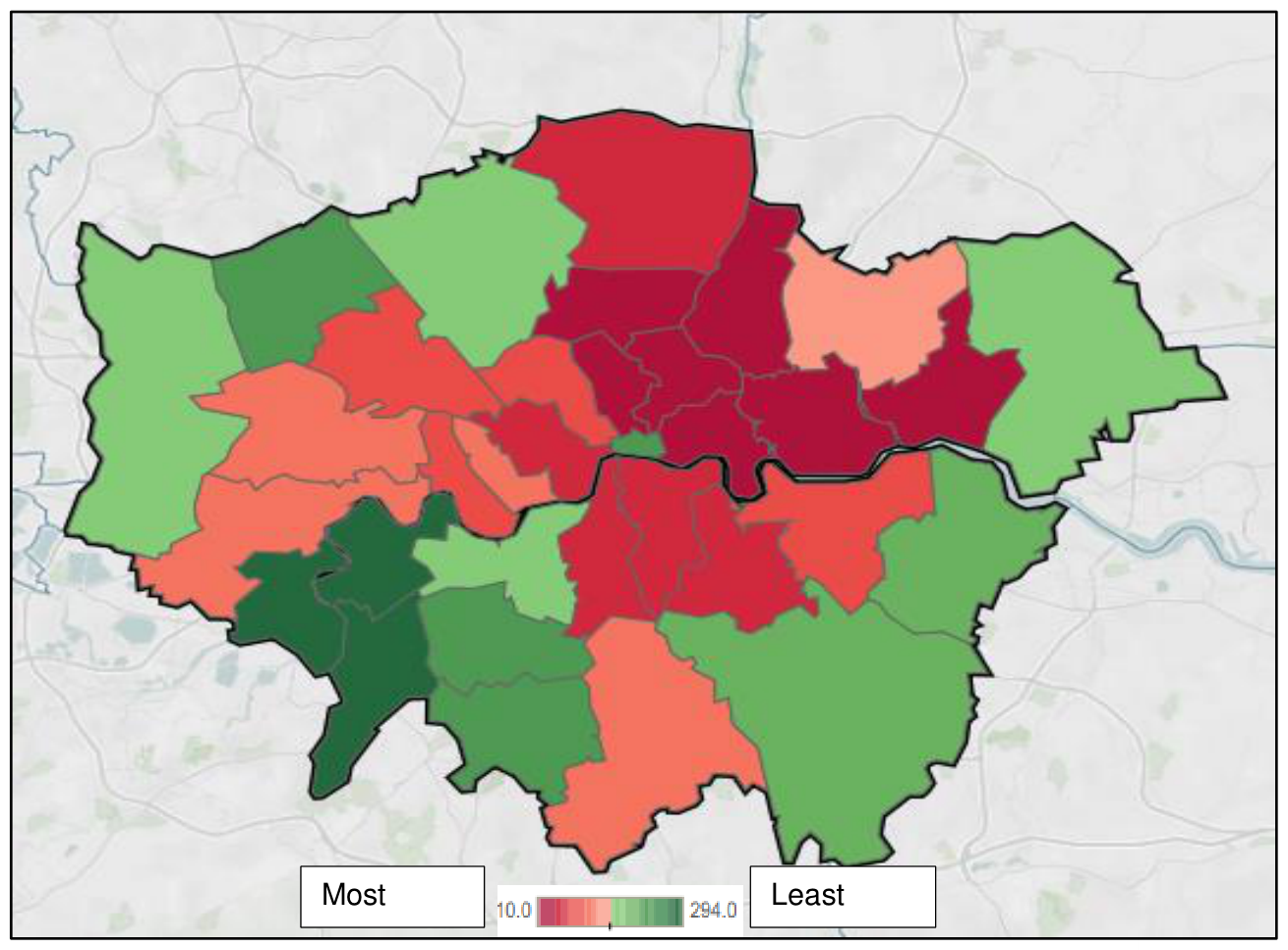
Figure 2: 2018 Indices of Multiple Deprivation in London (LC, 2018)
The distribution of inequalities aligns with the Social Mobility Commission (SMC, 2017) which identifies ‘social mobility cold-spots’, whereby accessing well-paid jobs is hampered by transport costs, poor accessibility and access to digital technology. Foulser (2017) considers MaaS operators must identify these ‘cold-spots’ from initial conception to reduce the geographic impact of MaaS.
Table 1 compares recent publications regarding the impact of poorly-run and well-planned MaaS platforms on social inclusion, and highlights the ability of MaaS to include and exclude both. Interestingly, Pereira et al (2017) assumes ‘accessibility’ is a combined ‘capability’ that offers human agency, i.e., the capability to access and use mobility technologies. Gullberg (2017) warns, however, that the uptake of autonomous vehicles will lead to increased mobility and the side-lining of accessibility within emerging mobility services.
Table 1: Poorly-Run MaaS vs Well-Planned MaaS: the impact on Social Inclusion
| Poorly-run MaaS | Well-planned MaaS |
|---|---|
| The high cost of MaaS focuses on young, wealthy populations (Li and Voege, 2017) | Concessionary fares for those of pension age, with disabilities or earning under a certain threshold (Mackettt and Thoreau, 2015) |
| Reliance on registration and digitalisation excludes those who struggle with new technologies and accessing banking (Pangbourne et al, 2019) | The provision of digitally-connected kiosks in train stations for those without smartphones (HC, 2018a) |
| Cognitive barriers exclude those who might have never experienced such technology (Lucas et al, 2019) | Tailored options for the elderly, those with autism, dementia, or those with sensory-impairments that assist in avoiding inaccessible routes (Melis et al, 2018; Viaaqio, 2017) |
| Disengagement of those who choose to walk and cycle from the policy debate (Docherty et al, 2018) | Mobility packages include front-end interfaces that prioritise health and well-being (Pangbourne et al, 2019) |
| Reduced or no service in undesirable or unprofitable locations and premium costs in affluent areas or at particular time periods: for example, Saturday night (Marsden and Reardon, 2018a) | Minimum acceptable threshold of accessibility to key activities (Lucas 2016; Pereira et al, 2017) |
In summary, the literature suggests an inclusive MaaS platform would ensure that the opportunities for seamless, on-demand mobility are accessible to all, and that citizens have the capability to make use of the service.
Why Governance matters for Mobility-as-a-Service
With consumer habits and new technologies redefining how citizens travel in cities; the smart mobility transition appears inevitable (Docherty, 2018). The challenge now faced by the UK Government is how to manage and adequately address the societal impacts of emerging mobility services.
Governance refers to the ‘extent to which government has the power to set, apply and enforce… rules’. (Marsden and Reardon 2018a:06). However, governance goes beyond policy or state action. Dowling (2018) believes governance is a process of identifying a problem, and formulating and implementing an intervention to achieve a particular outcome. But why does governance matter for MaaS? In Giddens’ (2008) opinion, the UK Government remains a key ‘enabler’ capable of stimulating stakeholder action, and an ‘insurer’ who guarantees its actions lead to desired outcomes. Marsden and Reardon (2018b) go further by suggesting emerging mobility services require strong governance because they are unlikely to replace the existing mobility regime without changes to the regulatory system they operate within. However, Docherty (2018) highlights the fact the UK Government has historically struggled to effect simple change to the transport system because governmental instruments fail to predict and manage trends, for example the emergence of non-state actors in transport governance and the shift towards crowd-sourced data. Dowling and Kent (2015) believe the state’s capacity to govern now relies on its ability to form effective partnerships with non-state actors. In the UK, the shift towards governance rather than intervention aligns with Geels’ (2011) observation that a ‘marketisation transition’ is underway as expanding consumer choice in transport provides businesses with a greater role in regulation (Docherty et al, 2004). Gray et al (2017) believe this leads to a split-personality between central and local government: the former advocating innovation through private service competition; the latter tasked with mitigating the negative externalities of congestion, air quality and social exclusion.
The governance structure in London is split between national, regional and local authorities which can lead to uncoordinated policy-making when managing new trends in mobility (Akyelken et al., 2018). Furthermore, the emergence of non-state actors within the London transport system has blurred the role of transport regulators and made existing regulation appear vague next to the specific nature of mobility innovations (Akyelken et al., 2018). For example, Uber has challenged the regulatory framework set by Transport for London (TfL) and disrupted the provision of mobility by offering smartphone user’s access to cheap taxi services. This has weakened the role for traditional ‘black cabs’ and the demand for night-time buses (Mulley and Kronsell, 2018; Wood et al., 2017). Dudley et al., (2017: 3) explore Uber’s ability to exploit out-of-date rules in London to embed its branding in the public consciousness before authorities were able to regulate effectively:
‘…for regulators… there is a delicate balance… between wishing to encourage innovation and services that apparently have wide public support, with sensitivity to the interests of established operators, to the provision of rules that provide fair competition’.
When mobility services reach a critical mass then regulation becomes difficult because restrictions are viewed as ‘frustrating public demand’ (Dudley et al, 2017: 4). This coincides with Docherty et al (2018), who consider technological change as outpacing the capacity of governments to respond, which risks locking emerging mobility services into a transition path that exacerbates current social problems – ‘once a particular spatial form is created it tends to institutionalise’ and determine future development (Harvey, 2008: 27).
However, Marique and Marique (2018: 188) argue it is not whether digital innovations disrupt social practices, but ‘how digital innovation may be best used to serve the complex socio-economic…challenges London faces’. Therefore, a transition in the way governance steers mobility services is needed to create conditions for inclusion and to effectively manage disruptive innovations (Docherty et al, 2018). Reardon and Marsden (2018: 140) consider strong state involvement a prerequisite if the ‘most integrated and sustainable visions of smart mobility’ are to be achieved. So, whilst state intervention has focused on ‘addressing market failure’ (Docherty et al, 2004: 258), the specific nature of emerging mobility services requires an equally specific regulatory framework. This accords with Hopkins and Schwanen (2018) who consider smart mobility transitions as impossible when developed through existing market-driven approaches. MaaS must balance public and private regulation to ensure a positive contribution to the quality of life for all (Marique and Marique, 2018).
Consideration of Mobility-as-a-Service in Governmental Documents
No regulatory framework has been defined by the UK Government to manage MaaS at the local, regional or national level, but significant research into the implementation of the service has been undertaken. Various mobility innovations have been advocated in London: GoSutton on-demand bus trials (TfL, 2019); automated vehicle trials in Greenwich (TRL, 2018); and the commitment from the London Assembly (LA, 2018) to guide MaaS. The Department for Transport’s (DfT) initial focus was the potential for MaaS to reduce car ownership, provide an efficient transport system and compete in mobility markets (Datson, 2016). Unfortunately, social inclusion and accessibility have been considered challenges for future policy-makers.
Instead, equity concerns arose during roundtable discussions held by the Government Office for Science (GoS, 2017: 2) with industry stakeholders which suggested MaaS should not be more expensive than current transport and fully inclusive to avoid ‘the MaaS and the MaaS-nots’. A call for evidence by GoS (2019) raised concerns that, without state intervention, future MaaS models could increase digital exclusion (CfBT, 2017; TravelSpirit, 2017; Viaaqio, 2017; techUK, 2017). If MaaS is to serve more than the agile and the affluent, then access must be provided by phone or person, or via a third party who can access the service on behalf of others (CfBT, 2017). The face-to-face element is essential for those currently excluded from digital software, for example the over-65s or those with dementia (Viaaqio, 2017). A governmental report (Enoch, 2018) suggests policymakers are faced with a major challenge in balancing the promised benefit with issues of equity.
The lack of an overarching strategy for local authorities was identified as a key barrier by GoS (2017) when dealing with disruptive mobility innovations. TravelSpirit (2017) claim an ‘Internet of Mobility Framework’ is required to govern MaaS, similar to KPMG’s ‘MaaS Requirement Index’ which guides local authorities in deciding the optimum level of regulation to achieve policy goals (Foulser, 2017). The KPMG index is the only one identified during this study that offers local authorities a framework for decision-making in the MaaS ecosystem. The risk is that, without such frameworks, local authorities are ill-equipped to manage issues pertaining digital exclusion at the local level (TechUK, 2018). A Transport Committee (HC, 2018b) reflects the concern that authorities are ill-informed of the potential impacts of MaaS. Simon Ho of TravelSpirit suggests
‘we are concerned about technological progress bulldozing what transport is really about… providing equitable and sustainable access to all’ (HC, 2018b).
The Transforming Cities Fund challenges transport authorities to create Future Mobility Zones (FMZ) in an attempt to explore smart mobility transitions (DfT, 2018a). It focuses on how technological innovations in ticketing and integration can be implemented within cities across the UK. Lyons and Davidson (2016: 105), believe by exploring policymaking pathways a number of ‘divergent plausible future scenarios’ can be considered in the decision-making process. This supports the remark made by Marsden et al., (2018) that more adaptive approaches to planning are needed to shape travel in the future. They argue, however, such debates are often undertaken in ‘silos’ rather than considering various societal impacts. For example, the Inclusive Transport Strategy (DfT, 2018b) considers that ‘mobility trials’ are when dialogue between disabled transport users and mobility providers should occur. Unfortunately, the social repercussions of MaaS do not appear central to the FMZ bidding process. However, the Future of Mobility Urban Strategy (DfT, 2019: 8) sets out principles which are to guide mobility innovations in the UK, including issues surrounding social inclusion: ‘the benefits of innovation in mobility must be available to all parts of the UK and all segments of society’. The study indicates a regulatory review of MaaS should include:
- Consideration of how ‘new mobility services can enable accessible, inclusive and safe mobility services’;
- Investigate ‘the case for the Government to do more to shape the way MaaS platforms emerge, to manage unintended consequences...’; and
- Recognise that ‘legislation and regulation relevant to MaaS is spread across multiple levels of government’. (DfT, 2019: 54)
The governmental document review confirms that unregulated MaaS models could disadvantage the most vulnerable transport users. However, recognising that state intervention in mobility transitions is currently disjointed does not address the fact MaaS platforms are entering the UK market devoid of appropriate regulation. A GoS evidence review concludes that policy interventions are essential in avoiding current inequalities deepening as a result of mobility transitions. The review recommends clarity in the regulatory role of the state and the position of authorities to avoid negative repercussions (Lucas et al, 2019).
Summary
The literature review frames inclusive transport as providing users mobility and by extension the capability, to access the services they require regardless of social circumstances. A gap in the literature is identified concerning the role of state when governing MaaS to ensure inclusion and highlights the confusing relationship of governance in the UK, tasked with balancing effective state intervention alongside promoting innovation. This has postponed research into the unforeseen societal implications MaaS could have for transport users (Pangbourne et al, 2018). A thorough evidence-based assessment of emerging mobility services has outlined the requirement for a regulatory framework to manage the relationship between state and non-state actors. However, the most suitable form of state intervention for MaaS remains unknown.
References
- Akyelken, N., Banister, D., and Givoni, M. (2018). The sustainability of shared mobility in London: The dilemma for governance. Sustainability, 10 (2), 420.
- Atasoy, B., Ikeda, T., Song, X., and Ben-Akiva, M. E. (2015). The concept and impact analysis of a flexible mobility on demand system. Transportation Research Part C, 56, 373–392.
- Banister, D. (2008). The sustainable mobility paradigm. Transport Policy, 15 (2), 73-80.
- Beyazit, E. (2011). Evaluating social justice in transport: lessons to be learned from the capability approach. Transport reviews, 31 (1), 117-134.
- Buscher, V., Doody, L., Webb, M. and Aoun, C. (2014). Urban Mobility in the Smart City Age. Schneider Electric, Arup and The Climate Group, London.
- Campaign for Better Transport (CfBT) (2017). In: Written Evidence: Mobility-as-a-Service. London: House of Commons.
- Church, A., Frost, M., and Sullivan, K. (2000). Transport and social exclusion in London. Transport policy, 7 (3), 195-205.
- Datson, J. (2016). Mobility as a Service: Exploring the Opportunity for mobility as a Service in the UK. London: Transport Systems Catapult.
- Department for Transport (DfT) (2018a). Transforming Cities Fund: Call for Proposals. London: HM Government.
- Department for Transport (DfT) (2018b). The Inclusive Transport Strategy: Achieving Equal Access for Disabled People. London: HM Government.
- Department for Transport (DfT) (2019). Future of Mobility: Urban Strategy. London: HM Government.
- Docherty, I. (2018). New Governance Challenges in the Era of Smart Mobility. In: Marsden, G. and Reardon, L. Governance of the Smart Mobility Transition. London: Emerald Publishing.
- Docherty, I., Marsden, G. and Anable, J. (2018). The governance of smart mobility. Transportation Research Part A: Policy and Practice, 115, 114-125.
- Docherty, I., Shaw, J. and Gather, M. (2004). 'Changing roles of the state in 21st century transport'. Journal of Transport Geography, 12 (4), 257-264.
- Dowling, R. (2018). Smart mobility: disrupting transport governance? In: Marsden, G. and Reardon, L. Governance of the Smart Mobility Transition. London: Emerald Publishing.
- Dowling, R., and Kent, J. (2015). Practice and public–private partnerships in sustainable transport governance: The case of car sharing in Sydney, Australia. Transport Policy, 40, 58-64.
- Dudley, G., Banister, D., and Schwanen, T. (2017). The rise of Uber and regulating the disruptive innovator. The Political Quarterly, 88 (3), 492-499.
- Enoch (2018). Mobility as a Service (MaaS) in the UK: change and its implications. London Government Office for Science.
- Foulser, B. (2017). Reimagine places: Mobility as a service. KPMG, August, 1-32.
- Geels, F. (2011). The multi-level perspective on sustainability transitions: Responses to seven critcisms. Environ. Innovations Societal Transitions, 1 (1), 24-40.
- Geels, F. (2012). A socio-technical analysis of low-carbon transitions introducing the multi-level perspective into transport studies. Journal of Transport Geography, 24, 471-482.
- Geels, F., Sovacool, B., Schwanen, T. and Sorrell, S. (2017). Sociotechnical transitions for deep decarbonization. Science, 357 (6357), 1242-1244.
- Giddens, A. (2008). The Politics of Climate Change. Policy Network, London.
- Goodall, W., Dovey, T., Bornstein, J. and Bonthron, B. (2017). The rise of mobility as a service. Deloitte Rev, 20, 112-129.
- Government Office for Science (GoS) (2017). Foresight Future of Mobility project, MaaS Roundtable. London: HM Government.
- Government Office for Science (GoS) (2019). A time of unprecedented change in the transport system: The Future of Mobility. London: HM Government.
- Gray, D., Laing, R. and Docherty, I. (2017). Delivering lower carbon urban transport choices: European ambition meets the reality of institutional (mis) alignment. Environment and Planning A: Economy and Space, 49 (1), 226-242.
- Gullberg, A. (2017). Urban transport: eliminating blind spots and missing links in the era of the fourth industrial (r)evolution. 15 August 2017, Stockholm: Thredbo15 Conference, 1-18.
- Harvey, D. (2008). Social Justice and the City. Baltimore, John Hopkins University Press.
- Hensher, D. (2017). Future bus transport contracts under a mobility as a service (MaaS) regime in the digital age: Are they likely to change? Transportation Research Part A: Policy and Practice, 98, 86-96.
- Hopkins, D., and Schwanen, T. (2018). Automated mobility transitions: governing processes in the UK. Sustainability, 10 (4), 956.
- House of Commons (HC) (2018a). Transport Committee – Mobility as a Service: Government Response to the Committee’s Eight Report. London: HM Government.
- House of Commons (HC) (2018b). Transport Committee – Oral Evidence: Mobility as a Service, Questions 1-76. London: HM Government.
- Jittrapirom, P., Marchau, V., van der Heijden, R. and Meurs, H. (2018a). Future implementation of Mobility as a Service (MaaS): Results of an international Delphi study. Travel Behaviour and Society. [In Press].
- Jittrapirom, P., Marchau, V., van der Heijden, R., and Meurs, H. (2018b). Dynamic adaptive policymaking for implementing Mobility-as-a Service (MaaS). Research in Transportation Business & Management, 27, 46-55.
- Kamargianni, M., Li, W., Matyas, M. and Schafer, A. (2016). A critical review of new mobility services for urban transport. Transportation Research Procedia, 14, 3294 – 3303.
- Kamargianni, M., Matyas, M., Li, W., Muscat, J., Yfantis, L., (2018). The MaaS Dictionary. MaaSLab, Energy Institute, University College London. Available at: www.maaslab.org [accessed on 24 August 2019].
- Karlsson, I. M., Sochor, J., and Strömberg, H. (2016). Developing the ‘Service’ in Mobility as a Service: experiences from a field trial of an innovative travel brokerage. Transportation Research Procedia, 14, 3265-3273.
- Kenyon, S., Lyons, G., and Rafferty, J. (2002). Transport and social exclusion: investigating the possibility of promoting inclusion through virtual mobility. Journal of Transport Geography, 10 (3), 207-219.
- Kwan, M. and Schwanen, T. (2016). Geographies of Mobility. Annals of the American Association of Geographers, 106 (2), 243-256.
- Lesser, R. (2019). Poverty in London 2017/2018. [Online]. London: London Assembly. Available at: https://data.london.gov.uk/blog/poverty-in-london-2017-18/ [accessed on 24 August 2019].
- Li, Y. and Voege, T. (2017). Mobility as a service (MaaS): Challenges of implementation and policy required. Journal of transportation technologies, 7 (2), 95-106.
- London Assembly (LA) (2018) Future transport: How is London responding to technological innovation? London: London Assembly.
- London Council (LC) (2018). Indices of Multiple Deprivation Map. [Online] London: London Councils. https://www.londoncouncils.gov.uk/our-key-themes/local-government-finance/fair-funding-review-2018/deprivation [accessed on 24 August 2019].
- Lucas, K. (2012). Transport and social exclusion: where are we now? Transport Policy, 20, 105-113.
- Lucas, K., Stokes, G., Bastiaanssen, J. and Burkinshaw, J. (2019). Inequalities in Mobility and access in the UK Transport System: Future of Mobility Evidence Review. London: Government Office for Science.
- Lucas, K., van Wee, B. and Maat, K. (2016). A method to evaluate equitable accessibility: combining ethical theories and accessibility-based approaches. Transportation, 43 (3), 473.
- Lyons, G., and Davidson, C. (2016). Guidance for transport planning and policymaking in the face of an uncertain future. Transport Research Part A, 88, 104-116.
- Mackett, R. and Thoreau, R. (2015). Transport, social exclusion and health. Journal of Transport & Health, 2 (4), 610-617.
- Marique, E. and Marique, Y. (2018). Uber in London: A battle between public and private regulation. Uber & Taxis–Comparative law studies, 163-200.
- Marsden, G. and Reardon, L. (2018a) Introduction. In: Marsden, G. and Reardon, L. Governance of the Smart Mobility Transition. London: Emerald Publishing.
- Marsden, G. and Reardon, L. (2018b) Conclusion, A window of opportunity. In: Marsden, G. and Reardon, L. Governance of the Smart Mobility Transition. London: Emerald Publishing.
- Marsden, G., Dales, J., Jones, P., Seagriff, E. and Spurling, N. (2018). All Change? The future of travel demand and the implications for policy and planning. Lancaster: Commission on Travel Demand.
- Melis, A., Mirri, S., Prandi, C., Prandini, M., Salomoni, P. and Callegati, F. (2017). Integrating personalized and accessible itineraries in MaaS ecosystems through microservices. Mobile Networks and Applications, 1–10.
- Metz, D. (2016) Travel Fast or Smart? A Manifesto for an Intelligent Transport Policy. London: London Publishing Partnership.
- Mulley, C. and Kronsell, A. (2018). Workshop 7 report: The “uberisation” of public transport and mobility as a service (MaaS): Implications for future mainstream public transport. Research in Transportation Economics, 69, 568-572.
- Mulley, C., Nelson, J., and Wright, S. (2018). Community transport meets mobility as a service: On the road to a new a flexible future. Research in Transportation Economics, 69, 583-591.
- Nussbaum, M. (2011). Creating capabilities. Harvard University Press.
- Pangbourne, K., Mladenovic, M., Stead, D. and Milakis, D. (2019). Questioning Mobility as a Service: Unanticipated implications for society and governance. Transportation Research Part A: Policy and Practice. 1-30.
- Pangbourne, K., Stead, D., Mladenovic, M. and Milakis, D. (2018). The case of Mobility as a Service: a critical reflection on challenges for urban transport and mobility governance. In: Marsden, G. and Reardon, L. Governance of the Smart Mobility Transition. London: Emerald Publishing.
- Pereira, R., Schwanen, T., and Banister, D. (2017). Distributive justice and equity in transportation. Transport Reviews, 37 (2), 170-191.
- Preston, J. and Raje, F. (2007). Accessibility, mobility and transport-related social exclusion. Journal of Transport Geography, 15, 151-160.
- Rantasila, K. (2015). The impact of Mobility as a Service concept to land use in Finnish context. International Conference on Sustainable Mobility Applications, Renewables and Technology (SMART), Kuwait City, 1-7.
- Reardon, L. and Marsden, G. (2018). Does governance matter? An international scenarios exercise. In: Marsden, G. and Reardon, L. Governance of the Smart Mobility Transition. London: Emerald Publishing.
- Smith, G., Sochor, J. and Sarasini, S. (2018). Mobility as a Service: Comparing developments in Sweden and Finland. Research in Transportation Business & Management, 27, 36-45.
- Snellen, D. and de Hollander, G. (2017). ICT'S change transport and mobility: mind the policy gap! Transportation research procedia, 26, 3-12.
- Social Mobility Commission (SMC) (2017). State of the nation 2017: Social mobility in Great Britain. London: Social Mobility Commission.
- TechUK (2018). In: Written Evidence: Mobility-as-a-Service. London: House of Commons.
- Transport for London (TfL) (2019). Trial of on-demand bus service ‘GoSutton’ launches today. [online]. London: TfL. Available at: https://tfl.gov.uk/info-for/media/press-releases/2019/may/trial-of-on-demand-bus-service-gosutton-launches-today [accessed 24 August 2019].
- Transport Research Laboratory (TRL) (2018). GATEway Project Final Report. London: TRL.
- TravelSpirit (2017) In: Written Evidence: Mobility-as-a-Service. London: House of Commons.
- Urry, J. (2004) The ‘System’s of Automobility. Theory, Culture & Society, 21 (5), 25-39.
- Vergragt, P. and Brown, H. (2007). Sustainable mobility: from technological innovation to societal learning. Journal of Cleaner Production, 15 (11-12), 1104-1115.
- Viaaqio (2017). In: Written Evidence: Mobility-as-a-Service. London: House of Commons.
- Wong, Y., Hensher, D. and Mulley, C. (2018). Emerging transport technologies and the modal efficiency framework: A case for mobility as a service (MaaS). The University of Sydney Business School: Institute of Transport and Logistics Studies.
- Wood, Z., Parry, G., Carruthers, J. and Rose, K. (2017). Assessing the impact of digital innovations in the London transportation network. Project Report.
Notes
99 Email contact: dp@caneparoassociates.com ; This article is resourced by David’s unpublished, award winning MSc Thesis (2019) submitted to University College London titled ‘State intervention in Mobility-as-a-Service: the role of governance in steering emerging mobility services towards inclusive outcomes in London’
How to cite
Pearce, D. (2020) ‘State intervention in Mobility-as-a-Service: steering emerging mobility services towards inclusive outcomes in London’, Journal of Contemporary Development & Management Studies, 8(1), pp. 76–89.
Converted from the printed issue (vol08-no1-2020.pdf, PDF pages 77–90). The PDF is the version of record.