Abstract
A continuously growing number of multinational enterprises (MNEs) aim to expand their commitments to Corporate Social Responsibility (CSR) to a corporate level by concluding International Framework Agreements (IFAs) together with global unions. The literature reviewed highlighted the considerable variations between the content of IFAs and noted the influence of country-specific factors on their effective implementation. This study explores the question to what extent do these cultural and legal variations explain the discrepancies between the agreements’ content, limiting the scope to France and Germany. The inductive study highlights the differences between all forty IFAs concluded in the two countries through a comparative content analysis and presents results from interviews conducted with the French non-profit organisation ORSE and two experts from Germany. The findings show that French and German IFAs differ from each other with regard to the types of signatories, the variety of topics addressed as well as implementation and monitoring procedures. Besides cultural and social norms pertinent to the countries, the research found that specifically the nature of labour relations shapes the IFAs in terms of the composition and power of the negotiation players, whose interests might further influence the actual concepts of the agreements. The study concludes that both country-specific and internal factors need to be considered as decisive determinants of the quantitative and qualitative development of French and German IFAs and gives implications for future research.
Keywords
Corporate Social ResponsibilityInternational Framework Agreements (IFA)Observatoire de la Responsabilité Sociétale des Entreprises (ORSE)
Introduction
In the current context of increasing social and environmental concerns associated with globalisation, multinational enterprises (MNEs) seek to minimise the unfavourable impact of their operations, often expressed through their commitment to Corporate Social Responsibility (CSR). Among these social practices, International Framework Agreements (IFAs), also referred to as Global Framework Agreements (GFAs), are considered the only type of instrument gathering both management and stakeholders at the negotiation table. Unlike European Framework Agreements (EFAs), they go beyond the regional scope of application and are therefore by definition negotiated with a Global Union Federation (GUF), which aims at promoting and monitoring the respect of fundamental labour standards at the corporate level. Thus, the protection of workers is also ensured in countries with relatively weak labour regulations.
Companies’ commitments to IFAs entail significant benefits, such as improved relationships between management and workers, increased credibility and a sound cross-border social dialogue (Papadakis 2011: 3). Nonetheless, only a small proportion of approximately 50,000 multinational enterprises throughout the world (ILO 2016) have made use of this CSR tool. Up to the date of this study, some 110 agreements (ORSE 2015) have been signed, which are mainly concentrated in Europe, notably in German, French and Nordic systems of industrial relations (Papadakis 2011: 5-7).
Due to the voluntary approach and lack of specified regulations for this phenomenon, it is a well-known fact that the agreements’ content varies considerably. While previous researchers have observed how national regulations and cultures can limit the implementation of IFAs, no study has investigated specifically to what extent these country-specific factors are also reflected in the actual wording of the agreements. In response to the research interests of the French non-profit organisation ORSE, Observatoire de la Responsabilité Sociétale des Entreprises, this study highlights the practices embedded in IFAs of companies headquartered in France and Germany, and identifies where contrasts originated with regard to factors pertinent to the countries of negotiation. Thus, it focuses on how and why IFAs are different from each other, based on a comparative content analysis.
The findings may serve as guidance on IFAs for ORSE members. At the same time, they contribute to filling the gap in CSR literature that often ‘completely ignores labour as a potential force for elaborating and implementing voluntary initiatives’ (Riisgaard 2005: 716) and has not yet investigated the differences in the content of IFAs between two specific countries. The results are also of significance for those businesses that have already signed an IFA or intend to do so in the future. Finally, they might further stimulate the attention of unions that, despite their crucial role in promoting CSR, have so far only insufficiently focused on this topic (ETUC 2013: 41).
The study is designed to answer the question: What are the major differences between IFAs concluded in France and Germany, and to what extent do cultural and legal variations explain the discrepancies between their content? The research pursued the following three objectives, which have been carefully defined based on time and resource constraints:
- To provide a comprehensive overview of the main characteristics of IFAs negotiated in France and Germany, contributing to the literature that examines the potential of IFAs.
- To illustrate the differences in the content of French and German IFAs from both quantitative and qualitative perspectives.
- To investigate the relationship between the content of IFAs and country-specific factors in order to identify what might explain these contrasts.
The paper begins by briefly defining CSR and outlining academic key debates regarding IFAs. Presenting the previous work of ORSE and its current research interests reinforces the study’s relevance and timeliness. The literature review is followed by the methodology section that describes the approach taken to achieve the objectives. The data analysis, which addresses all three objectives, gives the reader an understanding of the principal features of French and German IFAs, and highlights the differences in their content based on quantitative and qualitative observations. Potential origins of these contrasts are discussed through adding evidence of the primary data collected by the researcher. The findings are structured according to the categories investigated in the comparative analysis. A detailed evaluation is given regarding the impact of country-specific factors on the content of French and German IFAs. The paper ends with providing implications for future research and evaluating the future development of IFAs in France and Germany.
Literature Review
The necessity of tools to CSR theories
With CSR being ‘a source of opportunity, innovation, and competitive advantage’ (Porter and Kramer 2006: 80), an increasing number of organisations implement CSR policies in their businesses. The aim of CSR can be defined as creating ‘higher standards of living, while preserving the profitability of the corporation, for its stakeholders both within and outside the corporation’ (Hopkins 2005 cited in Hopkins 2006: 299). Another way of approaching CSR is the theory of the Triple Bottom Line, which has become a well-respected framework to measure a business’ success. While the traditional bottom line only focused on financial performance, Elkington (1998) suggested that businesses also needed to consider their impact on environmental and social capital.
With the emergence of CSR, specific tools were needed in order to operationalize socially responsible behaviour, which resulted in the promotion of codes of conducts and IFAs. In fact, the implementation of these guidelines is of great importance ‘for the future development of related CSR issues, such as the link between human rights and workers’ rights, the role of NGOs in business ethics, and the link between national and transnational governance systems’ (Egles-Zandén 2008: 530). Trade unions are regarded as powerful organisations to put CSR policy into practice, since they can easily exert pressure on organisations and jointly work on solutions that enforce companies’ social responsible behaviour (ETUC 2013: 25).
Key debates on IFAs
The origins of IFAs can be traced back to the 1990s. Global Union Federations committed themselves to promoting a legal instrument designed to strengthen employee representation and to regulate working conditions in transnational enterprises (Dehnen 2013: 578). Since the first IFA, signed by the French company Danone in 1988, their numbers have accelerated dramatically, and the CSR tool has found particular attention among researchers as of the early years of this millennium.
Previous academic debates often focused on the differentiation between codes of conduct and IFAs, which both aim to improve workers’ rights but differ in the degree of involvement and obligation they impose. Unlike codes of conduct, which are unilaterally adopted by corporations, IFAs ask for a company’s bilateral dialogue with its stakeholders by involving labour unions in the negotiation process (e.g. Egles-Zandén 2009: 531). In fact, IFAs are considered to be ‘one of the most promising tools in terms of CSR’ (ETUC 2013: 25).
Another group of academics examined the differences in content of IFAs (e.g. Bourque 2008). Even if ‘model agreements’ (Appendix A) exist, GUFs such as the International Metalworkers’ Federation (IMF 2006) noted that the agreements’ content generally deviates from these guidelines. Furthermore, the legal value of these texts is strongly contested (Sobczak 2007). Based on an examination of the main features of all IFAs signed up to that point, Hammer (2005) distinguished between ‘rights’ and ‘bargaining’ agreements, the latter leaving scope for further negotiation and discussions. Another distinction can be made between a ‘weak’ or ‘strong’ content, depending on the level of detail and defined mechanisms an agreement provides (Sydow et al. 2014). However, a classification of IFAs by specific countries has not yet been considered.
Other, mostly recent studies investigated the actual impacts of IFAs and the effect of translating labour relations to other countries (e.g. Helfen, Schüßler, and Stevis 2016), which guided the focus to local conditions that can constrain the implementation and effectiveness of IFAs (Nifouro 2012). Besides ‘external factors’, ‘internal factors’ have been identified as influential determinants (Stevis 2010), which define what motivates enterprises or unions to negotiate IFAs. A light remark by Müller, Platzer and Rüb (2008) implies that the unions’ approaches to IFAs might be influenced by the nature of labour relations and national traditions depending on the geographical location.
In a recent content analysis (Dehnen 2013) examining the controversial role of the European Works Council (EWC) as a negotiator of IFAs in three European countries, different forms of labour regulation shaped the characteristics of IFAs in this respect. It can be concluded from this observation that country-specific factors do not only manipulate the effectiveness of IFAs in practice but that they are also reflected in the content of the IFA itself.
Given the extensive insights on the major impact of country characteristics on IFAs, it is astonishing that no comparative content analysis has been conducted that addresses these specific origins. This study aims to fill this gap in the literature, primarily limiting the scope to local conditions in France and Germany, which include legal and cultural dimensions.
The research interests of ORSE
ORSE is among the few organisations that have attempted to identify best practices of IFA signatories and underline the importance of this CSR tool. Since its foundation in 2000, the multi-stakeholder organisation has been committed to researching and promoting various issues with regard to CSR and socially responsible investment at a European level. It is worth noting that ORSE is the only network that promotes CSR in Europe that has both unions and professional organisations in its membership.
Similar to the approach taken by Hammer (2005) and Sobczak (2007), ORSE (2007) conducted a study on all framework agreements concluded at that time, thus drawing up a guide to their main features. The analysis highlighted the agreements’ disparity with regard to the procedures, negotiation players as well as to their content and the measures taken for implementation. Agreeing with other researchers, ORSE (2007: 55) reasoned that ‘this diversity of practices relates to the cultural, social and economic background of these companies.’
In response to the need of an ‘active surveillance of framework agreements’ (ORSE 2007: 55) of both ORSE members and those companies committed to becoming engaged, it was of particular interest for ORSE to identify differences between the agreements’ content in France compared to another European country showing a great maturity with respect to IFAs, such as Germany.
Methodology
The secondary research undertaken and an exchange with ORSE managers in the initial stages helped the researcher to define the research questions and objectives. The hypothesis that there were likely to be differences in the characteristics of French and German agreements that were directly related to local conditions was then inductively evaluated based on secondary data. This data mainly consisted of the primary sources of the agreements themselves, whose analysis was reinforced and extended through primary research.
To arrive at conclusions on the principle of cause and effect, the philosophy of critical realism was essential to understand what lies behind the observable variables, such as the origins of IFAs and the deeper relations between the parties involved. In addition to that, national differences between France and Germany, particularly in terms of labour relations, had to be taken into account. Unlike realism, interpretivism urges the necessity to understand the roles of individuals in their environment. As ‘social actors’ (Saunders and Lewis 2012: 106) play a great role in the negotiation of IFAs, they might greatly influence their content. But more importantly, it was essential to scrutinise how their roles differ from country to country. With both philosophies being of relevance, the most effective approach was to blend their benefits, which can be defined as pragmatism. Thus, the mixture and application of the research instruments was primarily determined based on the research question and objectives.
Comparative content analysis
First and foremost, the main features of French and German IFAs were identified. While past researchers often applied a cross-sectional design, which focused on specific case studies (e.g. Niforou 2012), this longitudinal study contributes to the literature that is able to indicate change and developments in the content of IFAs since their emergence in 1988 (e.g. Hammer 2005, ORSE 2007). As a necessary consequence, archival documents were used as the principal source of data. The databases of ORSE (2015) and the European Commission (n.d.) provided a list of all IFAs signed by corporations worldwide. As a content analysis of specifically two countries has not yet been considered to the researcher’s knowledge, the study examined 100 per cent of all known agreements concluded by French (24) and German (16) multinational enterprises. Hence, a sample was not necessary.
The companies were compiled in a list (Appendix B), sorted by the date of signature. Information concerning the respective headquarters, industry and GUF was added to the overview. The documents’ size varied between only one to more than twenty pages. The uneven distribution of the numbers of agreements between France and Germany was carefully taken into account in the quantitative analysis. Furthermore, the researcher critically compared the English translation with the original texts to verify their accuracy. In case of amendments, the latest versions were predominantly analysed since they expected to yield the most results and reflected the current state of IFAs to a greater degree. To analyse the qualitative and quantitative data, testable propositions were developed based on ORSE’s directory for IFAs (2007), and a questionnaire was created that helped to classify the content of IFAs into different categories. The agreements could then be easily compared with each other, first examining French and German agreements separately and then identifying specific differences within each category.
The researcher was aware of the fact that European countries traditionally have very similar labour relations systems and that their comparison might not yield significant results. While the neighbouring countries both have relatively low levels of union membership, Germany currently showing 18 per cent and France 8 per cent, unions are yet structured and organised differently (ETUI 2014). Thus, this study is able to indicate the effect potentially small variations can have.
Primary data collection
To offset the weakness and descriptive nature of a documentary analysis, and to be able to meet the last objective, which aimed to explain the casual relationship between the facts that had been identified throughout the analysis and the broader context of country characteristics, surveys were selected as a supplement to archival research. They were considered to yield additional qualitative data and to give an in-depth understanding of the relationship between the variables.
A regular exchange was maintained with ORSE, whose managers were also surveyed as part of a semi-structured, personal interview. Questions were designed subsequent to the documentary analysis to ensure that specific observations could be addressed and evaluated. The results particularly served in understanding the variables in France.
To collect perception data on German IFAs, additional study participants were selected at random through non-probability sampling and contacted by email. The quota sample, which reduced the risk of unrepresentative results, consisted of researchers who could be identified as experts in the field based on the quantity and relevance of studies available. Assuming they had sufficient knowledge of IFAs in Germany, they were selected purposively since a sample obtaining these attributes was critical to the research results. Interviews with MNEs (e.g. Helfen, Schüßler, and Stevis 2016) or trade unions (e.g. Bourque 2008) could have been considered but since this study primarily examined external influential factors, the collected data would have not been of relevance. The author’s approach also reduced the risk of subject bias since it was expected that researchers take a more neutral position in evaluating the instrument. On top of that, it enhanced research reliability.
To some extent, snowball sampling was used as interviewees recommended additional members of the population. Eventually, the researcher surveyed two additional experts as part of semi-structured telephone interviews. While the first was particularly familiar with the strategy of the German trade union IG Metall, the second, a professor at the Global Labour University in Berlin, has been identified as an expert of IFAs in different institutional settings. Critical evaluation of the responses was essential, the researcher being aware of the fact that the flexibility allowed to the interviewees might result in bias. Before conducting the interview, it was pilot tested to confirm its feasibility, and the participants’ consent was asked to ensure their voluntary participation. The researcher understood and confirmed the crucial importance of ethics throughout, and also after the research process that involves human participants. Prior to the publication of this study, ORSE was given the opportunity to verify the confidential treatment of the data, being aware of the negative effect mistreatment could have on their business.
Results / Data Analysis
Predominance of IFAs in France and Germany
Out of the total number of approximately 110 IFAs signed up to the date of this study, notably more than 90 agreements have been signed by companies with headquarters in Europe. This strong role of Europe stems mainly from a law existing since 1994, which mandates the establishment of EWCs in the member states (Bourque 2008: 33), thus strengthening the voice of European employees. Among the European signatory countries, France and Germany remarkably represent more than 40 per cent, counting 16 and 24 agreements respectively. In fact, when taking into account the number of amended IFAs, a greater amount of agreements can be found in France). (Figure 1).
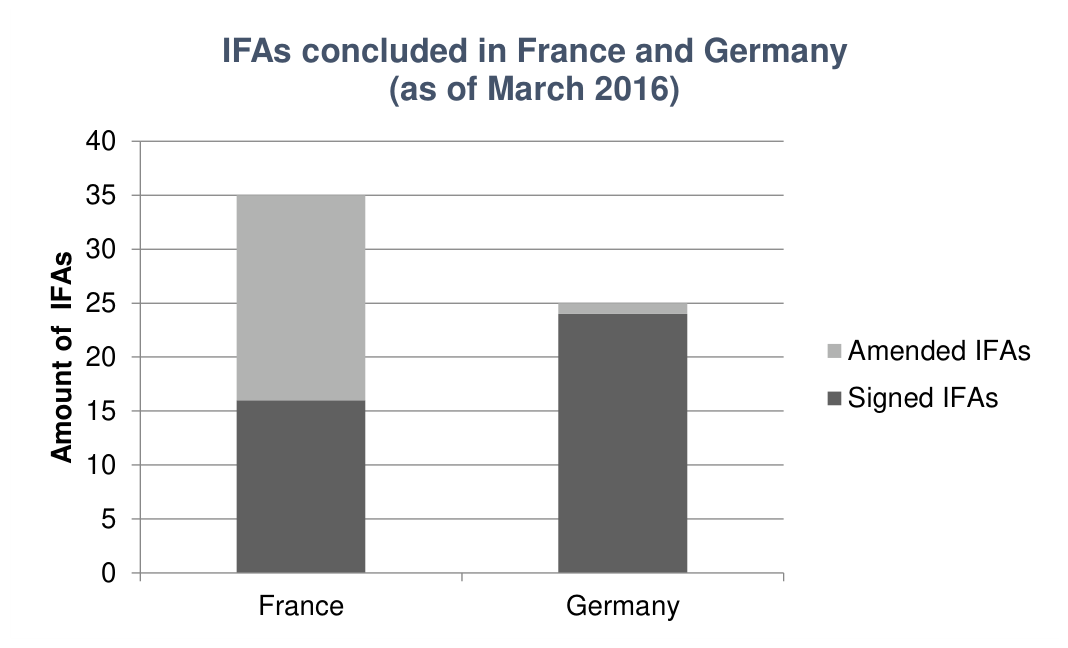
Figure 1: IFAs concluded in France and Germany
The researcher interrogated both ORSE (2016) and Fichter (2016) as part of semi-structured interviews whether a specific event triggered the introduction of IFAs in the two countries. To ORSE (2016), the early development of IFAs in France is not surprising due to the country’s tradition in collective bargaining and the significant power of French trade unions, in spite of their relatively low level of representation. In Germany, the trigger was the establishment of a world works council at Volkswagen, which put pressure on company management to negotiate an agreement stipulating ‘what the goals of this new body would be and how the company should deal with labour relations at its operations around the world’ (Fichter 2016).
When taking a closer look at the quantitative development in France and Germany (Figure 2), it becomes apparent that the majority of IFAs, regardless of the number of amendments, accumulated in the period from 2000 until 2007, after a rather sluggish development in the initial stages.
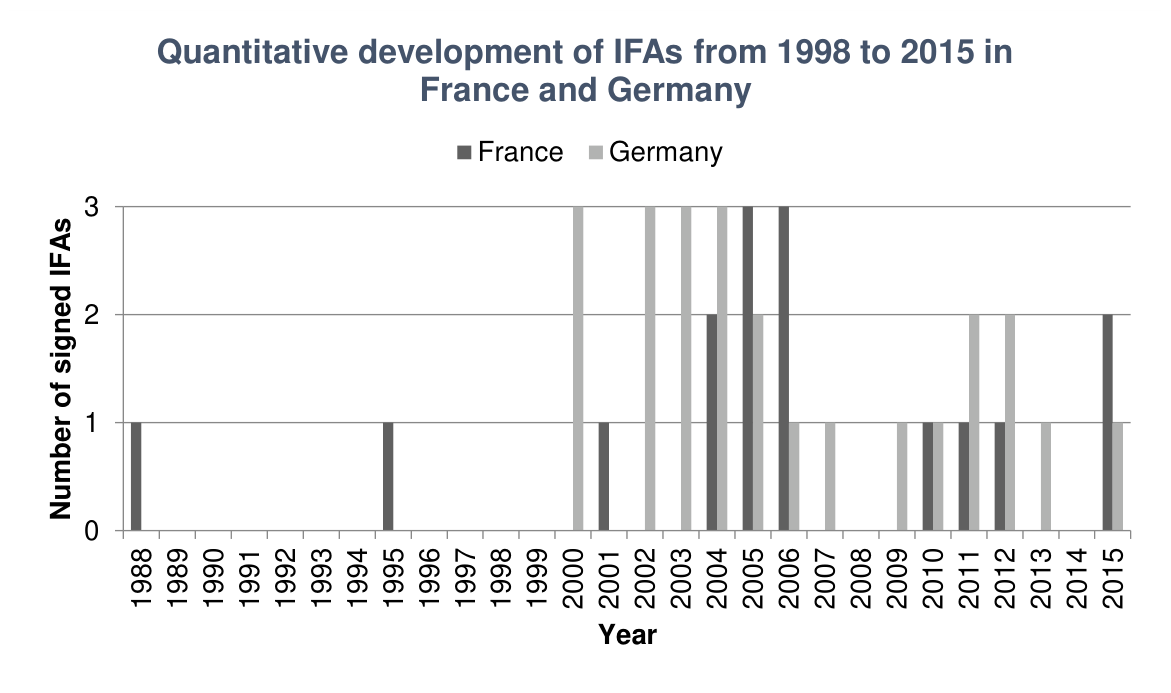
Figure 2: Quantitative development of IFAs in France and Germany
A closer examination of the industries involved indicated that the automotive industry accounts for most agreements in both countries. Particularly in Germany, it is reasonable to assume ‘enterprise- and sector-specific factors’ (Platzer and Rüb 2014) as the catalyst of this trend. The telephone interview conducted with Rüb (2016) shed light on the fact that a high degree of unionisation and strong cooperation between works councils and management in this sector increase bargaining pressure and facilitate the implementation of such agreements. Besides, companies of the same sector often follow suit to keep up with their socially responsible competitors.
Signatories
The analysis showed that all German and French IFAs were signed by at least one GUF. As for Germany, it is worth noting that almost half of the agreements were signed with the IMF, which has recently emerged to IndustriAll. This can be explained by the fact that it represents among others the automotive and engineering industries, in which most signatory companies are active. The researcher observed the same correlation between signatory GUFs and companies’ industries in France.
More relevant to this study than examining the players at a global level is to highlight additional negotiators at company, national and European levels. In both countries, very few IFAs include a European trade union that represents workers at a European level as negotiators together with the GUF. However, the findings indicated considerable differences with regard to the remaining players. (Figure 3).
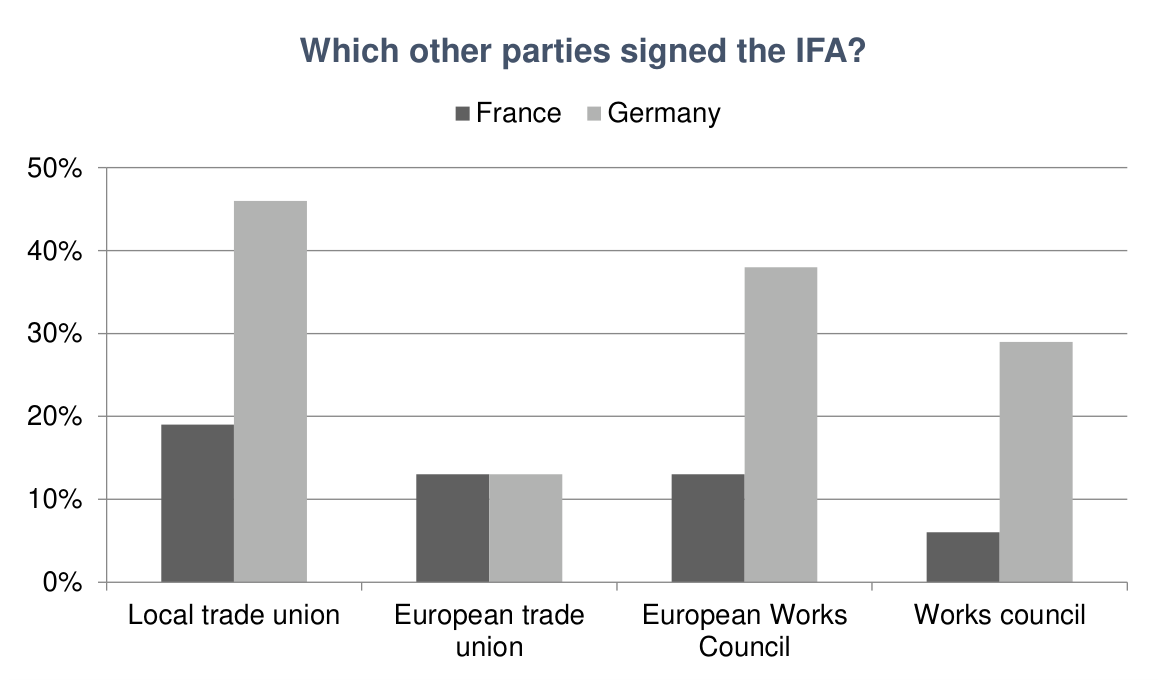
Figure 3: Other signatories
Employees in Germany are strongly represented at both company and industry level by the strictly separated works councils and trade unions (ETUI 2015). Trade unions can be freely established, with only very few requirements. French unions, in stark contrast, are not necessarily considered ‘representative’, and need the support from so-called confederations for collective agreements to become valid. They have an overall low bargaining power at the company level, which is why IFAs are mainly negotiated between management and the respective GUF. However, ORSE (2016) stressed that they still play a significant role in the implementation of IFAs.
It is important to note that the German trade union IG Metall, an affiliate of the IMF, signed the vast majority of IFAs (Figure 4). With IFAs being among the priority items on its agenda, its initiatives have strongly contributed to the high amount of German IFAs. The downside of its strong impulse was, however, that ‘some IFAs were signed although no great interest existed on the side of management’¹⁰⁰, and this has generally resulted in weaker implementation procedures (Rüb 2016).
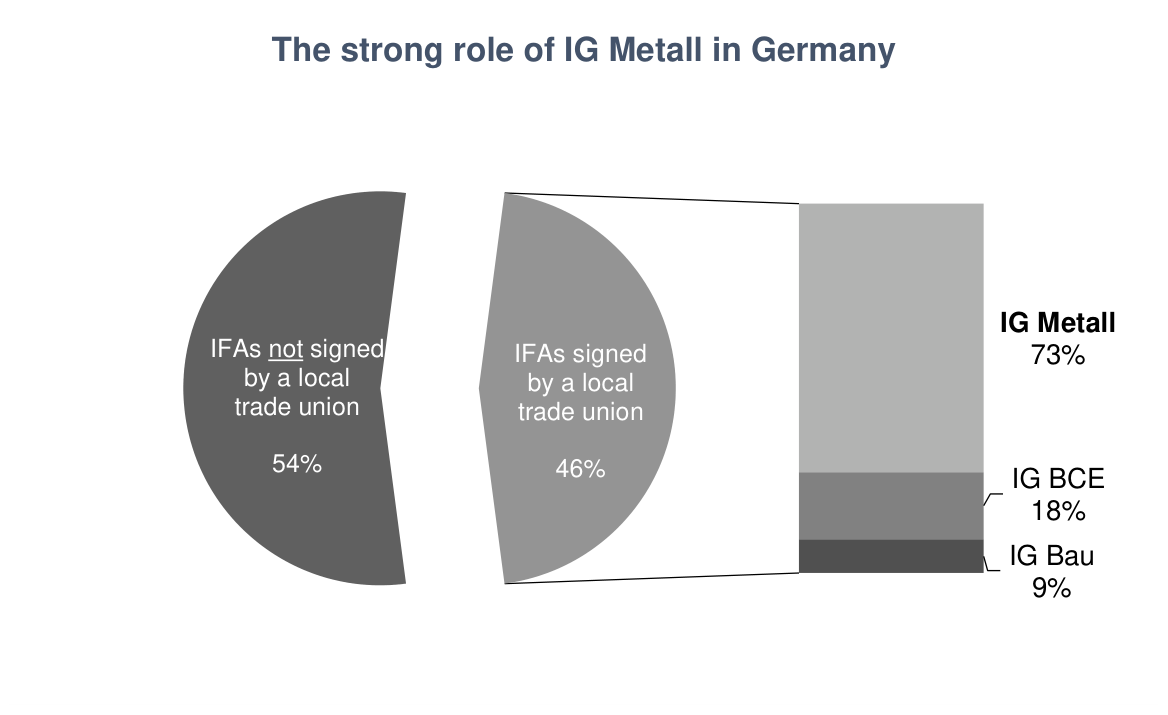
Figure 4: The strong role of IG Metall in Germany
As observed by Dehnen (2013), this analysis showed that the EWC is often a negotiator in German agreements, whereas it only plays a minor role in France. Provided that an EWC is installed in the company, management interests and its objectives pursued with the agreement play a dominant role in the involvement of an EWC. Besides that, an already existing strong relationship and mutual trust between the GUF and the EWC facilitate its voice. In contrast to France, where the EWC might also negotiate with management, the EWC has a clearly defined and accepted role as a ‘transnational body’ in Germany (Dehnen 2013: 594).
Nonetheless, due to the fact that IFAs mainly address global issues, Rüb (2016) explained that Global Unions principally try to preserve their monopoly and fear that the involvement of EWCs might cause conflicts of interests and obstruct global proceedings. As for the actual content of the agreement, Fichter (2016) evaluated the influence of the national works council as being a lot greater than the one of the EWC.
Motives
The introductory section of IFAs often contains a preamble, which outlines the signatories’ key objectives of the agreement and the justification for their commitment. The very first signatory company Danone (1988: 1), formerly named BSN, stated the necessity ‘to develop various co-ordinated initiatives to promote in BSN establishments’. Today, IFAs still have the same clearly defined purpose of promoting social dialogue and improved labour standards on an international scale. Thus, it is not surprising that all signatories base their motivation on achieving this goal, and that the researcher could only identify insignificant differences between the two countries’ documents in this respect.
Some firms consider their assumption of responsibility as ‘indispensable’ (e.g. Leoni 2002: 1), others as self-evident, such as a part of their long-term tradition (e.g. Bosch 2004). Furthermore, signatories often appeal to other global players, such as business partners, to follow suit and help to spread and support the initiatives of the United Nations as ‘an international benchmark in sustainable development’ (EDF 2009: 3). Most IFAs also make reference to the multinational’s development, whose further growth and long-term success correlate with the achievement of social and environmental targets. For instance, the Carrefour (2001: 1) agreement reads: ‘Every enterprise needs peace and social consensus in order to develop.’ The parties to the agreement also signal their commitment to enhance international competitiveness and increase customer satisfaction. IFAs create an ‘essential common reference body’ (PSA 2010: 1), which motivates firms to improve cross-border cooperation within the group. Remarkably, some companies seek to go far beyond the company’s boundaries, such as the German company GEA (2003), which strives for combating underdevelopment in developing countries.
Topics addressed
The International Labour Organisation (ILO) is a unique network, which gathers representatives of governments, employers and workers from 182 member states. It pursues the objective of ‘helping to achieve progress and social justice in the context of globalization’ (ILO 2008: 1). As a consequence, it is no surprise that IFAs often make reference to the ILO Core Labour Standards (Appendix A), which have been identified as fundamental to achieve these global standards.
Fundamental social rights
With very few exceptions, both German and French IFAs make specific reference to the fundamental social rights promoted by the ILO. The researcher observed a rather vague reference, without giving evidence to the specific clauses or only to a few of them, in particular in the early stages up to the year of 2002. This indicates a growing maturity and ‘strong content’ (Sydow et al. 2014) of IFAs, and an increasing significance to negotiators to reinforce these values.
Human rights
Previous researchers observed, however only in passing, that some IFAs solely focus on one particular issue, while others ‘go beyond the scope of labour law’ (Müller, Platzer, and Rüb 2008: 11), thus giving significance to additional themes such as health and safety, wages, training and development, restructuring and environmental protection (Sobczak 2007: 8-11). This study gives this element of IFAs more detailed attention, which allowed the identification of new, additional topics (Figure 5).
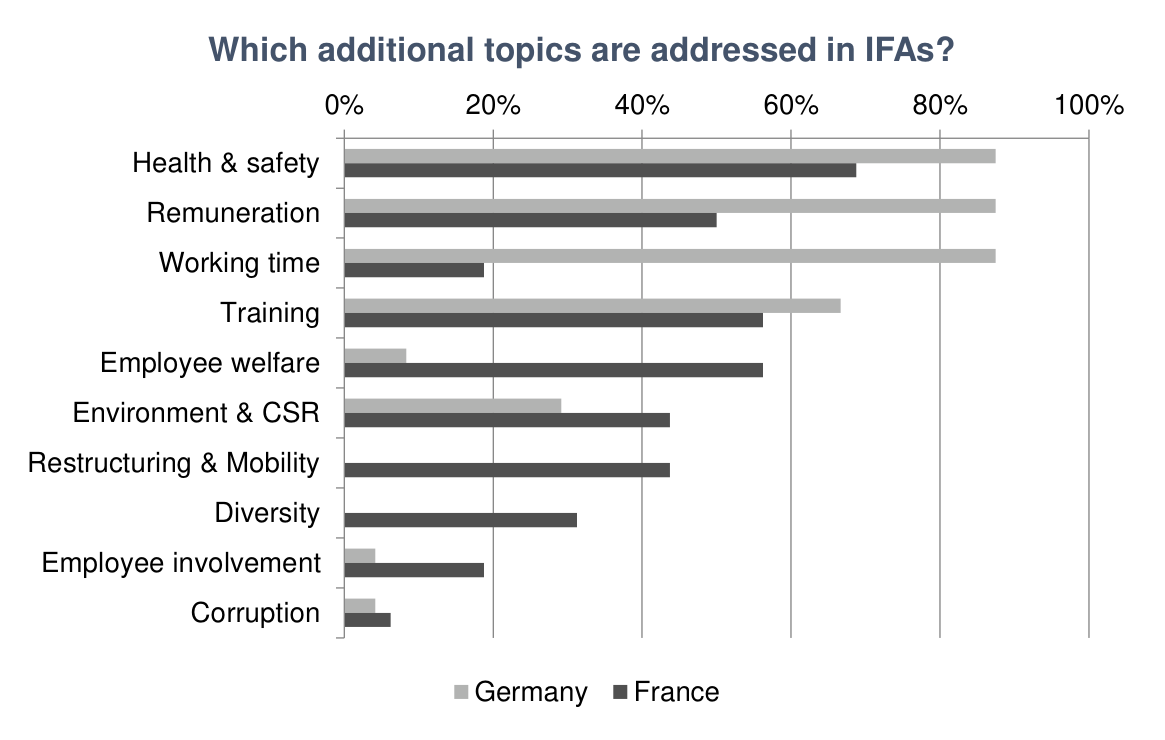
Figure 5: Human Rights Topics
While some categories, such as employee welfare, remuneration and working time, could have logically been combined in one broader topic, the researcher saw the necessity to make the distinction since they are also separately outlined in the agreements. It is worth mentioning that generally more than one topic is addressed within one IFA. Besides, this study identified Danone as the only MNE that has signed multiple conventions, each covering a separate topic.
Unexpectedly, French multinationals address an overall broader range of topics and some agreements are even dedicated to circumstantiate one specific topic, such as worker mobility (Club Med 2009) and health and safety (Orange 2014). The primary research undertaken by the author revealed that the potential driver of this distinction originates from legal differences. The French labour legislation, which was only recently reinforced through the adoption of the Act 2015-994, informally known as ‘Rebsamen law’, obligates firms with at least 150 employees to annually consult the works council on specific issues, for instance with regard to working and employment conditions, that arise at company level. Consequently, it is not surprising that this ‘cultural habit’ (ORSE 2016) and obligation to negotiate regularly on very particular topics is also reflected in French IFAs. Fichter (2016) added to this debate that the negotiation process is always defined by a ‘collision of interest between management and the actors on the side of the employees.’ This means that a GUF, which is often the exclusive negotiator on the employee side in French IFAs, might show interests in certain topics dissimilar from the ones of local trade unions and works councils leading the negotiation in Germany.
Health and Safety
The vast majority of German and French IFAs address occupational health and safety as a top priority, and at least adhere to the minimum of national standards in respect to this topic. Good working conditions and the effective management of risks aim to be ensured. A few MNEs (e.g. EDF 2009) provide safety equipment free of charge to their employees. Initiatives and training for risk prevention might be focused on particular topics, such as electromagnetic fields and cardiovascular risks (Renault 2013). Moreover, HIV/AIDS is a commonly addressed issue (e.g. BMW 2005). Other agreements mention initiatives for preventing physical abuse and sexual harassment (Schwan-Stabilo 2005) or address the challenges of an aging society (MAN 2012). To guarantee sufficient conditions in the work environment, internal health and safety committees (e.g. Faber-Castell 2000) or a ‘Global Safety Panel’ (Rhodia 2008: 7) are established. In addition to this, Staedtler (2006: 3) refers to its ‘Integrated Safety Management System’, which provides an overview of the basic principles and allows self-appraisal to reflect on existing corporate safety standards. The researcher identified the French companies Orange (2014) and Danone (2011) as the only firms devoting a whole agreement on this topic.
Remuneration
Agreements that address the topic of remuneration often refer to the ILO convention of ‘equal remuneration for work of equal value’. Thus, it is guaranteed that wages are fair and meet at least the national minimum standards. Some also indicate that information regarding wage conditions is regularly disseminated to employees through comprehensible written and verbal communication. In other cases, it is laid down that wage deductions require explicit permission of the employees concerned (e.g. ThyssenKrupp 2015). Two French agreements (Vallourec 2008, EDF 2009) stood out in the analysis by mentioning profit-sharing incentives that give recognition to employees’ performances.
Working Time
The avoidance of excessive working hours is particularly given weight in German agreements. Approximately 40 per cent of agreements guarantee compliance with respective regulations on regular, paid vocational days and overtime. In certain IFAs, it is also stated that overtime shall not become a substitute for insufficient remuneration (GEA 2003, ThyssenKrupp 2015). The agreement of Pfleiderer (2010) mentions the particular support given to employees working night shifts.
The primary research conducted for this study did not provide explanations for the large difference of Germany in this respect but the regularity of public debates on the regulation of working time suggests that this issue is a focal point in collective bargaining in the country.
Training
Both German and French firms often promote as part of IFAs that they support the qualification and professional development of their employees through employment and vocational training. A high-performing labour force that is familiar with the fast-changing technologies is seen as essential to ensure the future development and long-term success of these firms. A close attention is drawn to job trends, for instance via a ‘dynamic skills management programme’ (Renault 2013: 5).
Employee Welfare
A recent study conducted by the ILO (2013) together with ORSE revealed that awareness concerning employee welfare at group level has only recently started growing amongst MNEs. The observation that the topic is particularly addressed in France is coherent with the findings of this study.
A ‘life insurance scheme’ (Total 2015: 9) or social benefits systems are often provided ‘for protection in view of his/her future retirement and to ensure his/her physical and moral dignity in the event of workplace accidents, illness or maternity’ (EDF 2009: 7). In addition to this, one agreement states that every workplace is provided with ‘sufficient drinking water, sanitation and washing facilities, changing rooms, lockers and opportunities to dry wet clothing, as well as shelters and rooms in which meals can be taken’ (Pfleiderer 2010: 4).
Environment and CSR
The researcher noted that a specific section is often dedicated to the compliance with environmental standards of products and services. The mutual interdependency of a ‘profitable business and responsible dealing with resources’ (Pfleiderer 2010: 5) requires the adaption of production processes in favour of the environment. Thus, ISO 14001 certification often becomes the benchmark for environmental principles within the group (EDF 2009, Pfleiderer 2010, PSA 2010, Renault 2013). EDF (2009) particularly commits itself to fighting ‘against climate change and the preservation of biodiversity’ and PSA (2010: 13) implements an ‘environmental management system’ in its production sites.
While a few German firms signal their support of environmental institutions, French IFAs dedicate a specific clause (Rhodia 2011, Renault 2013) or an addendum (GDF 2010) on their commitment to the community. Renault (2013: 7) stands out by promoting road safety and ‘the integration of young people into the automobile industry’.
Restructuring and Mobility
By European labour law, employees’ representatives have to be informed in the case of a company’s future changes (Sobczak 2007: 474). French IFAs go beyond this approach by indicating social measures to be taken in the event of restructuring that ‘support redeployment and reclassification within the Group’ (Renault 2013: 5). Based on the consultation from the EWC, French MNEs intend to apply principles that limit negative consequences on its stakeholders during organisational change and to maintain a regular dialogue between the signatory parties on this topic (e.g. Total 2015).
Mobility often goes hand in hand with restructuring. However, it is also regarded as an opportunity for employees to ‘enrich their personal and professional development through a new experience’ (EDF 2009: 7). Club Med (2004: 3) has dedicated a whole IFA on the support of transnational mobility, which is not surprising due to the seasonal migration of service staff in this industry.
Diversity
Like restructuring, attention to the topics of diversity and mobility is solely drawn to in French IFAs. The support of diversity in the workplace generally includes gender equality, integration of disabled workers, and people of different origins and age (e.g. Renault 2013). On top of that, particular protection of migrant workers (Lafarge 2005) and employees on maternity leave (Total 2015) is to be ensured.
Employee involvement
Very few IFAs mention the encouragement of employee involvement, for instance through incentive systems (Pfleiderer 2010), or the opportunity to participate in social initiatives (EDF 2009, PSA 2010).
Corruption
Only one German (ZF 2011) and one French IFA (PSA 2010) include a specific clause on the avoidance of corruption and bribery. Communication and training measures are taken to make employees aware of this issue.
Implementation
For the agreements to become effective, measures need to be identified that ensure that the agreed principles are put in practice. It is self-evident that the successful implementation of IFAs is largely dependent on their actual content (Sydow et al. 2014). However, the content clearly evolves out of a complex process of negotiation that is determined by local actors and rules, whose specific roles are elaborated in this study.
Responsibilities
The researcher identified three different sets of responsibilities in both French and German IFAs. In most cases, specifically assigned managers of each business unit, sometimes with the support of employees’ representatives (e.g. Röchling 2004), may handle the procedure. Alternatively, all signatories (e.g. Hochtief 2000), which neither excludes management nor employees, are responsible (Figure 6). As expected, no specific role could be assigned to the EWC in this element of IFAs.
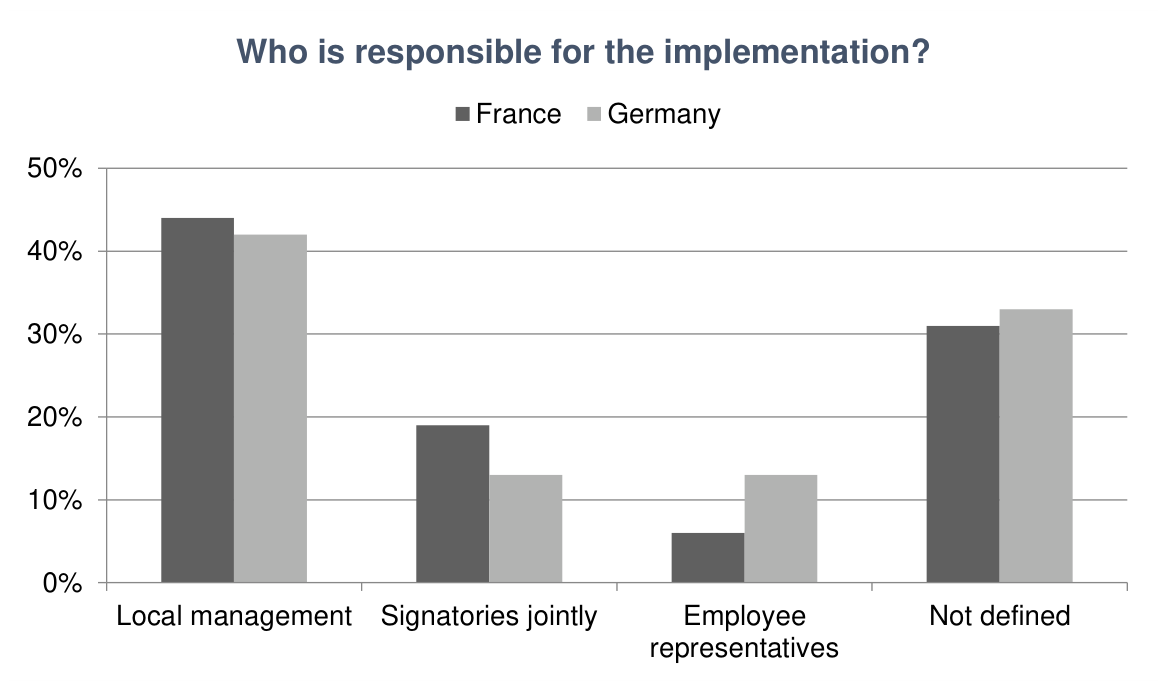
Figure 6: Implementation – Responsibilities
The findings indicate that an overall decentralized approach is taken to the implementation of the IFAs. Thus, managers of the respective subsidiaries are under the obligation to ensure compliance with the principles. In fact, this strategy is crucial since the GUF is highly dependent on the national and local bodies that are able to exert more influence due to their proximity to the executive committee (Rüb 2016).
Implementation Measures
An overall lack of definition of specific implementation measures emerged from the comparative analysis. Yet, the researcher identified a greater maturity of measures in German IFAs. While French agreements mention training practices, specifically for management and employee representatives (GDF 2010, Lafarge 2013, Orange 2014), German MNEs take the implementation measures one step further by incorporating the agreements’ principles into their internal systems and procedures (Figure 7).
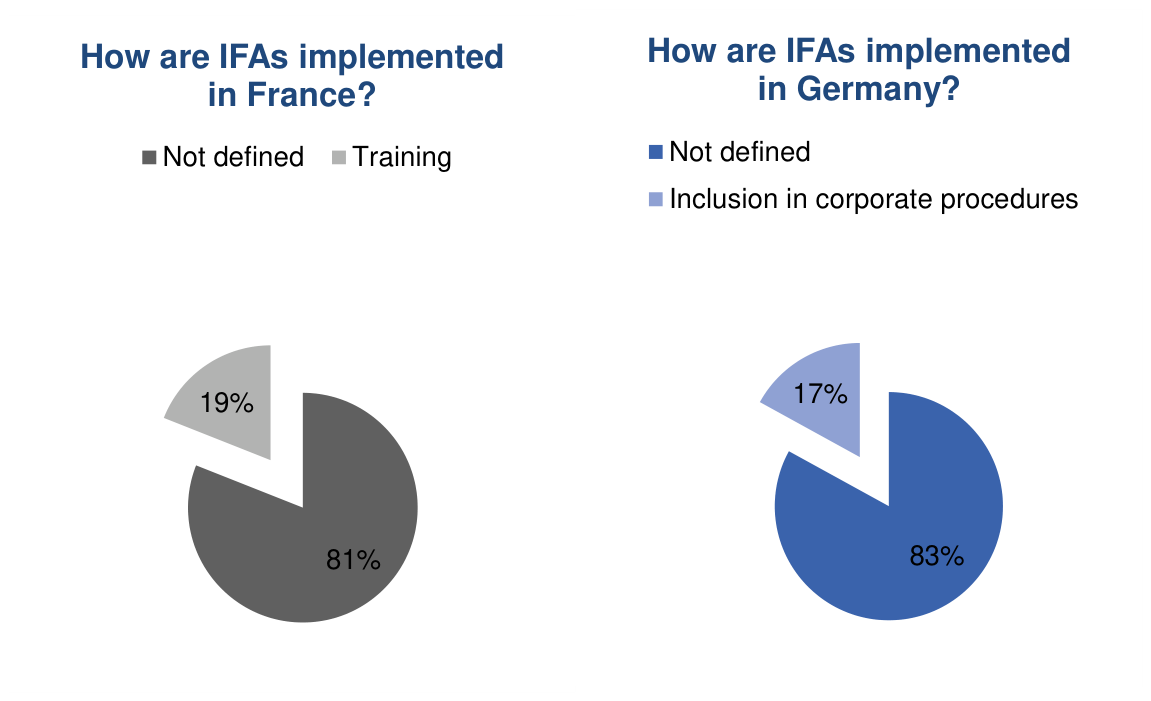
Figure 7: Implementation measures
These internal measures include the incorporation into manuals and guidelines, which are specifically defined in a few cases, such as the ‘Management System Manual for Quality, Environment, Safety, and Security in the Bosch Group’ (Bosch 2012: 3), and the ‘Integrity Code’ (DaimlerChrysler 2002: 4). The principles might also be integrated in management systems and controlling, purchasing instructions, agreements with suppliers and audit procedures (Staedtler 2006, Pfleiderer 2010). In addition to this, the agreement of Staedtler (2006: 5) indicates the ‘inclusion of the agreements on objectives which form the basis of the variable salary plan of Managing Directors’.
The researcher argues that the overall ‘weak’ content (Sydow et al. 2014) in this respect might be related to a prior existence of sophisticated CSR programs, independent of the framework agreement. Often times, IFAs become part of a much larger CSR program that companies promote, which ‘is very problematical because it turns it into just one point among many that management can point to as having a comprehensive CSR program’ (Fichter 2016). Thus, regardless of factors regarding the country of negotiation, the content is often dependent on whether management sees the need of clearly defining the procedures in IFAs or not.
Dissemination
Almost all IFAs have dedicated a specific clause about the fact that their content is to be communicated to the management and employees of the different business units. However, in both Germany and France, more than the majority of IFAs do not clearly define the specific means of communication (Figure 8), only mentioning that the information is made available ‘in a suitable manner’ (e.g. Leoni 2002), or that communication will take the form of oral or written communication (e.g. Hochtief 2000, Lafarge 2013). Fewer, mostly German agreements (e.g. DaimlerChrysler 2002, Rheinmetall 2003) declare that the appropriate methods of communication for informing employees are agreed upon with the employees’ representatives in advance. A few agreements (Faber-Castell 2000, Club Med 2009, Rhodia 2011) indicate more than one method.
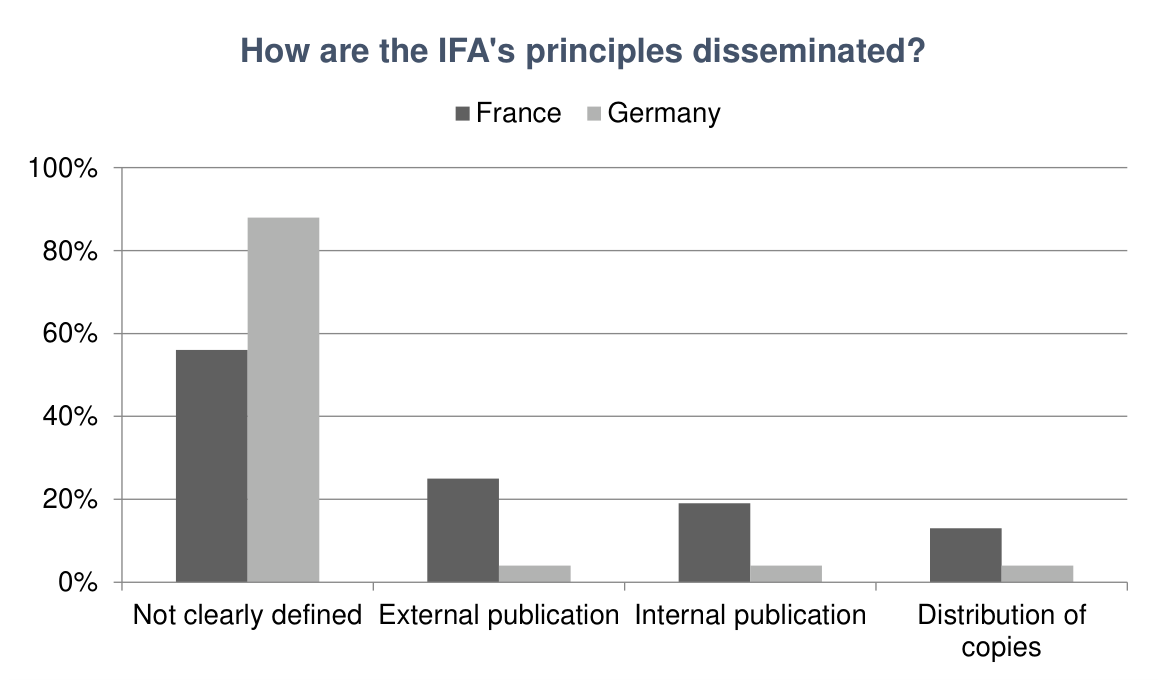
Figure 8: Dissemination of IFAs
In specific cases, information about the agreement is published externally on the corporate homepage, for instance in the sustainable development section (e.g. Rhodia 2011). Moreover, Club Med (2009) deposits a copy of the IFA at the European Commission and the ILO, while the agreement can also be published at the country’s juridical institutions (GDF 2010, Société Générale 2015). Aside from this, some IFAs are published internally as part of the company’s newsletter (Faber-Castell 2000) or the Intranet (Orange 2014, Total 2015). Another possibility of raising awareness of the IFAs principles is through the distribution of copies (WAZ 2007). Rhodia (2011) particularly ensures that new employees are informed and receive a copy as well.
Translation
In both France and Germany, it is common that the texts are translated into various languages to ensure employees’ proper understanding of the principles (Figure 9). However, the binding version is generally the document of the original language.
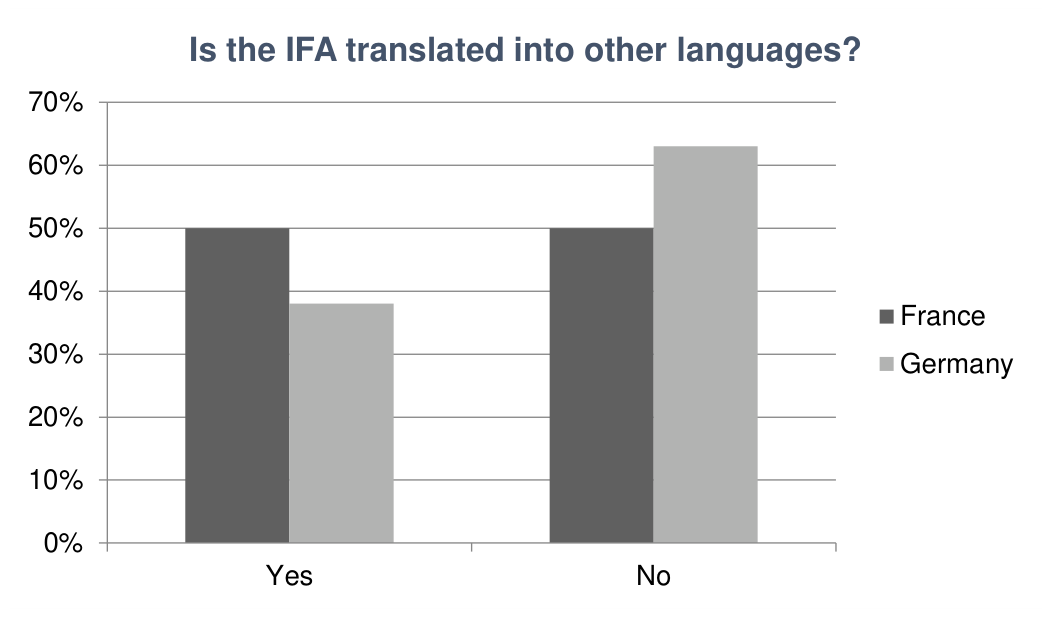
Figure 9: Translation of IFAs
Supply Chain Management
Multinational enterprises are often dependent on a good relationship with their strategic partners, which are essential in the creation of values for shareholders, and in safeguarding their corporate image. The document analysis showed that IFAs often incorporate the companies’ expectations regarding the application of the grounded principles across their value chain (Figure 10). This indicates the extension of the framework to an effective tool to reinforce common goals and values of contracting parties.
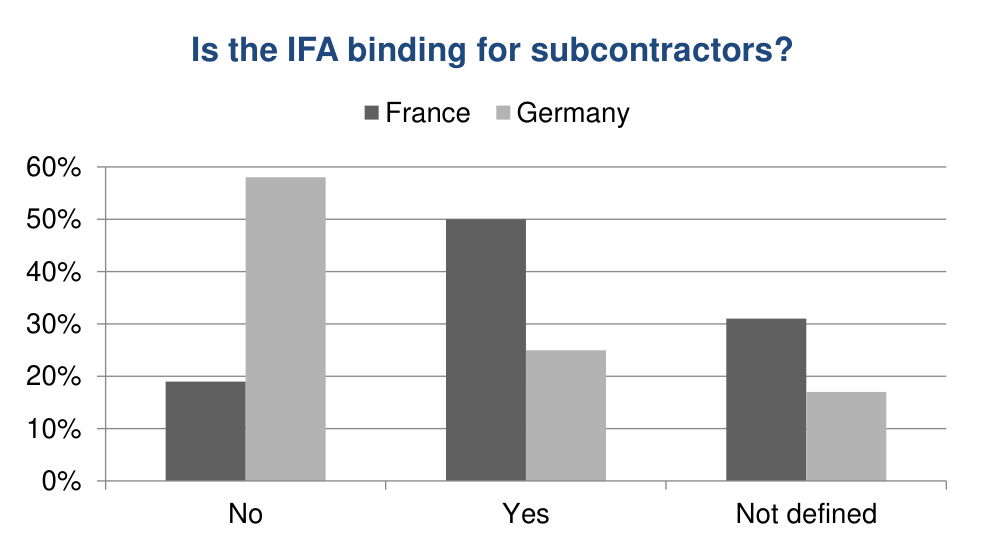
Figure 10: Supply Chain Management
The researcher noted that French and German IFAs show differences with regard to the exigency of the principles’ application. The majority of German IFAs indicate the encouragement and support of contracting partners to embed the values in the context of their own corporate policies. This is generally considered as a basis for promising future business relations. In France, however, this approach is more often taken one step further by insisting on the uncompromising compliance with these obligations of social responsibility. Thus, it is seen as a precondition and selection criterion for future business partners. If they fail to do so, it might result ‘in the termination of relations with the concerned enterprise’ (e.g. Lafarge 2013: 8).
These findings are particularly surprising since labour law generally does not regulate the relationship between employers and workers at suppliers and subcontractors (Sobzcak 2007: 470), which is why companies cannot be extremely intrusive in this respect. However, this study suggests that companies often include such clauses to demonstrate the importance they attach to the relevant principles (ORSE 2016).
Review and Monitoring
Besides implementation, appropriate follow-up procedures are essential for ensuring the effectiveness of and compliance with IFAs. While the implementation generally takes place at the company level, monitoring is usually the responsibility of all signatories; hence it goes to the global level and involves a larger number of players. Different ways of monitoring the application of the IFA have been identified in the comparative analysis (Figure 11), which are not mutually exclusive.
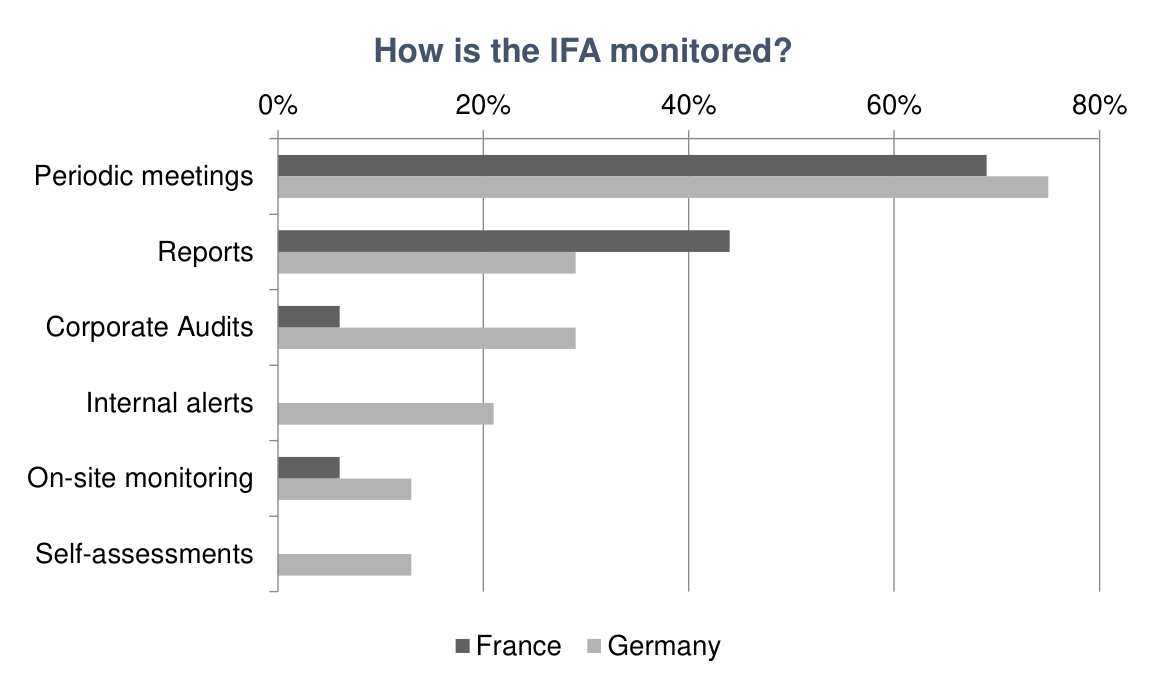
Figure 11: Monitoring Procedures
While German IFAs generally show a greater variety of procedures, no country-specific factors could be identified in this regard. Fichter (2016) explained that, similar to the implementation measures, these principles might solely arise out of the bargaining process, which is influenced by the interest and vision the parties have with signing such an agreement.
Periodic meetings
To ensure the efficiency of the IFAs and a regular exchange of experience and ideas between the parties involved, meetings take place at least once a year. Participants are in almost all cases representatives of management and the respective GUF. (Figure 12)
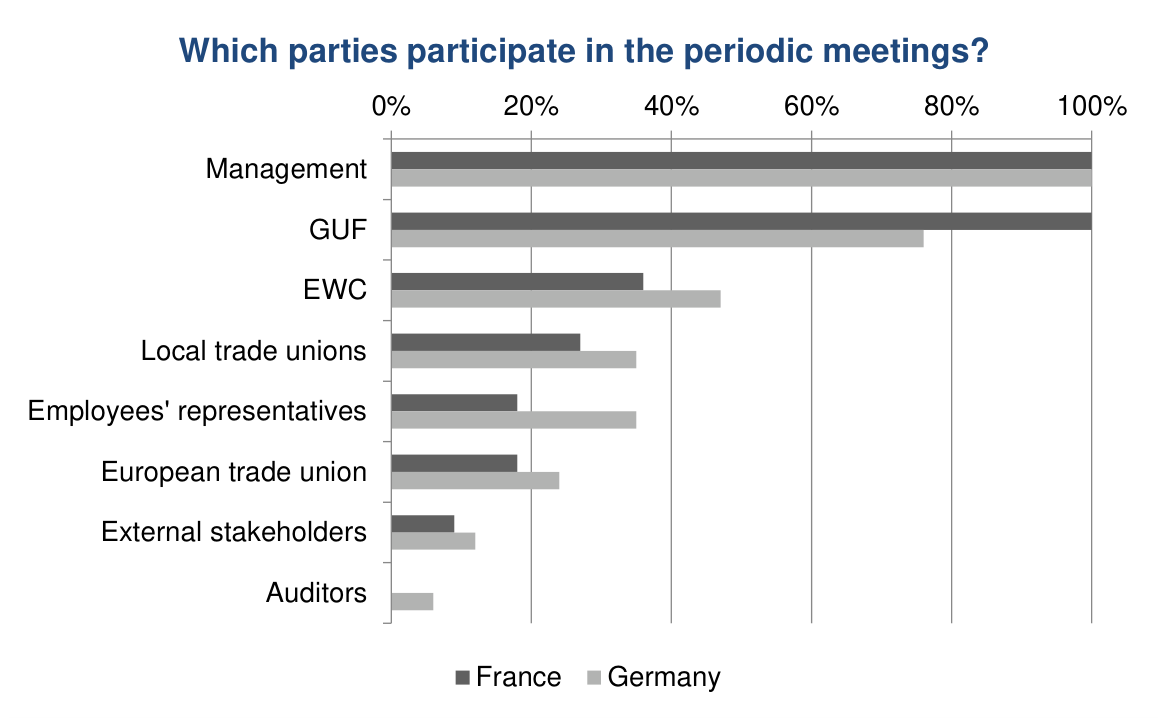
Figure 12: Participants of periodic meetings
While the EWC was mostly part of the negotiation process in Germany, the researcher could surprisingly not observe significant differences in its degree of activity in this stage. This suggests that it does not necessarily have to be a signatory to assume an active role (ORSE 2016), such as in the cases of Total (2015) and ThyssenKrupp (2015). The analysis also revealed that the monitoring process often takes place in the context of an EWC meeting, which indicates that the EWC is continuously informed on the realisation of the IFAs. It might participate in the annual meetings as an observer (Lafarge 2013) or even be a firm member of the monitoring committee (ThyssenKrupp 2015, Total 2015). Moreover, it can designate an employee representative as a participant in this forum (Pfleiderer 2010).
As monitoring is often times the responsibility of all signatories, also local trade unions, employees’ representative bodies and European trade unions might be amongst the participants. Access to annual meetings is rarely granted to external stakeholders, such as to nongovernmental organisations (EDF 2009), local partners (Wilkhahn 2009) or ‘external experts’ (Siemens 2012: 4). Staedtler (2006) is the only firm that allows the participation of internal auditors.
For the purpose of these meetings, both French and German IFAs state the employment of joint bodies, often called monitoring committees. Interestingly, 7 out of 14 of the agreements specifying this approach were concluded with the GUF called Building and Wood Workers International (BWI), which matches with the observation of Platzer and Rüb (2014: 12), who noted this particular aspect of the union’s strategy.
Reports
Regular reports are considered as another effective tool for monitoring purposes. Hence, corporate management communicates audit results to the signatories, employees’ representatives, and in one case to the EWC (Vallourec 2008). Specifically in France, this review is sometimes based on agreed quantitative and qualitative performance indicators (Orange 2014, Rhodia 2011, GDF 2010, Eurosport 2012). To ensure a greater degree of circulation, these reports might be translated (EDF 2009) and then incorporated in management and sustainability reports (e.g. Pfleiderer 2010), or internal management systems (Faber-Castell 2000).
Corporate Audits
Particularly in Germany, the review and monitoring process is often conducted through internal auditing. Thus, corporate audit examines compliance with the principles and, in a few cases, also includes them in its audit criteria (e.g. Leoni 2002).
Internal alerts
In contrast to France, specific mechanisms aiming to facilitate internal communications are often indicated in German IFAs. Hence, a general open line is established by Corporate Audit (DaimlerChrysler 2002) or by the Compliance and Sustainability Department (ZF 2011). Furthermore, electronic reporting channels are used, such as ‘Tell-us’ (Siemens 2012: 4), an internal tip-off system (MAN 2012), emails or an electronic message system (ThyssenKrupp 2015).
On-site monitoring
In addition to internal audits, monitoring is only in very few cases regularly, for instance every two or three years, conducted at the respective subsidiary locations (Schwan-Stabilo 2005, Sodexo 2011) and at licence partners or suppliers (Wilkhahn 2009). Even though on-site monitoring is considered the most effective, ‘the structures and resources necessary for such independent monitoring are lacking’ (Platzer and Rüb 2014: 12).
Self-assessments
German MNEs include self-assessments (Siemens 2012) or a ‘questionnaire on disclosure of personal data of suppliers’ (Wilkhahn 2009: 3, Staedtler 2006) in the sourcing process. Self-assessments might be conducted in regular intervals, for instance every two years (Faber-Castell 2000). In very few cases (Faber-Castell 2000, Wilkhahn 2009) the purchasing department receives further advanced training in this respect. Two German MNES (Faber-Castell 2000, Wilkhahn 2009) establish a multistage monitoring procedure consisting of a questionnaire from every company and business partners, internal audits and external audits. This is remarkable given the substantial costs necessary.
Dispute settlement
In case of difficulty, employees have the right to raise complaints, which ‘shall not result in any disadvantages or sanctions as a result thereof’ (Röchling 2004: 5). Thus, the vast majority of both German and French enterprises agreed on a multi-stage procedure for addressing potential infringements against the principles of an IFA. In general, solutions should always first be sought locally, or ‘as close as possible to the location where they have arisen’ (Rhodia 2011: 15). At a local level, the management is usually responsible for the investigation of complaints and consultation of additional bodies if no suitable remedy could be identified. In some cases, the Human Resources function is involved in the process as well (e.g. MAN 2012). If the matter could not be resolved this way, it will be passed on to the relevant trade unions, and eventually to group management or international bodies. A few French IFAs (GDF 2010, Sodexo 2011, Société Générale 2015) mention the possibility of seeking help from a mediator. In every case, terminating the IFA is considered as the last resort.
Discussion: Impact of country-specific factors on IFA content
While the researcher addressed potential origins of the differences between French and German IFAs throughout the comparative analysis, it is essential to further discuss the findings’ importance in relation to this last research objective. The results showed that in particular the composition of players that negotiate the agreement and their actual strength of bargaining are dependent on whether their representation is accepted and valued by their respective national systems. While trade unions’ approaches to IFAs might be influenced by the geographical location (Müller, Platzer, and Rüb 2008), it is worth investigating to what extent individual country contexts limit their potential and abilities. German MNEs are used for consulting employee representatives’ bodies on important decisions, which by law are very representative. Besides, without this strong voice given to local trade unions, it is rather unlikely that IG Metall would have been able to influence the development of IFAs in Germany to such great degree. French works councils are legitimately consulted on specific issues on a regular basis, which is potentially the reason for the greater variety of topics addressed and the high number of amendments in France. Another factor that may determine the content of IFAs is the degree of a country’s, and a company’s policy and commitment to CSR. A greater definition of initiatives and procedures covered in the agreements might be regarded as unnecessary provided they are already covered by CSR programs, or by previously existing social norms. In fact, the researcher’s investigation matches with the statement that German unions tend to keep agreements more informal and align them to existing CSR systems (Helfen, Schüßler, and Stevis 2016: 649). This raises the question whether the commitment becomes more visible and to what extent the wording differs in companies with weaker CSR programs.
In addition to this, the researcher noted that labour relations do not only have an impact on the wording of the agreements but also on the actual concept of what the agreement is pursuing (Fichter 2016). It is very likely that the body leading the negotiation has a major impact on the principles carried out in the negotiation stage. Provided a strong co-operation between management and works councils exists already, this relationship would solely be expanded and institutionalized to a higher level with the agreement. Thus, they are likely to insist that the global regulations are structured and managed based on their local norms and habits. In contrast, it is reasonable to assume that a global union leading the negotiation takes different interests among its affiliates and looks at the situation in a much more globalised manner than a works council that comes from a national environment (Fichter 2016). This internal dimension clearly interacts in the analysis of the factors ‘pre-set’ by a country, which prompts the researcher to agree with Stevis (2010), who concluded that both external and internal factors need to be taken into account as important determinants of IFA strategy.
Conclusion
The continuous process of globalisation and constant evolvement of the business environment is largely driven by the practices of multinationals. Intensifying negative connotations with internationalisation and external pressures have made MNEs become increasingly committed to CSR. In fact, trade unions have proven to be crucial in ensuring the effective application of CSR practices, whose initiatives triggered the introduction of IFAs as a tool to regulate working conditions at corporate level. The agreement of Hochtief (2000: 1) rightfully points out that ‘in many countries around the world, compliance with these seemingly so basic social standards is very much the exception rather than the rule.’ It is clear that not every institutional setting favours the implementation of IFAs in the same, effective way. However, before evaluating the quality of the agreements’ content or the approaches taken to the implementation, the researcher saw the necessity of exploring the question to what extent national variations affect the actual content of the agreements.
The comparative content analysis allowed for achieving the objectives of providing an overview of the main characteristics of French and German IFAs and depicting the discrepancies between their content. In the same vein, this approach helped the researcher to scrutinise the differences’ origins and to identify the relationship between their content and country-specific factors. France and Germany are important examples since they are amongst the strongest signatory countries. Against the researcher’s initial expectations, the findings implied that, despite the countries’ social and geographical proximity, some significant differences emerged, which are in accordance with national regulations and norms. French IFAs are strongly characterized by the major role of GUFs and a negotiation process that is carried out at company level, whereas agreements negotiated in Germany are shaped by the substantial roles and representation rights given to trade unions and the companies’ works councils. French agreements, in contrast, set themselves apart by addressing a broad range of topics that goes beyond the ILO guidelines, which potentially originated in the cultural habit of regular negotiation. Problematically, the researcher noted that their contents might be constrained by previously existing CSR policies.
The country comparison gave insights into the deeper structures and variety of IFAs. Limiting the scope to French and German IFAs allowed the author to identify rather rare topics, such as social welfare, mobility and diversity, which might be worth focusing more attention on in future content analyses. While in terms of quantity, France and Germany together are a major driving force in the development of IFAs, the findings indicated that there is still room for improvement from a qualitative perspective. However, the most recent agreements show that they are much more explicit regarding the standards they set and the measures for implementation. This trend is consistent with observations from previous researchers but the findings serve as an update on the agreements’ current state and potential.
The study clearly has its limitations. As multiple forces play into the negotiation process whose interests might interplay with country-specific factors and give the agreements a different direction, future research is needed that takes a closer look at the attitude of the individual players in the negotiation process in France and Germany, in particular MNEs, works councils and trade unions. It would also be interesting to extend the scope and to observe to what extent the wording differs in weaker systems of labour relations, such as in the USA, and whether it undermines or rather strengthens the content of the agreement. The same comparison could be made with MNEs with varying commitments to CSR.
To conclude, the relationship between national regulations and IFAs should not only find concern in evaluating implementation measures but also the content of IFAs. In fact, the link between these variables is often not avoidable. IFAs might have a global scope but are a local instrument in nature. If the country facilitates a sound relationship between the relevant players, IFAs can develop more easily with respect to both quantitative and qualitative determinants. At the same time, this dependency on the local level implies that their development is likely to remain limited to countries with strong ties between employers and workers. Nonetheless, the researcher suggests that an estimation of the future development of IFAs in Germany and France would have to be based on both external and internal dimensions. Specifically, in Germany, the quantitative development is likely to depend largely on the initiatives of trade unions and their resources necessary to be able to implement IFAs. Aside from this, multinational enterprises would need to be identified whose internal structures and degree of unionisation favours the commitment to such agreements.
Appendix A – IMF Model Framework Agreement
The IMF Model Framework Agreement
The IMF Model Framework Agreement (Model IFA) was adopted by the IMF Executive Committee as a basis for negotiating International Framework Agreements (IFAs) with transnational corporations.
There are 3 key components to the Model IFA:
- The ILO Core Labour Standards – referenced as such.
- The requirement for contractors and suppliers to observe the standards of the IFA
- Union participation in implementation.
The ILO Core Labour Standards
In 1998 the International Labour Conference adopted a ‘Declaration on Fundamental Principles and Rights at Work’, considered to be an expression of commitment by governments, employers’ and workers’ organisations to uphold basic human values. The Declaration commits ILO Member States to respect and promote principles and rights in four categories, whether or not they have ratified the relevant Conventions. The Declaration makes it clear that these rights are universal, and that they apply to all people in all States.
The four categories are:
- Freedom of association and the right to collective bargaining (ILO Conventions 87, 98, 135 and Recommendation 143)
- The elimination of forced and compulsory labour (ILO Conventions 29 and 105)
- The abolition of child labour (ILO Conventions 138 and 182) and;
- The elimination of discrimination in the workplace (ILO Conventions 100 and 111).
These ‘core’ conventions are at the heart of the Model IFA which stipulates that they be explicitly referenced by number.
The supplier provision
In many cases, the worst abuses of labour rights do not occur in the company that signs the IFA, but in the companies that supply to it. For this reason, the Model IFA contains a clause stating that the company will require its contractors, their sub-contractors, principal suppliers and licensees (franchise-holders) to provide the conditions and observe the standards of the IFA when producing or distributing products or components for the company.
Union participation in implementation
The Model IFA calls for a labour-management monitoring group to be set up. The principle is that unions must have a role in monitoring implementation of the IFA and identifying and reporting any breaches.
Additional Provisions
The Model IFA also states that:
- The company will adopt a positive approach towards the activities of trade unions and an open attitude towards their organisational activities.
- During labour-management conflicts the company will not hire new workers to replace those involved in the dispute.
- Wages and benefits paid for a standard working week shall meet at least legal and industry minimum standards and always be sufficient to meet basic needs of workers and their families and to provide some discretionary income.
- Working hours must not impair worker health and other aspects of productive life.
- A safe and hygienic working environment shall be provided and best occupational health and safety practice shall be promoted.
(IMF 2006: 4)
Appendix B – Overview of IFAs concluded in France and Germany
| MNE | Country | Date of Signature | Amendment(s) | Industry | GUF(s) |
|---|---|---|---|---|---|
| Danone | France | 1988 | 1989, 1992, 1994, 1997, 2001, 2005, 2007, 2011, 2016 | Food processing | IUF |
| Accor | France | 1995 | No | Tourism | IUF |
| Faber-Castell | Germany | 2000 | 2008 | Stationery | IFBWW |
| Hochtief | Germany | 2000 | No | Construction | IFBWW |
| Freudenberg | Germany | 2000 | No | Technology | ICEM |
| Carrefour | France | 2001 | 2015 | Retail | UNI |
| Volkswagen | Germany | 2002 | No | Automotive | IMF |
| DaimlerChrysler | Germany | 2002 | No | Automotive | IMF |
| Leoni | Germany | 2002 | No | Automotive/ Electricity | IMF |
| GEA | Germany | 2003 | No | Engineering | IMF |
| RAG (Evonik) | Germany | 2003 | No | Mining | ICEM |
| Rheinmetall | Germany | 2003 | No | Automotive | IMF |
| Bosch | Germany | 2004 | No | Engineering | IMF |
| Prym | Germany | 2004 | No | Automotive | IMF |
| Club Méditerranée | France | 2004 | 2009 | Tourism | IUF |
| Renault | France | 2004 | 2013 | Automotive | IMF |
| Röchling | Germany | 2004 | No | Automotive | IMF |
| EDF | France | 2005 | 2009 | Electric utility | ICEM, PSI, IFME |
| Rhodia | France | 2005 | 2008, 2011 | Chemicals | ICEM |
| BMW | Germany | 2005 | No | Automotive | IMF |
| Schwan-Stabilo | Germany | 2005 | No | Stationery | IFBWW |
| Lafarge | France | 2005 | 2013 | Building materials | BWI, IndustriALL |
| PSA Peugeot Citroen | France | 2006 | 2010 | Automotive | IMF |
| Staedtler | Germany | 2006 | No | Stationery | BWI¹⁰¹ |
| France Telecom (Orange) | France | 2006 | 2014 | Communication | UNI |
| WAZ | Germany | 2007 | No | Media | IFJ/EFJ |
| Vallourec | France | 2008 | No | Manufacturing | IMF |
| Wilkhahn | Germany | 2009 | No | Office Furniture | BWI |
| Pfleiderer | Germany | 2010 | No | Wood | BWI |
| GDF Suez | France | 2010 | No | Electric utility | ICEM, BWI, PSI |
| Mann-Hummel | Germany | 2011 | No | Automotive/ Engineering | IMF |
| ZF Friedrichshafen | Germany | 2011 | No | Automotive/ Engineering | IMF |
| Sodexo | France | 2011 | No | Consumer Services | IUF |
| MAN SE | Germany | 2012 | No | Engineering | IndustriALL¹⁰² |
| Siemens | Germany | 2012 | No | Electronics | IndustriALL |
| Eurosport | France | 2012 | No | Media | UNI |
| Metro Group | Germany | 2013 | No | Retail | UNI |
| Total | France | 2015 | No | Oil and gas | IndustriALL |
| ThyssenKrupp | Germany | 2015 | No | Metal | IndustriALL |
| Société Générale | France | 2015 | No | Financial services | UNI |
List of Abbreviations
| BWI | Building and Wood Workers International |
| CSR | Corporate Social Responsibility |
| EFA | European Framework Agreement |
| EMF | European Metalworkers Federation |
| EWC | European Works Council |
| GFA | Global Framework Agreement |
| GUF | Global Union Federation |
| ICEM | International Federation of Chemical, Energy, Mine and General Workers Unions |
| IFA | International Framework Agreement |
| IFBWW | International Federation of Building and Woodworkers |
| IFJ/EFJ | International Federation of Journalists/European Federation of Journalists |
| IMF | International Metalworkers’ Federation |
| ILO | International Labour Organisation |
| IUF | International Union of Food, Agricultural, Hotel, Restaurant, Catering, Tobacco and Allied Workers’ Associations |
| MNE | Multinational Enterprise |
| OECD | Organisation for Economic Co-operation and Development |
| ORSE | Observatoire de la Responsabilité Sociétale des Entreprises |
| PSI | Public Services International |
| UNI | Union Network International |
References
- Bourque, R. (2008) ‘International Framework Agreements and the Future of Collective Bargaining in Multinational Companies’. Just Labour: A Canadian Journal of Work and Society [online] 12, 30-47. available from http://www.justlabour.yorku.ca/volume12/pdfs/04_bourque_press.pdf [8 April 2016]
- BMW (2005) Joint Declaration on Human Rights and on Working Conditions in the BMW Group [online] available http://ec.europa.eu/employment_social/empl_portal/transnational_agreements/BMW_IFA_EN.pdf [15 March 2016]
- Bosch (2004) Basic Principles of Social Responsibility at Bosch [online] available from http://ec.europa.eu/employment_social/empl_portal/transnational_agreements/Bosch_IFA_EN.pdf [15 March 2016]
- Carrefour (2001) Global Agreement Carrefour – Union Network International (UNI) [online] available from <http://ec.europa.eu/employment_social/empl_portal/transnational_agreements/Carrefour_IFA_EN.pdf > [15 March 2016]
- Club Med (2009) Agreement relative to compliance with fundamental rights at work and the mobility of employees (GE service personnel) of Club Méditerranée in Europe and Africa [online] available from http://ec.europa.eu/employment_social/empl_portal/transnational_agreements/ClubMed_Accordmondialmobilite_EN.pdf [15 March 2016]
- DaimlerChrysler (2002) Social Responsibility Principles of DaimlerChrysler [online] available from http://www.industriall-union.org/sites/default/files/uploads/documents/GFAs/Daimler/daimler-gfa-english.pdf [9 April 2014]
- Danone (2011) Danone / IUF Agreement on health, safety, working conditions and stress [online] available from http://ec.europa.eu/employment_social/empl_portal/transnational_agreements/Danone_H&S Stress_EN.pdf [9 April 2014]
- Danone (1988) Common Viewpoint IUF/BSN [online] available from http://ec.europa.eu/employment_social/empl_portal/transnational_agreements/Danone_viewpoint_EN.pdf [9 April 2014]
- Dehnen, V. (2013) ‘Transnational Alliances for Negotiating International Framework Agreements: Power Relations and Bargaining Processes between Global Union Federations and European Works Councils’. British Journal of Industrial Relations [online] 51 (3), 577-600. available from <www.ebscohost.com> [10 March 2016]
- EDF (2009) Agreement on EDF Group Corporate Social Responsibility [online] available from http://ec.europa.eu/employment_social/empl_portal/transnational_agreements/EDF_IFA_EN.pdf [15 March 2016]
- Egels-Zandén, N. (2009) 'TNC Motives for Signing International Framework Agreements: A Continuous Bargaining Model of Stakeholder Pressure'. Journal Of Business Ethics [online] 84 (4), 529-547. available from <www.ebscohost.com> [10 March 2016]
- Elkington, J. (1998) Cannibals with Forks: The Triple Bottom Line of 21st Century Business. Philadelphia: New Society
- European Commission (n.d.) Database on transnational company agreements [online] available from http://ec.europa.eu/social/main.jsp?catId=978&langId=en [10 March 2016]
- Eurosport (2012) Accord monidal sur les droits soxiaux fondamentaux [online] available from http://www.clesdusocial.com/IMG/pdf/eurosport-accord-mondial.pdf [15 March 2016]
- ETUC (2013) Final report - Corporate Social Responsibility - Union Thinking on the EU Strategy 2011-2014 for Corporate Social Responsibility [online] available from https://www.etuc.org/IMG/pdf/CES-Brochure_RSE-Uk.pdf [18 April 2016]
- ETUI (2015) Collective bargaining [online] available from http://www.worker-participation.eu/National-Industrial-Relations/Countries/Germany/Collective-Bargaining [18 April 2016]
- ETUI (2014) Trade unions [online] available from http://www.worker-participation.eu/National-Industrial-Relations/Across-Europe/Trade-Unions2 [7 May 2016]
- Faber-Castell (2000) AGREEMENT [online] available from http://ec.europa.eu/employment_social/empl_portal/transnational_agreements/FaberCastell_Agreement_EN.pdf [15 March 2016]
- Fichter, M. (2016) International Framework Agreements in France and Germany [interview by the author] Coventry, 19 April 2016
- GEA (2003) Codes of Conduct of GEA AG [online] available from http://ec.europa.eu/employment_social/empl_portal/transnational_agreements/GEA_IFA_EN.pdf [15 March 2016]
- GDF (2010) Global Agreement on Fundamental Rights, Social Dialogue and Sustainable Development [online] available from http://ec.europa.eu/employment_social/empl_portal/transnational_agreements/GDFSUEZ_IFA_EN.pdf [15 March 2016]
- Hammer, N. (2005) ‘International framework agreements: global industrial relations between rights and bargaining’. Transfer [online] 11 (4), 511-30. available from http://www.ggt.uqam.ca/IMG/pdf/ART_2_-_NIKOLAUS_HAMMER.pdf [10 March 2016]
- Helfen, M., Schüßler, E., and Stevis, D. (2016) 'Translating European Labor Relations Practices to the United States Through Global Framework Agreements? German and Swedish Multinationals Compared'. Industrial & Labor Relations Review [online] 69 (3), 631-655. available from <www.ebscohost.com> [25 April 2016]
- Hochtief (2000) Framework agreement between Hochtief and IFBWW [online] available from http://ec.europa.eu/employment_social/empl_portal/transnational_agreements/Hochtief_FrameworkAgreement_EN.pdf [15 March 2016]
- Hopkins, M. (2006) 'What is Corporate Social Responsibility all About?'. Journal Of Public Affairs [online] 6 (3/4), 298-306. available from <www.ebscohost.com> [20 December 2015]
- Hopkins, M. (2005) 'Measurement of corporate social responsibility'. International Journal Of Management & Decision Making [online] 6 (3/4). available from <www.ebscohost.com> [20 December 2015]
- ILO (2016) Multinational Enterprises [online] available from http://www.ilo.org/global/topics/employment-promotion/multinational-enterprises/lang--en/index.htm [29 March 2016]
- ILO (2013) ‘The extension of social security and the social responsibility of multinational enterprises: An exploratory study’ [online] available from < http://www.ilo.org/wcmsp5/groups/public/---ed_emp/---emp_ent/---multi/documents/publication/wcms_213756.pdf> [22 April 2016]
- ILO (2008) ILO Declaration on Social Justice for a Fair Globalization [online] available from < http://www.ilo.org/wcmsp5/groups/public/---dgreports/---cabinet/documents/genericdocument/wcms_371208.pdf> [10 April 2016]
- IMF (2006) Background to International Framework Agreements in the IMF [online] available from http://library.fes.de/pdf-files/gurn/00251.pdf [18 April 2016]
- Lafarge (2013) Global Agreement on Corporate Social Responsibility and International Industrial Relations [online] available from http://ec.europa.eu/employment_social/empl_portal/transnational_agreements/Lafarge-Global_EN.pdf [15 March 2016]
- Leoni (2002) Declaration of Social Rights and Industrial Relationshsips at Leoni [online] available from http://ec.europa.eu/employment_social/empl_portal/transnational_agreements/Leoni_Declaration on SocialRights_EN.pdf [15 March 2016]
- MAN (2012) International Framework Agreement of the MAN Group [online] available from < http://www.industriall-union.org/sites/default/files/migration/imf/RelatedFiles/12030712003379/international-rahmenvereinbarung-man-endfassung.pdf > [15 March 2016]
- Müller, T., Platzer, H.-W., and Rüb, S. (2008) ‘International Framework Agreements – Opportunities and Limitations of a New Tool of Global Trade Union Policy‘ Friedrich Ebert Stiftung [online] (8), available from http://library.fes.de/pdf-files/iez/05814.pdf [11 March 2016]
- Niforou, C. (2012) 'International Framework Agreements and Industrial Relations Governance: Global Rhetoric versus Local Realities'. British Journal Of Industrial Relations [online] 50 (2), 352-373. available from <www.ebscohost.com> [12 March 2016]
- Orange (2014) Orange Group Global Health and Safety Agreement [online] available from http://www.orange.com/en/content/download/5759/83557/version/3/file/AccordUNIUK.pdf [15 March 2016]
- ORSE (2016) International Framework Agreements in France and Germany [interview by the author] Coventry, 5 April 2016
- ORSE (2015) International Framework Agreements (IFA) signed by IFAs and companies [online] available from http://www.orse.org/accords_syndicaux_sur_la_rse_au_niveau_mondial-52-226.html [12 March 2016]
- ORSE (2007) Directory for International Framework Agreements negotiations [online] available from http://www.orse.org/guide_pratique_sur_les_accords_cadres_internationaux-52-48.html [12 March 2016]
- Papadakis, K. (2011) Shaping Global Industrial Relations: The Impact of International Framework Agreements. International Labour Organization: Hampshire
- Pfleiderer (2010) International Framework Agreement [online] available from http://ec.europa.eu/employment_social/empl_portal/transnational_agreements/Pfleiderer_Socialcharter_EN.pdf [15 March 2016]
- Platzer, H.-W., and Rüb, S. (2014) International Framework Agreements. An Instrument for Enforcing Social Human Rights? [online] available from <library.fes.de/pdf-files/iez/10474.pdf> [2 April 2016]
- Porter, M. E., and Kramer, M. R. (2006) ‘Strategy and Society: The Link Between Competitive Advantage and Corporate Social Responsibility’. Harvard Business Review [online] 78-92. available from <www.ebscohost.com> [12 December 2015]
- PSA (2010) International Framework Agreement on PSA Peugeot Citroën’s Social Responsibility [online] available from http://ec.europa.eu/employment_social/empl_portal/transnational_agreements/PSA_IFA_EN.pdf [15 March 2016]
- Renault (2013) Global framework agreement on social, societal and environmental responsibility between the Renault Group, the Renault Group Works' Council and IndustriALL Global Union [online] available from http://ec.europa.eu/employment_social/empl_portal/transnational_agreements/Renault_ACI_EN.pdf [15 March 2016]
- Rheinmetall (2003) Social Responsibility Guidelines Code of Conduct of Rheinmetall AG [online] available from http://ec.europa.eu/employment_social/empl_portal/transnational_agreements/Rheinmetall_IFA_EN.pdf [15 March 2016]
- Rhodia (2011) Global Corporate Social Responsibility Agreement between Rhodia and ICEM [online] available from http://ec.europa.eu/employment_social/empl_portal/transnational_agreements/Rhodia_IFA_EN.pdf [15 March 2016]
- Riisgaard, L. (2005) 'International Framework Agreements: A New Model for Securing Workers Rights?'. Industrial Relations [online] 44 (4), 707-737. available from <www.ebscohost.com> [12 December 2015]
- Röchling (2004) Principles of Social Responsibility Codes of Conduct Gebr. Röchling KG [online] available from http://ec.europa.eu/employment_social/empl_portal/transnational_agreements/Roechling_IFA_EN.pdf [15 March 2016]
- Rüb, S. (2016) International Framework Agreements in France and Germany [interview by the author] Coventry, 6 April 2016
- Saunders, M., and Lewis, P. (2012) Doing Business Research in Business and Management: an Essential Guide to Planning Your Project. Pearson Education Limited: London
- Schwan-Stabilo (2005) International Framework Agreement [online] available from http://ec.europa.eu/employment_social/empl_portal/transnational_agreements/SchwanStabilo_IFA_EN.pdf [15 March 2016]
- Siemens (2012) International Framework Agreement [online] available from http://www.industriall-union.org/sites/default/files/uploads/documents/siemens-gfa-2012-english_final_0.pdf [15 March 2016]
- Société Générale (2015) Global Agreement on Fundamental Social Rights [online] available from http://www.societegenerale.com/sites/default/files/Global agreement Societe Generale UNI Global Union EN.pdf [15 March 2016]
- Sobczak, A. (2007) 'Legal Dimensions of International Framework Agreements in the Field of Corporate Social Responsibility'. Relations Industrielles / Industrial Relations [online] 62 (3), 466-491. available from <www.ebscohost.com> [12 December 2015]
- Staedtler (2006) International Framework Agreement between STAEDTLER, IG Metall Germany and Building and Woodworkers’ International (BWI) [online] available from http://ec.europa.eu/employment_social/empl_portal/transnational_agreements/Staedler_IFA_EN.pdf [15 March 2016]
- Stevis, D. (2010) International framework agreements and global social dialogue: Parameters and prospects [online] available from http://www.ilo.org/wcmsp5/groups/public/---ed_emp/documents/publication/wcms_122176.pdf [18 April 2016]
- Sydow, J., Fichter, M., Helfen, M., Sayim, K. Z., Stevis, D. (2014) ‘Implementation of Global Framework Agreements: towards a multi-organizational practice perspective’. Transfer [online] 20 (4), 489-503. available from http://trs.sagepub.com/content/20/4/489.full.pdf+html [22 April 2016]
- ThyssenKrupp (2015) International Framework Agreement [online] available from http://www.industriall-union.org/sites/default/files/uploads/documents/GFAs/ThyssenKrupp/unterzeichnetes_international_framework_agreement.pdf [15 March 2016]
- Total (2015) Corporate Social Responsibility Total Global Agreement [online] available from <http://www.total.com/sites/default/files/atoms/files/total_global_agreement_va.pdf > [15 March 2016]
- Vallourec (2008) Principles of Responsibility applicable within the Vallourec Group [online] http://ec.europa.eu/employment_social/empl_portal/transnational_agreements/Vallourec_Agreement_EN.pdf [15 March 2016]
- WAZ (2007) Framework Agreement [online] available from https://www.pottblog.de/wp-content/uploads/2007/07/waz-ifj-rahmenabkommen.pdf [15 March 2016]
- Wilkhahn (2009) International Framework Agreement on Social Responsibility and promotion of Employees Rights [online] available from http://ec.europa.eu/employment_social/empl_portal/transnational_agreements/Wilkhahn_FrameworkAgreement_ 2008_EN.pdf [15 March 2016]
- ZF (2011) Principles of Social Responsibility of ZF [online] available from <http://www.industriall-union.org/sites/default/files/uploads/documents/GFAs/ZF/zf_gfa_en.pdf > [15 March 2016]
Notes
100 All translations by the author
101 2005: Merger between IFBWW and WFBW
102 2012: Merger between IMF, ICEM, ITGLWF
How to cite
Krämer, M. (2020) ‘International Framework Agreements Shaped by the Countries of Negotiation: France and Germany Compared’, Journal of Contemporary Development & Management Studies, 8(1), pp. 90–122.
Converted from the printed issue (vol08-no1-2020.pdf, PDF pages 91–123). The PDF is the version of record.